
Executive Summary
- Proactive satellite dish removal prevents costly roof damage, enhances curb appeal, and prepares your home for modern connectivity solutions like fiber internet.
- Properly removing an old satellite dish mitigates risks of leaks, structural wear from wind stress, and potential hazards during severe weather events.
- Understanding your roof material is crucial for selecting the correct repair techniques and sealing compounds to ensure long-term, weather-tight integrity.
- DIY removal is feasible for many homeowners, but professional assistance is recommended for steep roofs, complex installations, or extensive pre-existing damage.
- Utilizing UV-resistant sealants, flashing, and matching roofing materials guarantees a durable, aesthetically pleasing repair that withstands environmental factors.
- Investing in high-quality repair materials and methods provides lasting protection against moisture infiltration, preventing expensive interior repairs down the line.
- Optimizing roof health after dish removal improves insulation efficiency and reduces energy costs by eliminating potential air and water entry points.
The Imperative of Satellite Dish Removal and Roof Repair
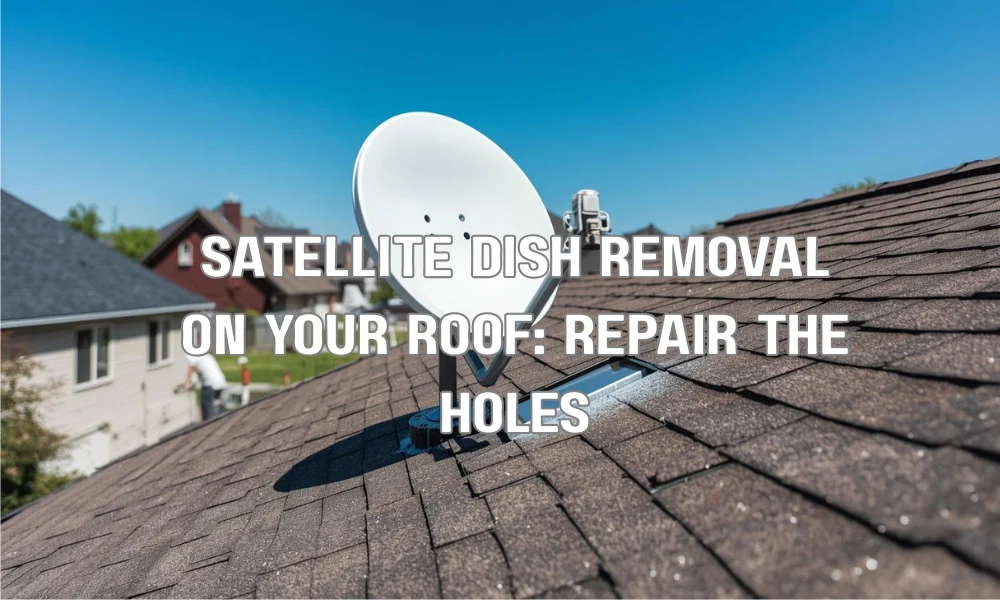
Outdated satellite dishes are more than just an eyesore; they represent a significant vulnerability to your home’s roof integrity. Left unaddressed, the mounting hardware, cables, and dish itself can cause leaks, structural damage from wind stress, and accelerate the wear and tear of your roofing materials. Removing these relics is a critical step in modern home maintenance, preventing costly future repairs and improving your property’s overall aesthetic and value.
Critical Fact 1: A single unsealed screw hole from an old satellite dish can allow gallons of water into your attic during a heavy downpour, leading to mold growth, damaged insulation, and compromised structural integrity.
Why is Prompt Satellite Dish Removal Necessary?
Prompt satellite dish removal is necessary to safeguard your roof from long-term damage and maintain your home’s structural integrity. These dishes often penetrate the roof’s surface with multiple screws and lag bolts, creating numerous potential entry points for water if not properly sealed or maintained. Over time, UV exposure, temperature fluctuations, and harsh weather can degrade the original sealants, turning a minor penetration into a significant leak risk. Furthermore, the weight and wind resistance of a large dish can stress roofing materials, especially during high winds, potentially loosening shingles or tiles, or even tearing off sections of the roof. Removing the dish eliminates this ongoing stress and the associated vulnerabilities, contributing to a more robust and resilient roof system. It also removes an outdated fixture, enhancing your home’s curb appeal and preparing it for contemporary connectivity solutions.
What are the Key Steps for Safe Dish Removal?
The key steps for safe dish removal involve prioritizing personal safety, disconnecting electrical components, and carefully dismantling the dish structure. First, ensure you have stable footing, preferably with a sturdy ladder and potentially a safety harness if your roof is steep. Next, locate and disconnect all cables leading from the dish, tracing them back to their entry point into the house to remove them if possible. Many dishes have an electrical ground wire that should be safely disconnected first. Using appropriate wrenches and screwdrivers, systematically unbolt and remove the dish itself, then the support arm, and finally the mounting bracket from the roof. Work slowly and methodically to avoid dropping components or causing accidental damage to the roof surface. Once all hardware is removed, you will be left with the exposed holes that require immediate attention.

How Do Different Roof Materials Impact Repair Techniques?
Different roof materials significantly impact the specific repair techniques required for satellite dish holes, necessitating material-specific approaches for effective sealing and aesthetics. For asphalt shingle roofs, repairs typically involve applying roofing cement to clean holes, inserting new, correctly colored shingles cut to size, and carefully sealing the edges beneath existing shingle layers. Metal roofs demand specialized metal patching kits, which often include sealant, matching paint, and sometimes small metal plates that are riveted or screwed over the holes, then sealed. Tile roofs, whether clay or concrete, present a unique challenge as the tiles often need to be carefully removed, the underlying membrane repaired, and then the original or new tiles re-secured and sealed. For flat or low-slope roofs, often covered with EPDM or TPO membranes, repair involves cleaning the area, applying specific membrane patches with appropriate adhesives, and heat welding or chemically bonding them for a watertight seal. Each material requires precise attention to detail and specific products to ensure a durable, weather-tight, and aesthetically consistent repair.
What Materials and Tools Are Essential for a Professional Repair?
Essential materials and tools for a professional repair include a combination of common household tools and specialized roofing supplies to ensure a watertight and durable fix. You’ll need a utility knife, caulking gun, drill with various bits, wire cutters, and wrenches for the removal process. For the repair, key materials include: high-quality, UV-resistant roofing sealant (e.g., silicone, polyurethane, or asphaltic mastic), matching replacement shingles or roofing material (tiles, metal patches), flashing material (aluminum or copper), roofing nails or screws appropriate for your roof type, and potentially a patching compound or waterproof membrane. Safety equipment like gloves, safety glasses, and a sturdy ladder are non-negotiable. Having a soft brush to clean the repair area and a small container of mineral spirits for cleanup can also be helpful. The choice of sealant and patching material is critical; always ensure they are compatible with your specific roofing material for maximum adhesion and longevity.
Critical Fact 2: Using incompatible sealants or patching materials can lead to premature failure of the repair, often causing greater water damage than the original unsealed holes due to trapped moisture and accelerated degradation.
When Should You Consider Professional Assistance for Hole Repair?
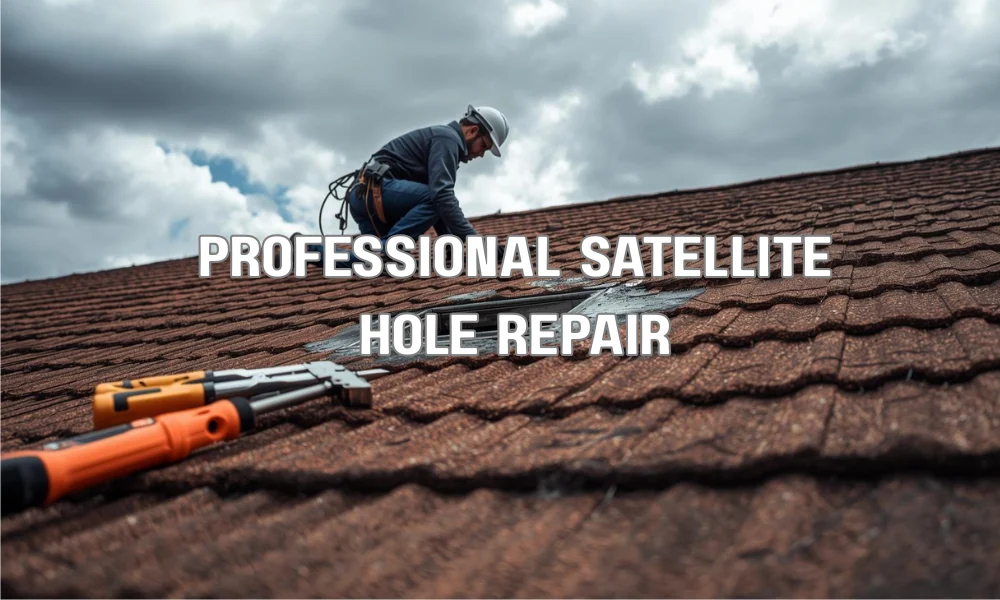
You should consider professional assistance for hole repair when the damage is extensive, the roof pitch is steep, or you lack confidence in your DIY skills. If the satellite dish created larger-than-expected holes, tore the roofing membrane, or damaged underlying sheathing, a professional roofer can assess the structural integrity and execute a more comprehensive repair. Steep roofs (pitches greater than 6:12) pose significant safety risks that are best handled by experienced professionals with proper safety gear. Furthermore, if your roof is made of specialized materials like slate, clay tile, or a complex metal system, repairing it correctly without specific expertise can be challenging and potentially cause more harm. Professionals have the right tools, materials, and experience to guarantee a watertight, code-compliant, and aesthetically pleasing repair, often providing warranties for their work that offer peace of mind.

What are the Long-Term Benefits of Proper Hole Repair?
The long-term benefits of proper hole repair extend far beyond simply stopping leaks, encompassing enhanced structural integrity, improved energy efficiency, and extended roof lifespan. A meticulously sealed repair prevents water infiltration, which is the primary cause of rot, mold growth, and damage to your attic insulation and ceiling. By eliminating these entry points, you safeguard your home’s structural components, preventing costly repairs to rafters and sheathing down the line. Furthermore, a sealed roof contributes to better thermal performance by preventing air leaks, which can reduce heating and cooling costs. Protecting your roof from water damage also prolongs its overall lifespan, delaying the need for an expensive full roof replacement. Finally, a professional, seamless repair maintains your home’s curb appeal and protects its market value, showcasing attention to detail in maintenance.
Can DIY Repairs Be as Effective as Professional Services?
DIY repairs can be as effective as professional services for minor satellite dish holes, provided the homeowner possesses the necessary skills, tools, and understanding of roofing principles. For small, isolated screw holes on easily accessible, low-pitch asphalt shingle roofs, a careful DIYer can achieve a watertight seal using high-quality roofing cement, flashing, and matching shingle pieces. The key to effectiveness lies in proper surface preparation (cleaning, drying), correct material application, and ensuring a complete, durable seal that integrates seamlessly with existing roofing. However, the effectiveness diminishes significantly with larger holes, underlying structural damage, complex roofing materials (like metal or tile), or steep pitches. In these scenarios, a professional’s expertise, specialized tools, and warranty-backed work typically far surpass what a DIYer can safely and effectively achieve, making professional services the more reliable long-term solution.
Comparative Analysis of Roof Repair Options
To illustrate the varying approaches and considerations for different roof types, here’s a comparative analysis of common repair options for satellite dish holes. This table highlights typical materials, complexity, and average longevity, assuming proper installation.
| Roof Material Type | Primary Repair Method | Key Materials | Complexity (1-5, 5=Most) | Estimated Longevity of Repair |
|---|---|---|---|---|
| Asphalt Shingles | Patching with new shingles & sealant | Roofing cement, matching shingles, flashing tape, roofing nails | 2 | 10-15 years (matching shingle lifespan) |
| Metal Panel/Standing Seam | Metal patch & specialized sealant | Metal patch (matching color/gauge), roofing screws, silicone sealant, specialized primer | 4 | 15-25 years (dependent on patch material) |
| Clay/Concrete Tiles | Tile replacement & underlayment repair | Matching tiles, roofing felt/underlayment, roofing cement, flashing, tile adhesive | 5 | 15-20 years (dependent on tile quality) |
| EPDM/TPO Flat Roof | Membrane patching & adhesive | EPDM/TPO patch, specific adhesive, seam roller, primer | 3 | 10-15 years (matching membrane lifespan) |
| Wood Shakes/Shingles | Wood replacement & sealant | Matching wood shakes/shingles, asphalt cement, copper flashing | 4 | 8-12 years (matching wood lifespan) |
Critical Fact 3: The integrity of any roof repair is directly proportional to the quality of materials used and the precision of the installation; skimping on either can lead to repetitive failures and compounded damage.
Frequently Asked Questions
Why should I remove an old satellite dish if it’s not currently leaking?
Even if an old satellite dish isn’t actively leaking, its mounting points are vulnerable areas. Sealants degrade over time due to UV exposure and temperature changes, creating eventual leak risks. Removing it proactively prevents future problems and improves your roof’s overall condition and appearance.
What tools do I need to remove a satellite dish?
You’ll typically need a wrench set, screwdriver set (Phillips and flathead), wire cutters for cables, and possibly a drill if the mounting hardware is seized. Always ensure you have a sturdy ladder and appropriate personal protective equipment like gloves and safety glasses.
How do I identify my roof material for repair purposes?
Your roof material can usually be identified by visual inspection: asphalt shingles are common, flat overlapping panels; metal roofs have distinct seams or panels; tile roofs use ceramic, clay, or concrete pieces; and flat roofs often have a continuous rubbery or white membrane.
Is it safe to go on my roof to remove a satellite dish?
It is safe for experienced individuals with proper safety gear on stable, low-pitch roofs. However, for steep roofs, wet conditions, or if you are uncomfortable with heights, hiring a professional roofer is strongly recommended to prevent falls and injury.
What kind of sealant should I use for roof holes?
Use a high-quality, UV-resistant roofing sealant compatible with your specific roof material. Common choices include polyurethane-based sealants, asphaltic mastics, or specialized silicone sealants designed for roofing applications. Avoid general-purpose caulk.
Will removing the dish damage my roof further?
If done improperly, removal can cause additional damage. However, when done carefully and systematically, the removal process itself should not cause new damage beyond the existing penetrations, which are immediately addressed with proper repair techniques.
How much does it cost to have a professional remove a dish and repair the holes?
Professional removal and repair costs can vary widely based on location, roof complexity, and the extent of damage. Generally, expect to pay between $150 to $500 for a standard service, which includes labor and materials for patching holes.
Can I just cover the holes with duct tape or tar?
No, using temporary solutions like duct tape or generic tar is not advisable. These materials are not designed for long-term roofing exposure, will degrade quickly, and can trap moisture, leading to more significant and expensive damage over time. Always use proper roofing repair materials.
