
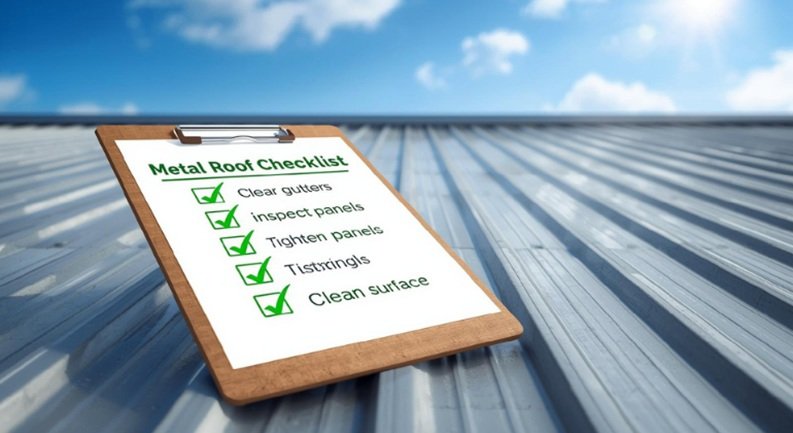
As licensed roofing contractors and seasoned experts serving the unique climate of **Fort Lauderdale, Hollywood, and the wider South Florida region**, we at Shieldline Roofing understand that your metal roof is more than just a cover; it’s a long-term investment. Renowned for their durability and sleek aesthetics, metal roofs are perfectly suited to withstand our intense sun, heavy rainfall, and the formidable winds of hurricane season. However, even the most robust metal roof requires diligent, specialized maintenance to truly achieve its projected lifespan and performance.
Neglecting this vital aspect can lead to issues ranging from cosmetic degradation to serious structural compromise, often exacerbated by our subtropical environment. This comprehensive checklist is designed to empower South Florida homeowners and business owners with the knowledge and actionable steps needed to maintain their metal roofing system, ensuring it continues to protect your property efficiently and beautifully for decades to come.
Key Takeaways from Shieldline Roofing:
- Extend Lifespan: With proper, regular maintenance tailored for our climate, your metal roof can easily surpass its already impressive longevity, pushing past 60+ years.
- Prevent Costly Repairs: Proactively addressing minor issues like loose fasteners or developing rust early avoids the expensive, extensive damage that our humidity and storms can rapidly accelerate.
- Maintain Aesthetics & Performance: Regular cleaning and inspections ensure your roof not only looks pristine but also functions optimally, protecting your investment against the elements.
- Safety First: Always prioritize safety, using appropriate gear or, better yet, calling **Shieldline Roofing professionals** for challenging or hazardous tasks, especially involving heights or electrical components.
1. Understanding Your Metal Roof’s Anatomy in South Florida’s Climate
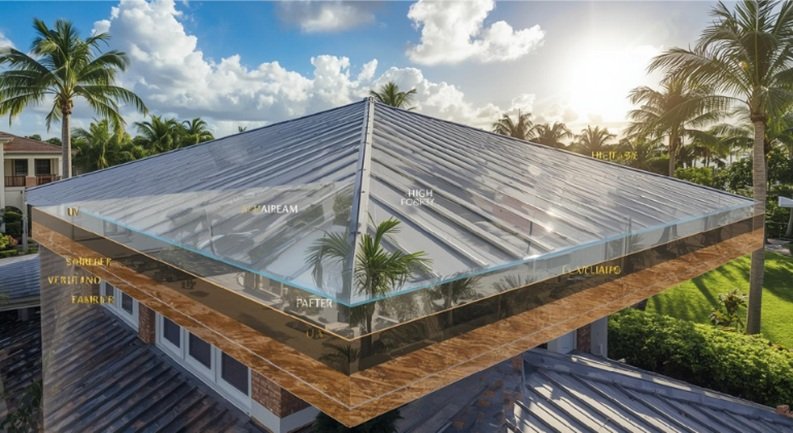
Before diving into maintenance, it’s crucial to understand the specific components of your metal roof and how they interact with our local environment. In South Florida, every element of your roofing system is put to the test, from UV radiation to torrential downpours.
Common Metal Types and South Florida Considerations
While many metal types are suitable, the most common in our region include **steel (galvalume or galvanized), aluminum, and occasionally copper or zinc**. Each has unique properties:
- **Steel:** Often coated for corrosion resistance (e.g., Galvalume), steel roofs are robust and a popular choice due to their strength and cost-effectiveness. However, scratches or compromised coatings can be vulnerable to rust in our humid, saline air.
- **Aluminum:** Naturally rust-resistant and lighter than steel, aluminum is excellent for coastal properties in **Fort Lauderdale and Hollywood** where salt spray is a concern. It’s also highly reflective, contributing to energy efficiency.
- **Copper/Zinc:** While less common for entire roofs due to higher cost, these metals are prized for their longevity, aesthetic patina, and natural resistance to biological growth, making them ideal for accents or specific architectural features.
Shieldline Roofing specializes in the installation and maintenance of all these materials, ensuring they meet the stringent **Florida Building Code (FBC)** requirements for your specific location.
Key Components and Their Vulnerabilities in Our Environment
Your metal roof is a system, not just panels. Understanding its parts helps identify potential trouble spots:
- **Panels:** The primary surface, prone to impact damage from hail or flying debris during storms.
- **Seams:** The critical joints where panels connect. These are primary points of water entry if compromised by heat expansion, wind uplift, or sealant degradation.
- **Fasteners:** Screws and clips that secure panels. In South Florida, these must be robust, often stainless steel, to resist corrosion and handle extreme wind loads. Missing or loose fasteners are common leak points.
- **Flashing:** Metal strips around chimneys, skylights, vents, and wall intersections. Crucial for diverting water, flashing is highly susceptible to thermal expansion and contraction, which can compromise its integrity.
- **Gutters & Vents:** Essential for water management and attic ventilation, preventing moisture buildup that fosters mold and rot, critical in our humid climate.
The Fundamental Importance of a Robust Roof for Structural Integrity and Energy Efficiency
A well-maintained metal roof doesn’t just look good; it forms the core of your building’s structural integrity. It protects against water intrusion, which can lead to costly interior damage, mold, and even structural wood rot – a significant concern in our humid environment. Furthermore, the reflective properties of many metal roofs, especially those with cool roof coatings, are vital for **energy efficiency in South Florida’s intense heat**, reducing cooling costs by deflecting solar radiation. Compliance with **FBC standards for wind resistance and water-tightness** is paramount for protecting your property during severe weather events.
2. The Annual Inspection Ritual: Shielding Against South Florida’s Elements
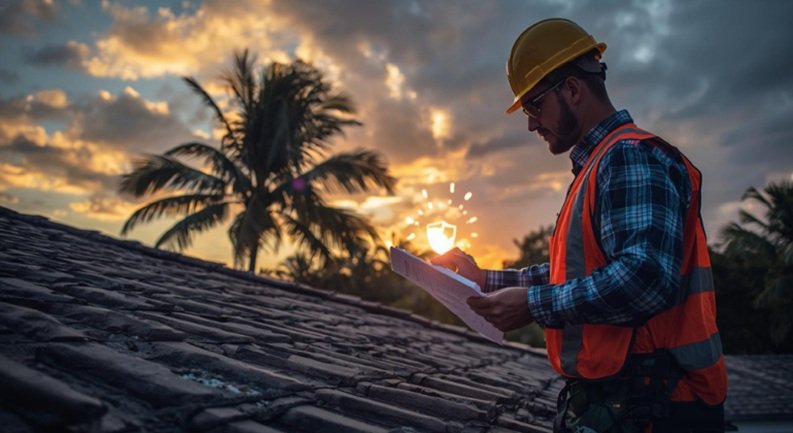
Regular, thorough inspections are the cornerstone of effective metal roof maintenance. For properties in **Fort Lauderdale, Hollywood, and South Florida**, this routine is non-negotiable, given our susceptibility to high winds, heavy rains, and relentless sun.
Optimal Timing: Post-Storm and Seasonal Checks
Shieldline Roofing recommends conducting comprehensive inspections twice a year, ideally:
- **Late Spring/Early Summer:** After the winter rains and before the peak of hurricane season. This allows you to address any lingering issues and prepare for the intensified weather to come.
- **Late Fall/Early Winter:** After the primary hurricane season, once heavy leaf drops have occurred, and before cooler, wetter weather sets in. This is crucial for identifying any storm-related damage.
Additionally, an immediate visual check – from the ground if possible – should be performed after any significant weather event, such as a severe thunderstorm or tropical system. Even minor hail or strong gusts can cause unseen damage that needs prompt attention.
Ground-Level and Safe On-Roof Assessment
Your inspection should begin safely from the ground. Look for obvious signs of trouble:
- **Missing Panels or Loose Trim:** Visually scan for any panels that appear lifted, askew, or missing entirely. Check fascia and soffit metal for detachment.
- **Debris Accumulation:** Note any heavy leaf, branch, or pine needle accumulation, especially in valleys or around flashing – these can trap moisture and accelerate corrosion or biological growth.
- **Signs of Water Pooling or Improper Drainage:** Look for dark streaks, standing water, or areas where water might not be flowing freely off the roof or through gutters. This could indicate a pitch issue or blockage.
On-Roof Inspection (If Safe & You Have Proper Safety Gear):
If you are comfortable and equipped with the necessary safety gear (stable ladder, non-slip shoes, safety harness for steep roofs), a more detailed on-roof inspection is invaluable. Shieldline Roofing highly advises engaging professionals for this, especially on complex or steep roofs.
- **Examine Seams and Panel Overlaps:** Look for any separation, lifting, or signs of stress – these are prime entry points for water, especially during driving rain and high winds.
- **Inspect All Flashing:** Pay close attention to flashing around chimneys, skylights, vents, and wall intersections. Look for cracks, sealant deterioration, or detachment.
- **Check Fasteners:** Inspect every exposed fastener for looseness, corrosion, or missing washers. Re-tighten or replace as needed – this is a common source of leaks in older metal roofs.
- **Look for Abrasion or Impact Damage:** Identify areas where tree branches might be rubbing the roof surface, or any dents/punctures from hail or falling objects.
Documentation for Compliance and Claims
For any identified issues, especially after a storm, **documentation is critical**. Take clear, dated photos or videos of all findings, both minor and major. This evidence serves multiple purposes:
- **Tracking Repairs:** Helps you monitor the progress and effectiveness of maintenance over time.
- **Professional Consultation:** Provides valuable information for Shieldline Roofing professionals when you call for assistance.
- **Insurance Claims:** In the event of storm damage, comprehensive documentation is essential for a smooth and successful insurance claim process, especially vital in our hurricane-prone region.
3. Cleaning for Optimal Performance and Appearance in Our Humid Climate
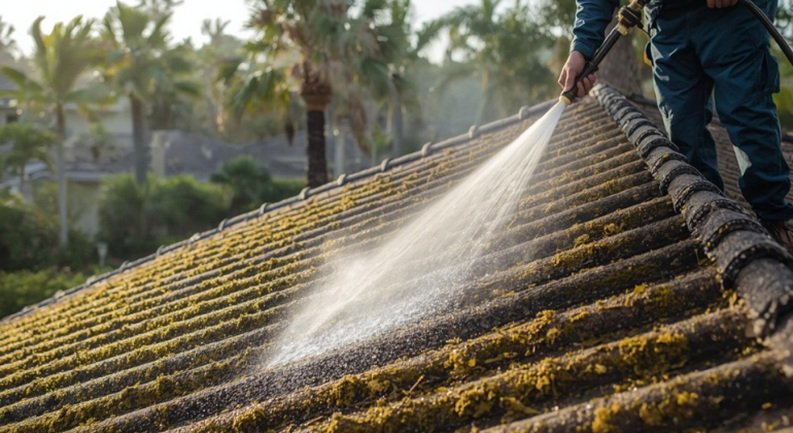
Maintaining a clean metal roof in South Florida is not just about aesthetics; it’s a critical component of its longevity and performance. Our high humidity and warm temperatures create an ideal breeding ground for algae, moss, and mildew, which can degrade coatings and trap moisture.
Debris Removal and Preventing Algae/Mildew
Regularly clear your roof surface and valleys of leaves, branches, pine needles, and other organic matter. This is especially important for multi-story properties near mature trees in areas like **Hollywood and Fort Lauderdale**. Accumulated debris:
- **Traps Moisture:** Leads to prolonged dampness, accelerating corrosion on steel roofs and fostering biological growth.
- **Promotes Biological Growth:** Algae, moss, and mildew thrive in our climate. While not immediately damaging to metal, they can hold moisture against the surface, degrade paint finishes over time, and create unsightly dark streaks.
- **Blocks Water Flow:** Can divert water into unintended areas, leading to leaks or standing water.
Gentle Surface Washing Techniques
When washing your roof, gentle is the keyword. The goal is to remove surface contaminants without harming the protective coatings.
- **Mild Cleaning Solutions:** Use a soft-bristle brush with a mild, non-abrasive cleaning solution. Many homeowners find a simple solution of water and a small amount of household detergent effective. Specific, roof-safe cleaning products are also available.
- **Gentle Pressure Washing:** If using a pressure washer, always apply it with extreme caution. Use a wide fan tip (40-degree or wider) and maintain a low pressure setting (below 1500 psi). Always test on an inconspicuous area first to ensure it doesn’t strip the paint or damage the coating. Improper pressure washing can void warranties.
- **Thorough Rinsing:** Always rinse the roof thoroughly from top to bottom to prevent streaking or residue build-up. Ensure all cleaning solution is washed off, as dried residue can attract more dirt or even damage the finish.
Remember, safety should always be your top priority. If you’re uncomfortable with heights or operating a pressure washer on a roof, contact Shieldline Roofing for professional roof cleaning services.
Protecting Your Roof’s Coating and Warranty
Your metal roof’s coating (e.g., Kynar 500, SMP) is its primary defense against UV radiation, corrosion, and aesthetic degradation. Using harsh chemicals, wire brushes, or strong solvents can irrevocably damage this coating, leading to premature fading, chalking, and a significantly reduced lifespan. More importantly, it can **void your manufacturer’s warranty**. Shieldline Roofing always uses manufacturer-approved methods and materials to preserve your roof’s integrity and warranty.
4. Critical Connections: Fasteners, Sealants, and Flashing Under Florida’s Sun
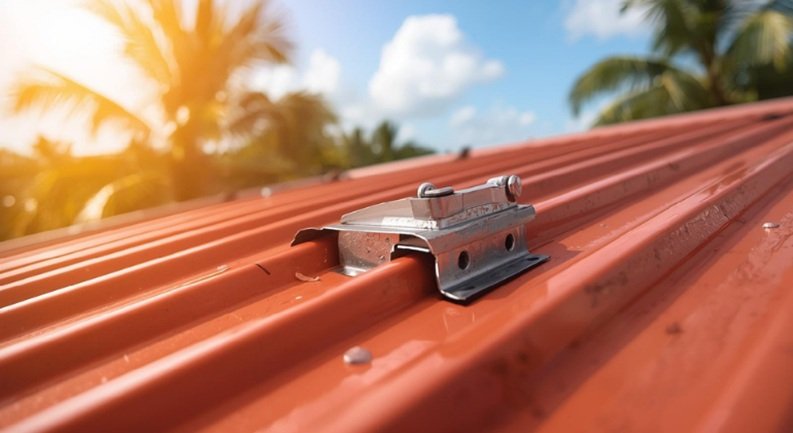
The strength of your metal roof lies not just in its panels, but in the integrity of its connections. In South Florida, these vulnerable points are constantly challenged by thermal expansion/contraction, UV degradation, and relentless wind uplift forces, making their inspection and maintenance paramount for **FBC compliance**.
Fastener Integrity Against Wind Uplift
Fasteners — the screws or clips holding your panels down — are often the first points of failure in a metal roof, especially during high-wind events. For South Florida, this is a critical concern, directly impacting your roof’s ability to resist hurricane-force winds.
- **Check All Exposed Fasteners:** Inspect every visible screw head for looseness, rust, or stripping. Pay attention to the washers beneath the screw heads; these rubber or neoprene washers are crucial for creating a watertight seal and are often the first to degrade under UV exposure.
- **Replace Corroded Screws:** Any fastener showing signs of rust or significant corrosion should be replaced immediately. Shieldline Roofing uses appropriate, non-corrosive alternatives (e.g., stainless steel or zinc-aluminum capped screws) designed for our coastal environment.
- **Ensure Tight Seals:** Tighten any loose screws, but be careful not to over-tighten, which can strip the screw or damage the panel. The washer should be slightly compressed, forming a tight, waterproof seal.
Sealant Condition and UV Degradation
Sealants are used around penetrations (vents, pipes, skylights) and sometimes along seams. Our intense South Florida sun and humidity are notorious for breaking down sealants over time.
- **Inspect for Cracking, Shrinking, or Deterioration:** Look for any signs that the sealant is losing its elasticity, pulling away from surfaces, or developing cracks. These are clear pathways for water intrusion.
- **Remove and Reapply High-Quality Sealant:** If sealant is compromised, the best practice is often to carefully remove the old, degraded material. Then, reapply a high-quality, UV-resistant, and compatible caulk or sealant specifically designed for metal roofing applications. Ensure the new sealant adheres properly to both surfaces. Shieldline Roofing uses industrial-grade sealants proven to perform in our climate.
Flashing Examination and Water Intrusion Prevention
Flashing components are expertly installed to divert water away from critical junctures on your roof. When flashing is compromised, the risk of leaks skyrockets.
- **Ensure Secure Placement:** Verify that all flashing components (e.g., step flashing, counter flashing, valley flashing) are securely in place and properly lapped. Look for lifted edges or areas where the flashing has pulled away from the structure.
- **Immediate Attention to Damage:** Any lifted, bent, cracked, or corroded flashing needs immediate attention. These issues are direct threats to your roof’s watertight integrity. Repair or replacement must comply with **Florida Building Code** – a specialty of Shieldline Roofing.
5. Rust and Corrosion Prevention: A South Florida Imperative
While metal roofs are inherently durable, rust and corrosion pose a significant threat, especially to steel-based systems in our humid, often saline, coastal environment. Proactive measures are essential to maintain your roof’s integrity and aesthetic appeal in **Fort Lauderdale and Hollywood**.
Early Detection and Humidity-Driven Corrosion
Rust – the reddish-brown oxidation of steel – begins subtly but can spread rapidly if left unchecked, particularly with the constant moisture and salt air we experience. For aluminum, a white powdery corrosion can occur.
- **Regularly Look for Signs:** During your bi-annual inspections, meticulously scan the entire roof surface for any rust spots, discoloration, or areas where the paint finish appears compromised. Pay extra attention to cut edges, fastener points, and areas where water might collect briefly.
- **Understand the Cause:** In our region, constant humidity, salt spray, and condensation combine with oxygen to accelerate corrosion, especially on unprotected steel or where coatings have been scratched or abraded.
Proper Treatment and Coatings
Addressing rust quickly can prevent it from becoming a widespread, costly problem.
- **Clean Affected Areas Thoroughly:** Gently remove any loose rust, dirt, or debris from the affected area using a soft brush or cloth. Ensure the surface is clean and dry before proceeding.
- **Apply Rust-Inhibiting Primer and Touch-Up:** For minor rust spots, apply a high-quality, rust-inhibiting primer compatible with your metal roof type. Once dry, follow with an appropriate touch-up paint or coating that matches your roof’s existing finish. Shieldline Roofing can advise on the best products for South Florida’s climate.
- **Preventative Measures:** Ensure proper drainage across the entire roof to avoid standing water, which significantly accelerates corrosion. Trim back tree branches that might rub against the roof, causing abrasions that expose the metal beneath the coating.
Galvanic Corrosion in Coastal Environments
This is a critical consideration in our coastal South Florida environment. Galvanic corrosion occurs when two dissimilar metals are in electrical contact in the presence of an electrolyte (like saltwater or even humid air). For example, copper flashing in direct contact with an aluminum roof panel can lead to rapid corrosion of the less noble metal (aluminum).
- **Be Aware of Potential Issues:** During any repairs or additions to your roof, always ensure that compatible metals are used. If dissimilar metals must be in proximity, they should be separated by an inert barrier (e.g., rubber, specialized tape).
- **Shieldline Roofing Expertise:** Our contractors are highly experienced in selecting and installing compatible materials, adhering to **Florida Building Code** and best practices to prevent galvanic corrosion, especially important in high-saline areas like **Fort Lauderdale and Hollywood**.
6. Gutter and Downspout Management: Essential for South Florida’s Stormwater
In a region prone to torrential downpours and hurricane-force rains, efficient water drainage from your roof is not merely good practice – it’s a necessity. Properly functioning gutters and downspouts protect your foundation, landscaping, and ultimately, your roof’s integrity.
Clear Flow: Protecting Against Our Heavy Rains
The most basic, yet often overlooked, aspect of gutter maintenance is ensuring unobstructed flow.
- **Regular Debris Removal:** Given the lush vegetation in South Florida, gutters can quickly fill with leaves, pine needles, shingle grit, and other organic debris. This creates blockages, causing water to back up, overflow, or even seep under the roof edge, leading to fascia and soffit damage.
- **Professional Cleaning:** Shieldline Roofing recommends gutter cleaning at least twice a year, or more frequently if your property is surrounded by dense trees. This is a task that can often be safely handled by homeowners from a stable ladder, but professionals can ensure comprehensive cleaning and inspection.
Proper Slope: Ensuring Efficient Drainage
Gutters must have the correct slope – typically a quarter-inch per 10 feet – to allow water to drain effectively towards the downspouts. If gutters sag or have insufficient slope, water will pool, leading to:
- **Mosquito Breeding Grounds:** Standing water is a prime breeding site for mosquitoes, a public health concern in South Florida.
- **Accelerated Corrosion:** Prolonged water exposure can prematurely corrode metal gutters.
- **Increased Weight and Stress:** Gutters filled with standing water and debris become excessively heavy, straining their hangers and potentially pulling away from the fascia.
If you notice sagging or pooling, it’s often a sign that hangers need reinforcement or the gutter needs re-sloping. Shieldline Roofing can assess and correct these issues.
Drainage Away From Foundation: Preventing Structural Damage
The downspouts are the final step in the drainage system. They must direct water away from the building’s foundation.
- **Extend Downspouts:** Ensure downspouts terminate at least 4-6 feet away from the foundation. Use extensions if necessary.
- **Prevent Water Damage:** When water pools near the foundation, it can lead to hydrostatic pressure, foundation cracks, basement/crawl space flooding, and landscape erosion – all costly problems that proper gutter management prevents.
7. Post-Storm Assessment: After Every South Florida Weather Event
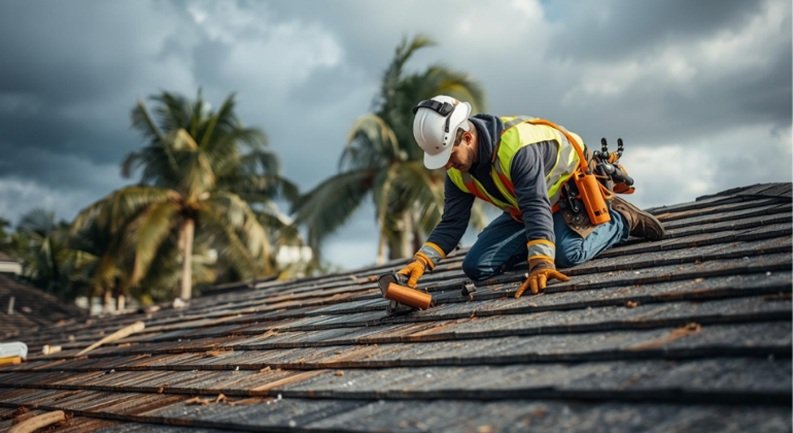
For properties in **Fort Lauderdale, Hollywood, and South Florida**, a post-storm assessment isn’t an option – it’s a critical safety and financial imperative. Our region’s unique climate means your roof is regularly exposed to extreme weather events, from tropical storms to full-blown hurricanes. Immediate action can save you from far greater costs and damage down the line.
Immediate Visual Inspection Protocol
As soon as it is safe to do so after any significant weather event (heavy winds, hail, severe thunderstorms, tropical depressions, or hurricanes), conduct a thorough visual inspection of your metal roof.
- **From the Ground First:** Prioritize safety. Begin your assessment from the ground with binoculars. Look for obvious signs of distress such as missing or dislodged panels, loose flashing, significant dents, or debris accumulation.
- **Interior Check:** Also check your interior ceilings and attic for any signs of water intrusion – new stains, drips, or damp insulation. Even minor leaks can rapidly escalate to major structural damage in our humid environment.
Identifying Wind and Hail Damage
Metal roofs are highly resistant to hail and wind, but extreme events can still cause damage:
- **Wind Damage:** Look for lifted, bent, or entirely missing panels. Pay close attention to the edges and corners of the roof, as these areas experience the greatest wind uplift forces. Inspect fasteners for signs of pulling out or corrosion exacerbated by movement.
- **Hail Damage:** While metal roofs are excellent against hail, very large hail can cause cosmetic dents or, in extreme cases, compromise coatings. Look for depressions on panels. While often cosmetic, significant denting can impact the longevity of the coating or even lead to water pooling in the depressions.
- **Impact Damage:** Any falling debris from trees or adjacent structures can cause punctures or severe dents that require immediate professional assessment.
When to Engage Shieldline Roofing for Post-Storm Repairs
For any significant damage – active leaks, lifted panels, extensive denting, or concerns about structural integrity – **contact Shieldline Roofing promptly**. Trying to DIY complex repairs after a storm can be extremely dangerous and may inadvertently cause further damage or void your warranty. Our team of **licensed and insured professionals**:
- **Provides Rapid Response:** We understand the urgency of post-storm damage.
- **Expertly Assesses Damage:** We can accurately identify all areas of concern, including hidden damage not visible from the ground.
- **Ensures Code Compliance:** All repairs will adhere strictly to the latest **Florida Building Code (FBC)** requirements for wind mitigation and structural integrity.
- **Assists with Insurance Claims:** We can work directly with your insurance company, providing detailed reports and estimates to facilitate a smooth claim process.
8. Professional vs. DIY Maintenance: Prioritizing Safety and FBC Compliance
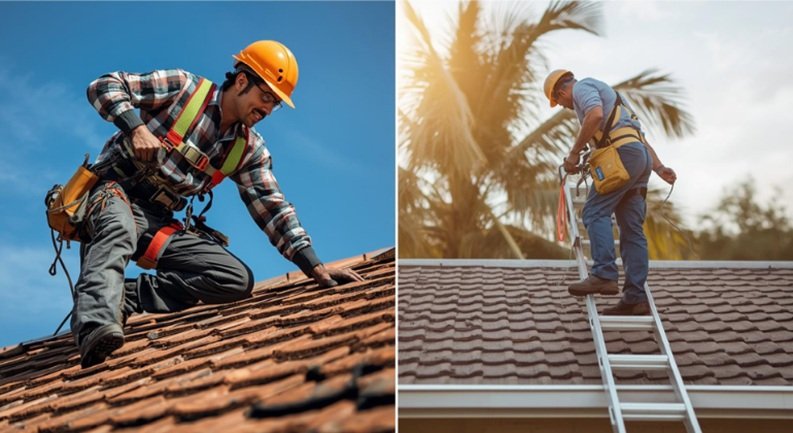
Maintaining a metal roof in South Florida demands a balance between homeowner vigilance and professional expertise. While some tasks are perfectly suited for DIY, others – particularly those involving heights, structural integrity, or adherence to the **Florida Building Code** – are best left to licensed and insured roofing contractors like Shieldline Roofing.
Safe DIY Tasks for the South Florida Homeowner
There are several maintenance tasks you can safely perform to extend your metal roof’s life:
- **Ground-Level Debris Removal:** Safely clearing leaves, branches, and other organic matter from gutters and around the perimeter of your house.
- **Visual Inspections (from the ground):** Regularly looking for obvious signs of damage, loose materials, or drainage issues using binoculars.
- **Gutter Cleaning:** If you have single-story gutters and a stable ladder, cleaning debris from gutters can be a manageable task. Always ensure your ladder is on solid, level ground.
- **Hose Rinsing:** Gently rinsing off surface dirt and pollen from the ground with a garden hose (avoiding direct roof walking if uncomfortable).
Always prioritize your safety. Wear appropriate personal protective equipment (PPE), including non-slip shoes, gloves, and eye protection. Never work on a wet or slippery roof.
When Shieldline Roofing’s Expertise is Indispensable
There are distinct situations where calling a professional is not just recommended, but essential for safety, longevity, and compliance with the **Florida Building Code**.
- **Complex Repairs & Significant Damage:** Active leaks, widespread rust, lifted panels, or any structural concerns require specialized skills and tools.
- **Steep Roof Pitches:** Working on a steep roof is inherently dangerous and requires professional equipment (e.g., safety harnesses, specialized scaffolding).
- **Warranty-Specific Repairs:** Many metal roof warranties require repairs to be performed by a certified contractor to remain valid. Shieldline Roofing ensures all work upholds your warranty.
- **Code Compliance:** Any structural repairs, major replacements, or work involving flashing, underlayment, or fasteners must adhere to the latest **Florida Building Code**, especially in our **High-Velocity Hurricane Zone (HVHZ)**. Shieldline Roofing guarantees all work is code-compliant and properly permitted.
- **Uncomfortable with Heights:** If you feel uneasy or lack the proper safety equipment, do not risk injury. Professional roofers are trained and equipped to work safely at heights.
The Importance of a Licensed, Insured Contractor
In South Florida, choosing a **licensed and insured roofing contractor** like Shieldline Roofing is non-negotiable. Our licensing (License #: CCC1333790) signifies that we meet stringent state standards for knowledge, experience, and ethical practice. Our insurance protects both our workers and your property in the unlikely event of an accident. Hiring an unlicensed contractor is a massive risk, exposing you to liability, sub-standard work, and potentially voiding your home insurance.
Key Statistics from Shieldline Roofing
- A well-maintained metal roof can last **40-70 years**, significantly outperforming asphalt shingles (15-30 years) and providing superior protection in South Florida.
- Metal roofs contribute to **energy savings of 10-25%** for South Florida homeowners and businesses due to their reflective properties, especially when coated for “cool roof” performance.
- Regular maintenance can reduce the likelihood of costly repairs by **up to 75%** over the roof’s lifespan, preventing minor issues from escalating in our challenging climate.
- Ignoring a small leak (e.g., from a loose fastener) can lead to **internal structural damage costing 10x more** to repair than the initial fix, particularly in a high-humidity environment where mold and wood rot thrive.
- Proper cleaning and diligent care can prevent surface degradation, maintaining a roof’s warranty and aesthetic appeal for its full expected duration, even under the intense South Florida sun.
FAQs from Our South Florida Clients
How often should I clean my metal roof in Fort Lauderdale?
At least once a year, or twice if your property in **Fort Lauderdale or Hollywood** is surrounded by heavy tree cover or experiences significant environmental fallout (e.g., pollen, dust, salt spray). Our humid climate accelerates algae and mildew growth, making regular cleaning even more important.
What causes rust on a metal roof in South Florida?
Mostly moisture (rain, humidity, condensation) combined with oxygen, especially on ungalvanized or scratched steel roofs. **Salt spray in coastal areas** significantly accelerates this process. Using incompatible metals can also lead to galvanic corrosion, a common issue we see.
Can I pressure wash my metal roof in South Florida?
Yes, but with extreme caution. Shieldline Roofing advises using a wide fan tip (40-degree or wider) and **low pressure (below 1500 psi)** to avoid damaging the paint finish or dislodging fasteners. Always test in an inconspicuous area first, and if in doubt, call a professional to avoid voiding your warranty.
When should I call Shieldline Roofing for metal roof maintenance?
You should call us if you spot significant damage, active leaks, extensive rust, or if you are uncomfortable with heights or lack the proper safety equipment. Also, for **warranty-specific repairs** or any work requiring adherence to the **Florida Building Code**, engaging a licensed professional like Shieldline Roofing is essential.
Does neglecting maintenance void my metal roof warranty?
Often, yes. Most manufacturer warranties require regular maintenance and proper care. Always check your specific warranty terms to understand your obligations. Shieldline Roofing can help you understand these terms and ensure your roof remains compliant.
What are common mistakes to avoid during metal roof maintenance in South Florida?
Avoid using abrasive cleaners or wire brushes, walking improperly on the roof (which can cause dents or panel damage), ignoring minor issues (which quickly escalate in our climate), and performing repairs without proper safety gear or knowledge of the **Florida Building Code**.
Protect Your Investment with Shieldline Roofing
Your metal roof is a testament to durability and a cornerstone of your property’s protection against South Florida’s challenging climate. By following this comprehensive maintenance checklist, you’re not just preserving its appearance; you’re safeguarding its structural integrity, extending its lifespan, and ensuring it continues to meet the rigorous demands of the **Florida Building Code**.
However, we at Shieldline Roofing understand that not all maintenance tasks are suitable for every homeowner or business owner. For challenging inspections, complex repairs, or any task that involves working at heights, our **licensed, insured, and highly experienced professionals** are here to help. We are experts in metal roofing systems tailored for **Fort Lauderdale, Hollywood, and all of South Florida**, ensuring your roof is always in optimal condition, year-round.
Ready for a free, no-obligation, code-compliant roof inspection to ensure your metal roof is ready for whatever South Florida weather brings? Don’t wait for a problem to escalate. Contact Shieldline Roofing today to schedule your expert assessment and proactive maintenance plan. Trust Shieldline Roofing to keep your investment protected and performing flawlessly.
