
Executive Summary
- Implementing reflective cool roof systems is critical for mitigating intense solar heat gain in Florida’s commercial buildings, directly reducing cooling loads.
- Cool roofs leverage high solar reflectance and thermal emissivity to minimize heat absorption, significantly lowering roof surface and interior temperatures.
- Advanced cool roof materials, like TPO, PVC, and reflective coatings, offer durable, cost-effective solutions for enhancing building energy efficiency.
- Reduced HVAC strain from cool roofs translates into substantial energy cost savings, extended equipment lifespan, and improved indoor comfort for occupants.
- The science behind cool roofs is validated by measurable reductions in heat flux, offering a tangible return on investment through decreased operational expenses.
- Strategic selection and professional installation of cool roof systems are essential for maximizing their thermal performance and long-term benefits in humid climates.
- Adopting cool roof technology contributes to environmental sustainability by combatting the urban heat island effect and lowering carbon emissions from energy consumption.
Understanding the Florida Heat Challenge for Commercial Buildings
Why is Florida’s climate particularly challenging for commercial roofing and HVAC systems?
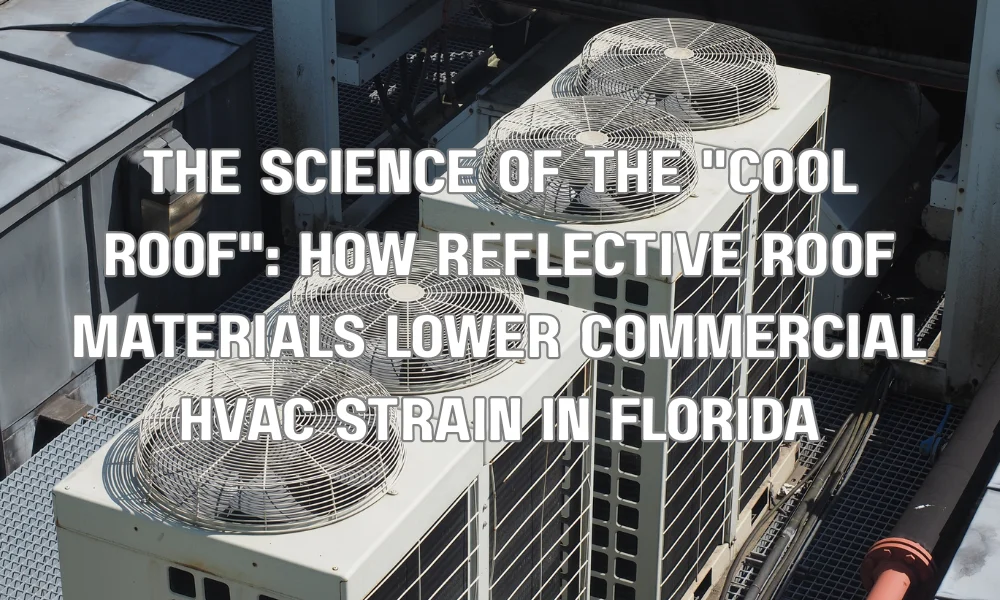
Florida’s climate presents unique and formidable challenges for commercial roofing and HVAC systems due to its relentless combination of intense solar radiation, high ambient temperatures, and pervasive humidity. This trifecta creates an environment where conventional dark roofs absorb massive amounts of solar energy, turning building rooftops into heat sinks that drastically increase internal temperatures and place immense strain on cooling systems. The constant demand for cooling in Florida means HVAC units operate almost continuously, leading to higher energy consumption, accelerated wear and tear, and elevated operational costs for businesses.
Critical Fact 1: In Florida, a dark conventional roof can reach surface temperatures of 150-180°F (65-82°C) under direct sun, transferring substantial heat into the building below, even when ambient air temperatures are significantly lower.
The Core Science of Cool Roofs
How do cool roofs fundamentally reduce heat absorption?
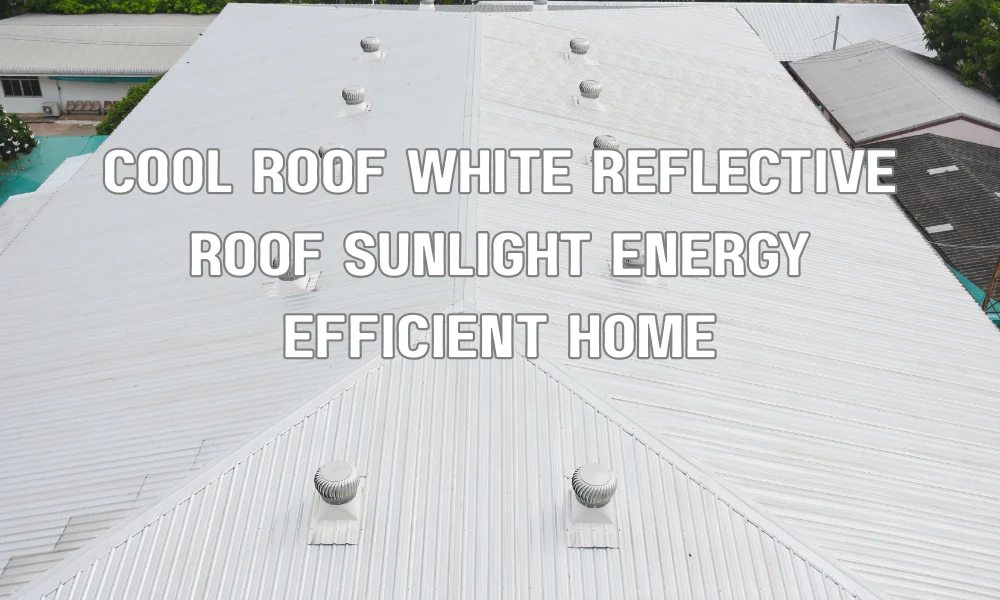
Cool roofs fundamentally reduce heat absorption by utilizing materials designed with high solar reflectance and high thermal emissivity. Solar reflectance, also known as albedo, is the roof’s ability to reflect sunlight away from the building rather than absorbing it as heat. Thermal emissivity is the roof’s capacity to radiate absorbed heat back into the atmosphere rather than transferring it downwards into the building’s interior. By maximizing these two properties, cool roofs effectively minimize the amount of heat energy that penetrates the building envelope, thereby keeping the internal spaces cooler.
What are the key properties that define a “cool roof”?
The key properties that define a “cool roof” are its Solar Reflectance Index (SRI), solar reflectance, and thermal emissivity. SRI is a comprehensive measure that combines both solar reflectance and thermal emissivity, indicating how hot a surface will get relative to standard black and white surfaces. High solar reflectance means the roof bounces a large percentage of solar energy back into space. High thermal emissivity allows any absorbed heat to radiate away efficiently rather than being trapped, preventing heat buildup and significantly lowering the roof’s surface temperature compared to traditional roofing materials. These combined properties are crucial for reducing heat flux into the building.
Types of Reflective Roofing Materials for Commercial Use
What commercial roofing materials offer superior reflective properties?
Commercial roofing materials offering superior reflective properties typically include single-ply membranes like TPO (Thermoplastic Polyolefin) and PVC (Polyvinyl Chloride), as well as highly reflective coatings applied over existing roof systems. TPO and PVC are inherently light-colored, often white, and engineered with smooth surfaces that naturally reflect a significant portion of solar radiation. Reflective coatings, on the other hand, can be applied to various roof substrates, including modified bitumen, asphalt, and metal, transforming them into cool roofs by enhancing their solar reflectance and emissivity. These options provide versatility for new construction and retrofit projects, catering to different budgetary and structural requirements.
| Roof Material Type | Solar Reflectance (Initial) | Thermal Emissivity (Initial) | Lifespan (Years) | Typical Cost/Sq. Ft. (Installed) |
|---|---|---|---|---|
| White TPO Membrane | 0.75 – 0.85 | 0.85 – 0.90 | 20 – 30+ | $7 – $12 |
| White PVC Membrane | 0.80 – 0.90 | 0.85 – 0.90 | 20 – 30+ | $8 – $14 |
| Acrylic Reflective Coating | 0.70 – 0.80 | 0.80 – 0.90 | 10 – 15 | $2 – $5 |
| Silicone Reflective Coating | 0.80 – 0.90 | 0.85 – 0.90 | 15 – 20+ | $3 – $7 |
| EPDM (White-on-Black) | 0.60 – 0.70 | 0.85 – 0.90 | 20 – 30+ | $6 – $11 |
Critical Fact 2: A study by the EPA indicates that cool roofs can lower roof surface temperatures by 50-60°F (28-33°C) compared to dark roofs, translating to a reduction in peak cooling demand by 10-15% for typical commercial buildings.
Quantifying the Benefits: HVAC Strain Reduction and Energy Savings
How much can a cool roof actually lower internal building temperatures and HVAC demand?
A cool roof can significantly lower internal building temperatures and HVAC demand by reducing heat transfer through the roof, leading to more stable and comfortable indoor environments. By preventing vast amounts of solar heat from entering the building, cool roofs reduce the workload on air conditioning systems, allowing them to cycle less frequently and operate more efficiently. This often results in internal temperature reductions of several degrees Fahrenheit, directly mitigating the need for excessive cooling and alleviating the strain on HVAC compressors, fans, and coils.
What are the economic and environmental advantages of implementing a cool roof in Florida?
Implementing a cool roof in Florida offers substantial economic and environmental advantages, primarily driven by energy efficiency. Economically, businesses experience significant reductions in electricity bills due to decreased HVAC energy consumption, often yielding a quick return on investment. Furthermore, the reduced stress on HVAC equipment extends its lifespan, delaying costly replacements and minimizing maintenance needs. Environmentally, cool roofs combat the urban heat island effect by reflecting solar radiation, which helps lower ambient air temperatures in urban areas. This also leads to a reduction in greenhouse gas emissions associated with electricity generation, contributing to a greener footprint for commercial operations.
Implementation and Maintenance Considerations
What are the crucial factors for selecting and installing a cool roof system?
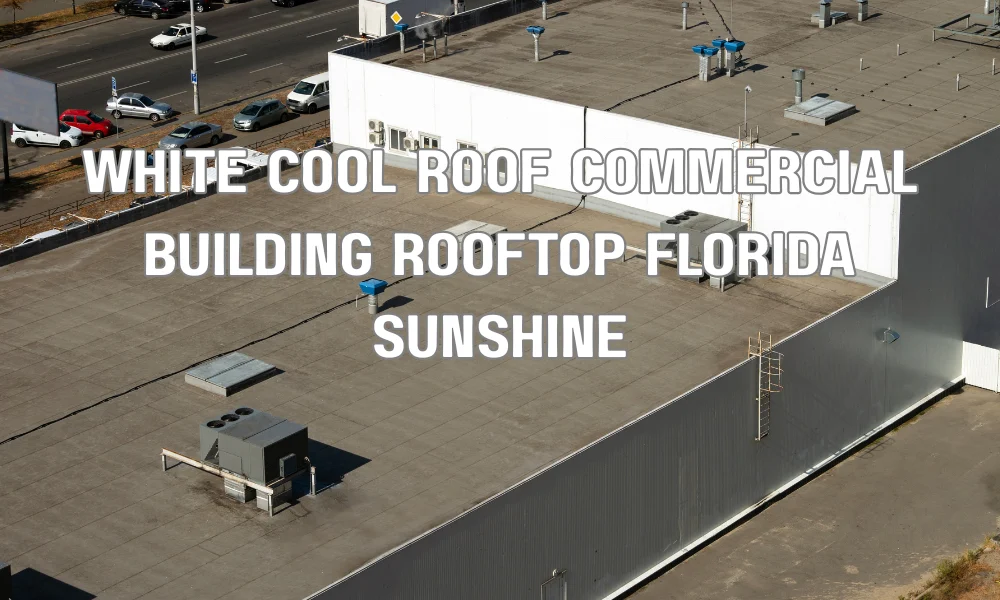
Crucial factors for selecting and installing a cool roof system include assessing the existing roof’s condition, understanding local building codes and incentives, and choosing the appropriate material based on performance requirements, budget, and desired lifespan. A thorough roof inspection is essential to determine if the existing substrate can support a new cool roof membrane or coating. It’s vital to select materials with certified high solar reflectance and thermal emissivity ratings, often verified by organizations like the Cool Roof Rating Council (CRRC). Professional installation by experienced contractors is paramount to ensure proper adhesion, waterproofing, and seam integrity, maximizing the system’s longevity and performance in Florida’s challenging climate.
How does proper maintenance ensure long-term cool roof performance?
Proper maintenance is essential to ensure the long-term performance and efficiency of a cool roof system. Over time, cool roofs can accumulate dirt, dust, and biological growth (like algae or mildew), which can significantly diminish their solar reflectance. Regular cleaning, typically with mild detergents and low-pressure washing, is necessary to remove these contaminants and restore the roof’s reflective properties. Routine inspections are also critical to identify and address any potential damage, such as punctures, tears, or seam failures, promptly. Proactive maintenance preserves the cool roof’s ability to reflect heat, thus sustaining its energy-saving benefits and extending its overall service life.

Critical Fact 3: While the initial cost of cool roof materials can sometimes be slightly higher, the average payback period for commercial cool roof installations in hot climates like Florida is often between 5-7 years, solely from energy savings.
Frequently Asked Questions
Q1: What is a cool roof and how does it work on a Florida commercial building?
A cool roof is a roofing system engineered to reflect a high percentage of incoming solar radiation rather than absorbing it as heat. On a Florida commercial building, this means selecting roofing materials with high Solar Reflectance Index (SRI) values—typically white or light-colored membranes or coatings. By reflecting 75–85% of incident solar energy (versus 10–15% for dark surfaces), cool roofs reduce roof surface temperatures by 50–80°F, directly reducing the heat conducted through the roof assembly into the building and cutting HVAC cooling loads by 15–25%.
Q2: How much can a cool roof reduce electricity costs for a Florida commercial building?
In Florida’s hot-humid climate, independent studies show cool roofing systems reduce commercial cooling energy use by 15–25% compared to dark-surface predecessors. For a 50,000 sq. ft. building spending $60,000/year on HVAC electricity, this represents $9,000–$15,000 in annual savings. Actual savings vary by building type, occupancy schedule, HVAC system type, and the SR difference between the old and new roof. Buildings with poor insulation values, high internal heat gain, or older HVAC systems tend to benefit most from cool roof retrofits.
Q3: What is Solar Reflectance Index (SRI) and what value does Florida require for commercial roofs?
Solar Reflectance Index (SRI) is a combined metric measuring a roofing material’s ability to reject solar heat, incorporating both its solar reflectance and thermal emittance. An SRI of 0 represents a standard black surface; SRI of 100 represents a standard white reference surface. Florida’s Energy Code (based on ASHRAE 90.1-2022) requires a minimum SRI of 82 for low-slope commercial roofs in Florida’s climate zones. Most white TPO membranes, PVC membranes, and silicone coatings achieve SRI values of 100–115, significantly exceeding the code minimum.
Q4: Does a cool roof have a measurable impact on HVAC equipment lifespan in Florida?
Yes. HVAC equipment that operates fewer hours per year—because the building requires less cooling—experiences reduced compressor, fan, and refrigerant system wear. Studies suggest HVAC system lifespan can be extended by 10–15% when combined with a cool roof retrofit in hot climates. Additionally, lower supply air temperatures required to maintain comfort set points under a cool roof reduce mechanical stress on duct systems and air handlers. For commercial property managers responsible for HVAC capital planning, cool roofing represents an indirect but real equipment lifecycle benefit.
Q5: How does a cool roof’s performance change over time in Florida’s environment?
Cool roofs lose some initial reflectance through soiling (airborne particulates, algae, biofilm) during the first 1–3 years of service. Industry testing shows that most white TPO membranes stabilize at approximately SRI 90–100 after 3 years of weathering in Florida’s climate—still well above the code minimum of 82. Annual cleaning (pressure washing or chemical treatment for biological growth) can recover 80–90% of initial reflectance. Florida Energy Code compliance is evaluated against aged SRI values (after 3-year weathering), not initial values, so most qualifying products remain compliant throughout their service life.
Q6: Are there Florida utility rebates or incentives for installing cool roofs on commercial buildings?
Several Florida electric utilities offer demand-reduction or energy efficiency incentive programs that may include rebates for qualifying cool roof installations. Florida Power & Light (FPL), Duke Energy Florida, and Tampa Electric (TECO) have all offered commercial energy efficiency programs historically, though specific rebate structures change annually. The federal Energy Policy Act also allows commercial property owners to claim the Section 179D energy-efficient commercial buildings deduction for qualifying cool roof improvements that reduce HVAC energy use. Consult your utility provider and CPA for current incentive availability.
Q7: Can a silicone coating convert my existing dark commercial roof in Florida into a code-compliant cool roof?
Yes. A white silicone coating applied at the warranted dry film thickness (20–30 mils total) over an existing dark or aged membrane immediately transforms the surface SRI from the original (as low as 10–30 for dark membranes) to 105–115. Provided the existing substrate is structurally sound and passes a moisture survey, this is the lowest-cost path to cool roof compliance—often $2.50–$5.00/sq. ft. versus $8–$14/sq. ft. for full replacement. The silicone coating also resets the waterproofing life of the roof surface for an additional 10–15 year cycle.
