
Executive Summary
- Prioritizing “solar-ready” design in commercial roofing projects significantly reduces future PV installation costs and complexities by integrating necessary infrastructure proactively.
- TPO roofing requires careful planning for solar, including robust membrane attachment and effective ballast or non-penetrating mounting solutions to preserve warranty and longevity.
- Metal roofing excels for solar integration due to its durability and easy non-penetrating clamp-on attachment systems, streamlining future photovoltaic array deployment.
- Early structural assessments are paramount to ensure the roof can safely support the additional static and dynamic loads of solar panels and mounting hardware.
- Pre-installing conduit pathways and planning electrical tie-ins during roof construction prevents disruptive and expensive retrofits when solar panels are eventually added.
- A solar-ready approach mitigates risks associated with roof warranties and structural integrity, ensuring seamless system integration and long-term performance.
- Proactive planning for solar-ready commercial roofs offers substantial financial incentives, enhanced energy independence, and strong environmental stewardship credentials.
The Imperative of Solar-Ready Commercial Roofing
Preparing a commercial roof for future solar integration is no longer an optional add-on but a strategic necessity in modern building design and construction. As energy costs fluctuate and sustainability mandates grow, equipping new TPO or metal deck installations with solar-ready features offers substantial long-term benefits, avoiding costly retrofits and maximizing energy efficiency potential. This foresight ensures a smoother, more cost-effective transition to renewable energy, enhancing a property’s value and operational resilience from day one.
Critical Fact 1: A report by the Solar Energy Industries Association (SEIA) indicates that commercial solar installations grew by 20% in 2023, underscoring the accelerating demand for integrated renewable energy solutions on commercial properties.
Why is “solar-ready” a crucial consideration for new commercial roofs?
“Solar-ready” is crucial because it significantly de-risks and streamlines the future installation of photovoltaic (PV) systems, saving considerable time and money. By incorporating structural, electrical, and roofing membrane considerations during initial construction or re-roofing, building owners avoid expensive, disruptive, and often warranty-voiding modifications later on. This forward-thinking approach ensures the roof’s integrity, maximizes solar energy harvest, and maintains the building’s operational continuity. Planning ahead enables the seamless integration of solar technology as market conditions or energy needs evolve, positioning the property for long-term energy independence and reduced operational costs without compromise.
Understanding TPO Roofing for Solar Integration
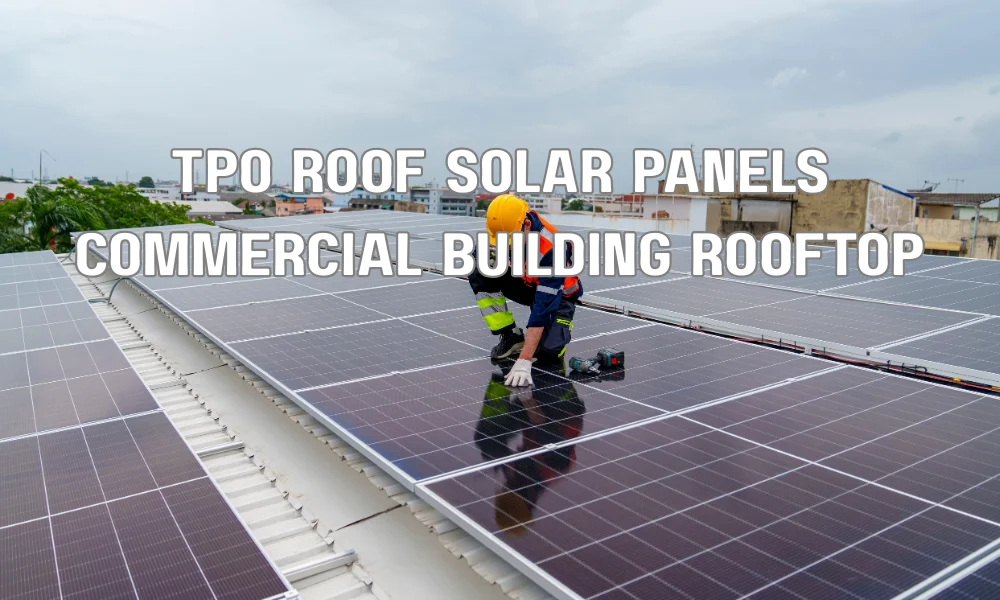
Thermoplastic Polyolefin (TPO) is a popular single-ply roofing membrane known for its durability, energy efficiency, and cost-effectiveness. Its reflective surface can help reduce cooling loads, making it an attractive base for solar installations. However, integrating solar PV systems with TPO requires specific considerations to maintain membrane integrity and warranty. Non-penetrating attachment methods are typically preferred to avoid puncturing the waterproof layer, which is crucial for the roof’s longevity.
What are the inherent advantages and challenges of TPO for solar?
TPO roofing offers several advantages for solar integration, primarily its inherent reflectivity which reduces heat gain and contributes to a cooler roof surface, enhancing PV panel efficiency. It is also lightweight and relatively cost-effective to install. However, challenges include finding secure, non-penetrating attachment methods that do not compromise the membrane’s warranty or performance, as traditional penetration methods can lead to leaks. Additionally, TPO’s thermoplastic nature means it can soften at very high temperatures, which must be considered when selecting mounting hardware that might conduct heat. The membrane’s surface must also be robust enough to withstand the stresses of maintenance traffic and panel cleaning.
How can TPO roofs be best prepared for future solar panel installation?
To best prepare TPO roofs for future solar panel installation, prioritize robust membrane attachment during initial installation, ensuring it can handle potential uplift forces. Specify thicker TPO membranes (60-80 mil) for enhanced puncture resistance and durability under future PV systems. Integrate pre-installed flashing details or “solar walks” made from reinforced TPO to create designated pathways for maintenance without damaging the general roof area. Crucially, coordinate with solar installers to pre-select non-penetrating racking systems that are compatible with TPO and preserve the roof warranty, such as ballasted systems or clamped systems that attach to structural elements beneath the membrane without direct punctures. Planning for proper drainage around future panel arrays is also essential to prevent water ponding.
Optimizing Metal Roofing for Solar Integration
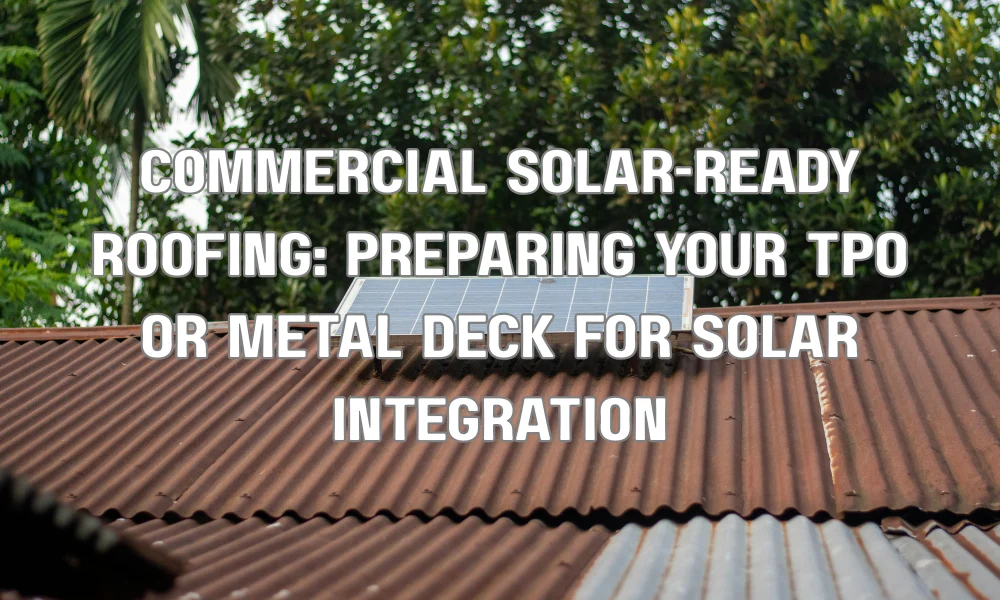
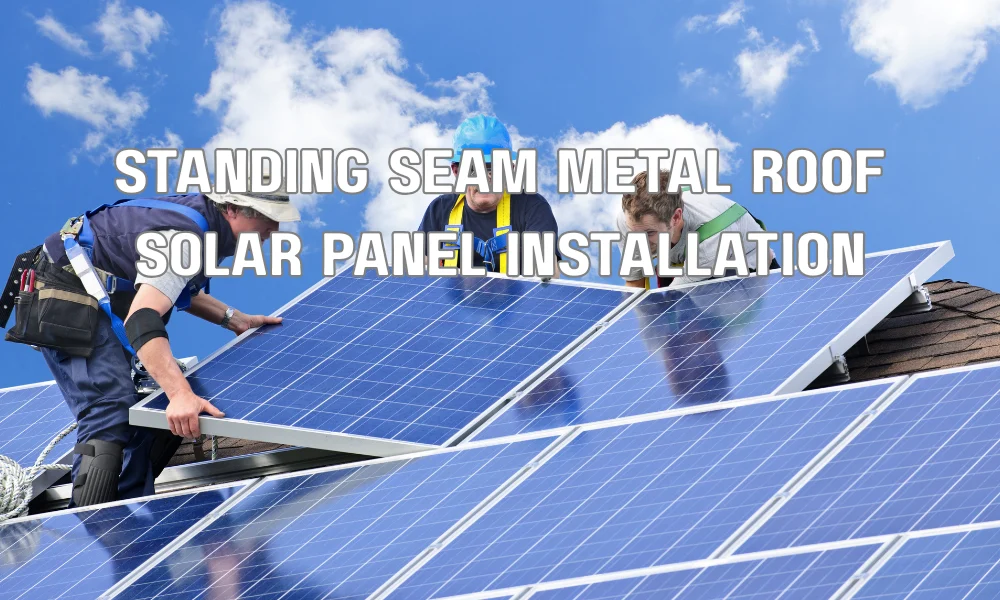
Metal roofing, particularly standing seam metal, is widely recognized as one of the most solar-friendly commercial roofing options available. Its inherent strength, longevity, and unique seam design make it exceptionally well-suited for direct attachment of solar PV systems without penetrating the roof surface. This non-penetrating approach preserves the roof’s watertight integrity, often extending its lifespan and maintaining its warranty, while providing a secure and stable platform for solar arrays.
Critical Fact 2: Metal roofs boast an average lifespan of 40-70 years, significantly exceeding that of other commercial roofing materials, making them an ideal long-term base for 25+ year solar PV systems.
What makes metal roofing an ideal candidate for solar PV systems?
Metal roofing is an ideal candidate for solar PV systems primarily due to its exceptional durability, longevity, and unique attachment capabilities. Standing seam metal roofs allow for non-penetrating clamps that securely fasten solar racking directly to the roof’s seams, completely avoiding punctures and preserving the roof’s watertight integrity and warranty. This method significantly reduces the risk of leaks and simplifies installation. Furthermore, metal’s high strength-to-weight ratio provides a robust platform for solar arrays, while its inherent fire resistance and low maintenance requirements further enhance its suitability for integrated solar solutions. The long lifespan of metal roofs also aligns perfectly with the multi-decade operational life of solar panels, creating a truly sustainable system.
What specific preparations are needed for metal roofs to go solar?
Specific preparations for metal roofs to go solar involve ensuring the roof system itself is in excellent condition and properly installed to withstand the full lifespan of the PV array. Verify the structural integrity of the underlying deck and purlins to support the additional dead and live loads of the solar system, including wind and snow loads. When installing new metal roofs, selecting standing seam profiles is advantageous for their direct clamp-on attachment compatibility. Consider pre-painting with reflective coatings to enhance energy efficiency and possibly boost panel performance. While attachment is typically non-penetrating, plan for conduit and electrical pathway integration, often requiring careful flashing around penetrations for wire runs to maintain waterproofing.
Key Structural and Technical Considerations
Beyond the roofing material itself, preparing for solar integration necessitates a thorough review of the building’s structural capacity and pre-planning for electrical infrastructure. These critical steps prevent costly structural reinforcements or difficult electrical retrofits down the line, ensuring a safe, compliant, and efficient solar installation. Neglecting these aspects can lead to significant project delays, budget overruns, and even structural compromise.
How do structural integrity and load-bearing capacity factor into solar readiness?
Structural integrity and load-bearing capacity are paramount for solar readiness because PV systems add significant weight to a roof, comprising panels, racking, and ballasts. An engineering assessment must confirm the existing roof and building structure can safely support these additional static and dynamic loads, including snow, wind uplift, and seismic forces, throughout the solar array’s operational life. Overlooking this can lead to structural failure, roof damage, or safety hazards. Proactive evaluation allows for any necessary reinforcements to be implemented during initial construction or re-roofing, minimizing disruption and ensuring code compliance.
What electrical and conduit pathways should be planned in advance?
Electrical and conduit pathways should be meticulously planned in advance to facilitate a clean, efficient, and cost-effective solar installation. This includes determining the optimal location for inverter pads, disconnect switches, and interconnection points to the building’s main electrical service. Pre-installing dedicated conduits, appropriately sized for future solar wiring, from the roof down to the electrical room or inverter location eliminates the need for external surface-mounted conduits or disruptive core drilling later. Planning for proper wire management, grounding, and lightning protection also mitigates safety risks and ensures compliance with electrical codes, streamlining the final solar hook-up process.
Are there specific permitting and code compliance aspects to consider early?
Yes, specific permitting and code compliance aspects must be considered early to ensure a smooth solar-ready roofing project. Local building codes, fire codes, and electrical codes often have specific requirements for rooftop access, set-backs from edges and firewalls, and wiring methods for solar installations. Early engagement with local authorities and a clear understanding of these regulations can prevent costly redesigns or delays. Ensuring that the roof design accounts for future PV system weights and wind loads in accordance with structural codes is also critical, as is planning for appropriate electrical clearances and pathways to meet NEC standards from the outset.
Comparative Analysis of Solar-Ready Roofing Options
This table outlines a comparative analysis of TPO and Metal roofing types, focusing on their readiness and suitability for future solar PV installations. Understanding these differences is crucial for making informed decisions during new construction or re-roofing projects.
| Feature | TPO Roofing (Solar-Ready) | Metal Roofing (Solar-Ready) |
|---|---|---|
| Initial Cost (Material & Install) | Moderate ($5-$10 per sq ft) | Higher ($10-$20+ per sq ft) |
| Lifespan (Roof) | 15-30 years | 40-70 years |
| Solar Attachment Method | Ballasted systems, adhered mounts, limited penetration if reinforced. | Non-penetrating clamps (standing seam), bolted systems (corrugated). |
| Puncture Resistance | Good (60-80 mil membrane recommended) | Excellent |
| Thermal Performance (Pre-Solar) | High reflectivity, reduces heat island effect. | Good, can be enhanced with reflective coatings. |
| Warranty Implications | Careful selection of non-penetrating system crucial to maintain. | Generally easier to maintain with non-penetrating clamps. |
| Structural Load Impact | Higher with ballasted systems; lower with mechanically attached. | Generally lower (clamped) to moderate (bolted). |
| Ideal for Future Growth | Good, if designed with modularity in mind. | Excellent, easy to add/remove panels with clamp systems. |
Long-Term Benefits and ROI of Proactive Solar Planning
Investing in a solar-ready commercial roof provides a myriad of long-term benefits that extend far beyond simply supporting solar panels. This proactive approach significantly enhances a property’s financial viability, environmental credentials, and operational resilience. By integrating solar readiness into the initial roofing project, businesses can unlock substantial economic advantages and contribute positively to their sustainability goals, securing a competitive edge in an increasingly green market.
What financial and environmental benefits does a solar-ready roof offer?
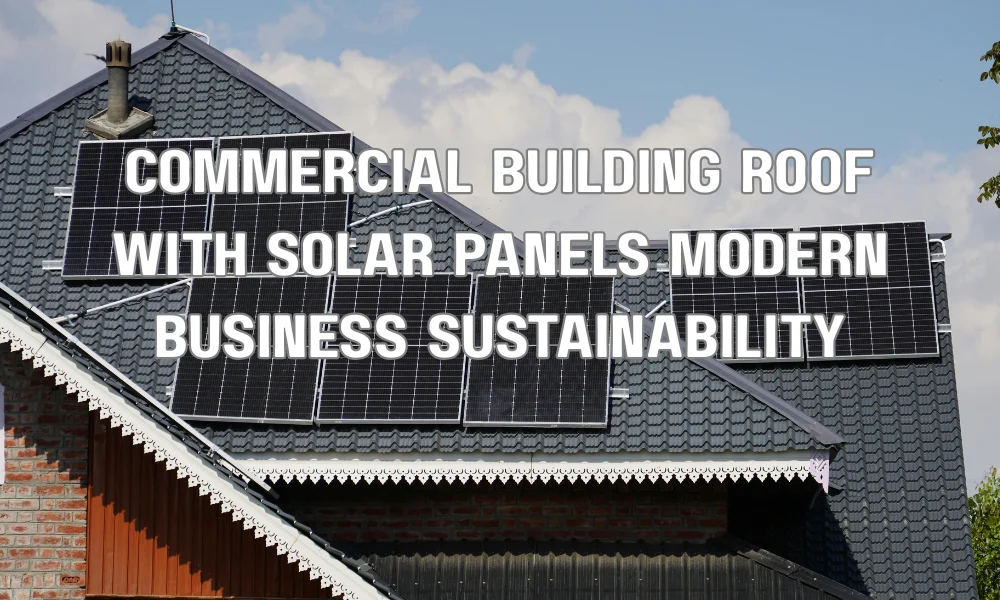
A solar-ready roof offers significant financial and environmental benefits, starting with reduced energy costs and protection against future electricity price volatility once PV systems are installed. It often qualifies for various tax credits, rebates, and incentives, improving the project’s return on investment (ROI). Environmentally, it drastically reduces a building’s carbon footprint, supports renewable energy adoption, and enhances corporate social responsibility. Furthermore, a solar-ready designation can increase property value, attract environmentally conscious tenants or buyers, and demonstrate a commitment to sustainability, providing a strong market differentiator and positive public image.
Critical Fact 3: Commercial solar installations can typically provide an ROI within 3-7 years, significantly bolstered by the reduced upfront costs associated with pre-planned solar-ready roofing infrastructure.
Frequently Asked Questions
Q1: Will installing solar panels void my commercial TPO roof warranty in Florida?
Solar installation voids a TPO roof warranty only if: (1) non-approved penetration hardware is used; (2) the penetrations are not flashed using the manufacturer’s approved method (typically TPO-welded covers); or (3) the solar contractor does not obtain the roofing manufacturer’s written approval for the installation. Using an approved penetration system, installed by a manufacturer-authorized roofing contractor, with a warranty continuity letter from the TPO manufacturer, preserves full warranty coverage throughout the solar system’s life.
Q2: How much additional structural load does a rooftop solar installation add to a Florida commercial building?
A typical rooftop PV installation adds 2.5–6 lbs/sq. ft. of dead load for penetrating-mount systems (2–4 lbs for panels, 0.5–2 lbs for racking). Ballasted systems add 3–8 lbs/sq. ft. in addition to panel weight. Florida commercial buildings designed to current codes generally have adequate capacity for penetrating-mount systems, but older structures (pre-1990s) may require a structural assessment to confirm. Always commission a structural engineering review before solar installation on any building where original structural drawings are unavailable.
Q3: What is the best commercial roofing system for solar integration in Florida?
Standing-seam metal roofing is the optimal substrate for commercial solar in Florida: clamp-based mounting requires no penetrations, full waterproofing integrity is maintained, and the system accommodates panel removal and reinstallation at the lowest cost. For membrane roofs, 60-mil TPO with penetrating anchor systems using manufacturer-approved hardware is the preferred option. Aged modified bitumen and EPDM systems should be assessed for remaining life before solar installation—if less than 15 years remain, reroofing before solar is the more economical path.
Q4: Do Florida commercial solar installations require a building permit?
Yes. Commercial rooftop solar installations in Florida require both an electrical permit (for the PV system wiring and interconnection) and a structural/building permit (for the roof attachment system) from the local authority having jurisdiction. In Miami-Dade, solar mounting systems must carry Miami-Dade NOA approval or receive a site-specific engineering letter. Permit requirements vary by municipality; Shieldline coordinates the roofing permit and inspection scope as part of the solar-ready roofing package.
Q5: How do I know if my Florida commercial roof has enough remaining life to install solar on it?
A professional roof assessment by a licensed contractor is the definitive answer. Key indicators of adequate remaining life include: less than 25% wet insulation (confirmed by IR scan); no systemic seam failures or membrane delamination; active manufacturer’s warranty with at least 15 years remaining; and no structural deck deterioration. If the assessment finds inadequate remaining life, a restoration coating or full replacement should be completed before solar installation to avoid the costly scenario of removing and reinstalling panels for a roof failure mid-solar-project.
Q6: What federal incentives are available for commercial solar installations in Florida in 2026?
The federal Investment Tax Credit (ITC) under the Inflation Reduction Act provides a 30% tax credit for commercial solar installations placed in service through 2032, with certain bonus credits available for projects meeting domestic content or energy community requirements. Additional bonus credits (10% adder) are available for projects in designated energy communities or using U.S.-manufactured components. These credits apply to the full installed cost of the solar system, including any necessary roof upgrades performed in conjunction with solar installation. Consult a tax professional for current eligibility requirements.
Q7: Can a commercial solar installation in Florida affect my roof’s wind uplift performance or code compliance?
Yes—improperly designed solar installations can create aerodynamic concerns that affect wind uplift performance. Florida’s high wind zones require solar racking systems to be engineered to resist wind uplift per ASCE 7-22 Chapter 29. Raised panel arrays can create high suction zones on the roof surface between the panels and the membrane, potentially lifting unsecured sections of membrane. Shieldline reviews all solar racking designs for roofing system compatibility and can provide supplemental membrane securement in high-uplift zones as part of a solar-ready roof specification.
