
Executive Summary
- Standing seam metal roofing offers superior longevity, often lasting 50+ years, significantly reducing replacement costs over a 30-year period compared to architectural shingles.
- While architectural shingles have a lower initial installation cost, their higher frequency of repair and replacement diminishes their long-term value significantly.
- Metal roofs provide enhanced energy efficiency through superior solar reflectivity, potentially lowering cooling costs and contributing to a more sustainable home.
- Durability against extreme weather, including high winds and hail, makes standing seam metal a more resilient choice, minimizing storm-related damage and insurance claims.
- The higher upfront investment in a standing seam metal roof often results in a better return on investment through increased property value and reduced lifetime expenses.
- Maintenance requirements are notably lower for metal roofs, typically involving less frequent inspections and repairs than granular-surfaced architectural shingles.
- Recyclability and reduced waste generation position standing seam metal as the more environmentally friendly option for eco-conscious homeowners.
Understanding the Roofing Landscape
What are Architectural Shingles?
Architectural shingles, also known as laminate or dimensional shingles, are a popular roofing material known for their aesthetic appeal and cost-effectiveness. They are composed of a heavy fiberglass mat base, coated with asphalt and ceramic granules, designed to emulate the look of natural wood or slate shakes. This multi-layered construction gives them a thicker, more dimensional appearance than traditional 3-tab shingles, enhancing a home’s curb appeal. Their widespread availability and relatively straightforward installation make them a go-to choice for many homeowners.
Critical Fact 1: Architectural shingles typically have an expected lifespan of 20-30 years, often requiring replacement sooner in harsh climates or with inadequate maintenance.
What is Standing Seam Metal Roofing?
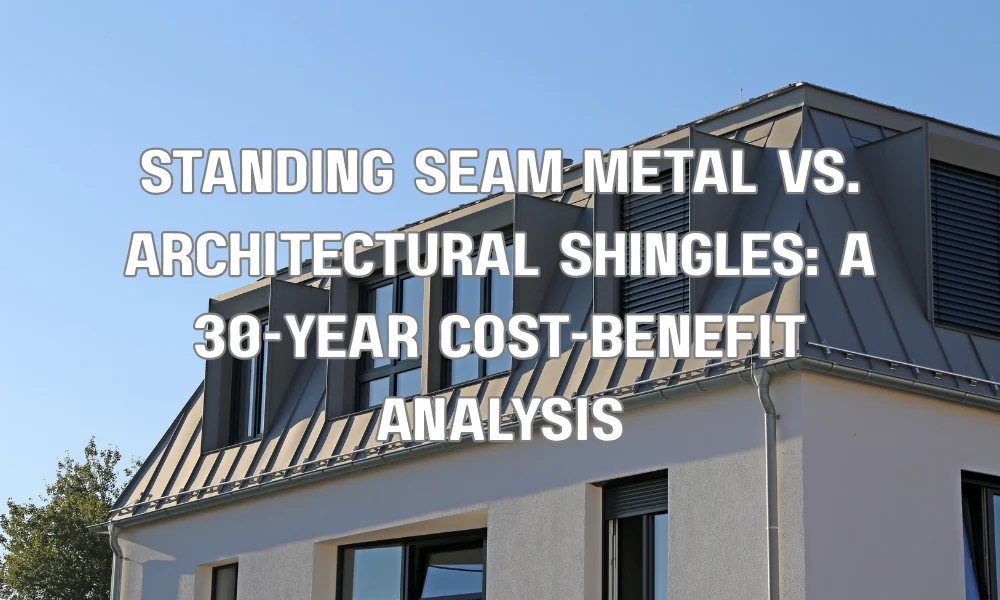
Standing seam metal roofing is characterized by its concealed fasteners and raised seams, which run vertically from the eave to the ridge. This design creates a series of panels joined together by interlocking seams that stand above the flat surface of the roof, effectively preventing water penetration. Crafted from durable metals like steel, aluminum, copper, or zinc, these roofs are factory-formed or site-rolled, providing a robust, long-lasting, and low-maintenance roofing solution. The sleek, modern aesthetic is highly sought after in contemporary architecture.
Initial Investment vs. Long-Term Value
How does the upfront cost compare for each roofing type?
The upfront cost for architectural shingles is significantly lower than that of standing seam metal roofing, making them an attractive option for budget-conscious homeowners. On average, architectural shingles cost between $4.00 and $7.00 per square foot installed, depending on factors like shingle quality, roof complexity, and labor rates. In contrast, standing seam metal roofing typically ranges from $10.00 to $18.00 per square foot installed, reflecting the higher material costs, specialized fabrication, and skilled labor required for its installation. This initial price disparity often influences homeowners’ immediate decisions, but it’s crucial to consider the total cost of ownership over several decades.
What are the long-term maintenance implications?
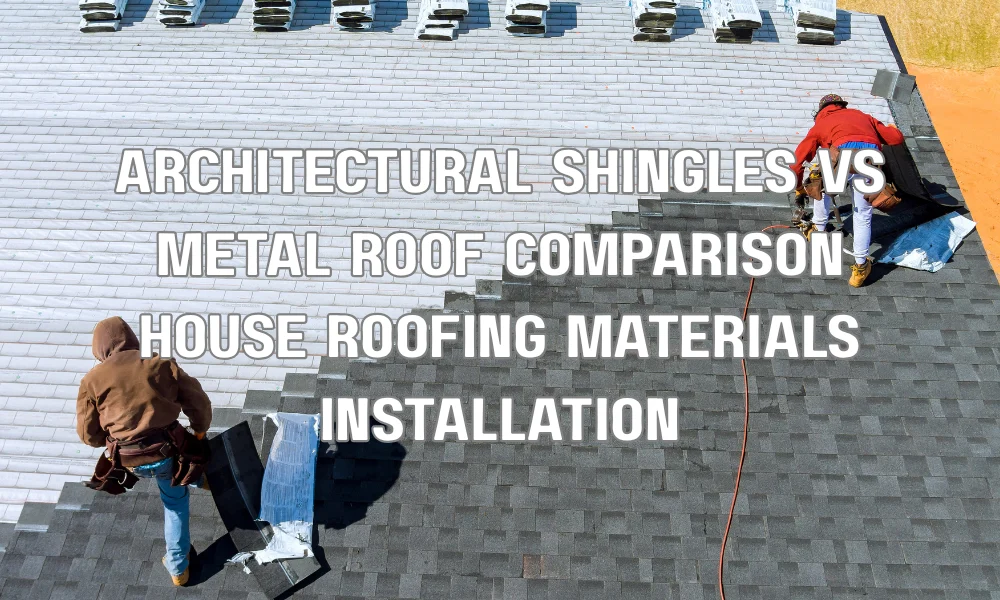
Long-term maintenance requirements differ substantially between these two roofing materials. Architectural shingles often require more frequent inspections and minor repairs, such as replacing cracked, curled, or missing shingles, especially after severe weather events. Algae and moss growth can also necessitate regular cleaning and treatment, which adds to ongoing costs and effort. Standing seam metal roofs, by contrast, are largely maintenance-free; their robust construction and interlocking panels resist common issues like leaks, cracking, and biological growth. Periodic inspections to check sealants and fasteners are generally sufficient, significantly reducing the financial and time burden over their extended lifespan.
Critical Fact 2: Over a 30-year period, a metal roof can save homeowners 3-4 times its initial cost in avoided repairs, replacements, and potential energy savings compared to asphalt shingles.
Performance, Durability, and Environmental Impact
How do these materials perform in extreme weather conditions?
Standing seam metal roofs demonstrate exceptional performance in extreme weather conditions, far surpassing architectural shingles. They are highly resistant to high winds, often rated to withstand gusts up to 140 mph or more, thanks to their interlocking panels and concealed fastening systems. Their hard, non-porous surface is impervious to hail damage and heavy snow loads, allowing snow to shed easily. Architectural shingles, while designed to be durable, are more susceptible to wind uplift, granule loss from hail, and cracking or warping due to thermal expansion and contraction, which can compromise their integrity over time.
What is the expected lifespan and warranty for each?
The disparity in expected lifespan and warranty coverage is a primary differentiator. Architectural shingles typically come with warranties ranging from 25 to 50 years, but their realistic lifespan is often 20 to 30 years before significant deterioration or replacement becomes necessary. Standing seam metal roofs, however, boast a much longer service life, frequently lasting 50 to 70 years or even longer, often outliving the home’s owner. Manufacturers typically back these roofs with robust warranties, often extending 30 to 50 years for performance and finishes, reflecting their inherent durability and longevity.
Which roofing option offers better energy efficiency and sustainability?
Standing seam metal roofing offers superior energy efficiency and sustainability compared to architectural shingles. Metal roofs, particularly those with lighter colors or specialized coatings, have high solar reflectivity, meaning they reflect a significant portion of the sun’s radiant heat rather than absorbing it. This can lead to cooler indoor temperatures and reduced air conditioning demands, potentially saving homeowners 10-25% on cooling costs. Furthermore, metal roofing is often made from recycled content and is 100% recyclable at the end of its long life, significantly minimizing landfill waste. Architectural shingles, conversely, are petroleum-based, have lower reflectivity, and are not easily recyclable, contributing to a larger environmental footprint.
| Feature | Architectural Shingles | Standing Seam Metal Roofing |
|---|---|---|
| Initial Cost (per sq ft installed) | $4.00 – $7.00 | $10.00 – $18.00 |
| Typical Lifespan | 20 – 30 years | 50 – 70+ years |
| Manufacturer Warranty | 25 – 50 years | 30 – 50 years (performance/finish) |
| Annual Maintenance (Estimated) | Moderate ($50 – $200+) | Low ($0 – $50) |
| Energy Savings Potential | Low | Moderate to High (10-25% cooling) |
| Recyclability | Poor (landfill) | Excellent (100% recyclable) |
| Wind Resistance Rating | Up to 110 mph | Up to 140+ mph |
Resale Value and Return on Investment
How does each roofing type impact property resale value?
Both roofing types can positively impact property resale value, but standing seam metal typically offers a more substantial and sustained boost. A new architectural shingle roof is generally considered a necessary home upgrade that maintains market value, offering a decent return on investment (ROI) by avoiding a deduction for an old roof. However, a standing seam metal roof is often viewed as a premium upgrade, a significant selling point that can increase property value by an average of 1-6% and command a higher resale price. Its long lifespan and low maintenance appeal strongly to prospective buyers, especially those looking for long-term savings and durability.
What is the 30-year cost-benefit analysis for homeowners?
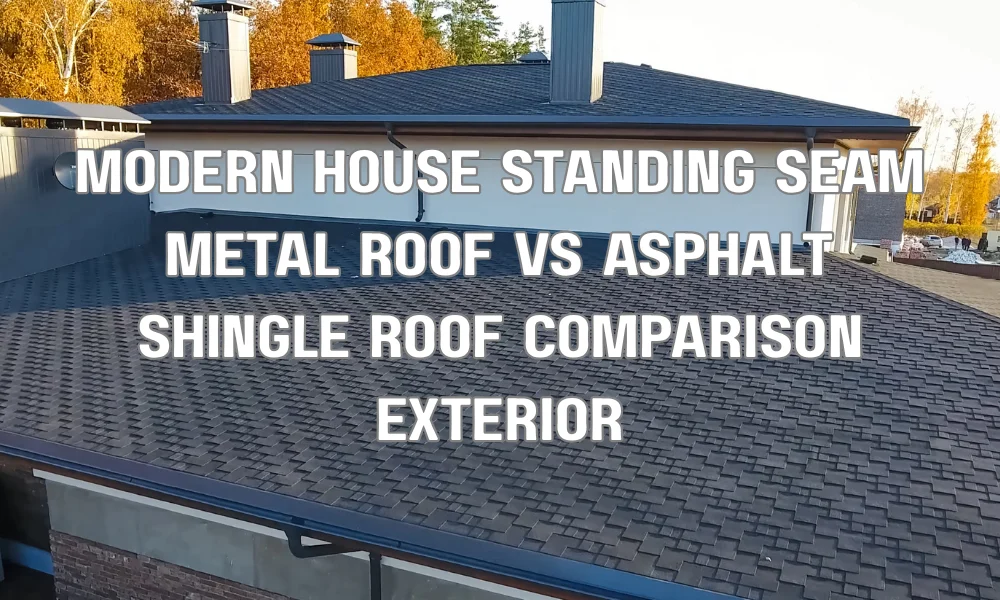
A 30-year cost-benefit analysis strongly favors standing seam metal roofing despite its higher initial investment. Over three decades, a homeowner with architectural shingles might expect to replace their roof at least once, incurring another full installation cost, plus ongoing maintenance and potential repair expenses for storm damage. This could accumulate to $15,000 – $30,000+ in total costs for a typical 2,000 sq ft roof. In contrast, a standing seam metal roof installed today would likely still be performing optimally at the 30-year mark, with only minimal maintenance costs. The higher initial outlay of $20,000 – $36,000 would be a one-time expense, effectively saving the cost of a full replacement. Additionally, energy savings from a metal roof can further offset its initial price, leading to substantial long-term financial benefits and a superior overall return on investment.
Critical Fact 3: The long-term ROI for a standing seam metal roof can reach up to 85.9%, making it one of the most value-adding home improvements compared to the 60-70% ROI for architectural shingles.
Frequently Asked Questions
Is a metal roof much louder than an architectural shingle roof during rain?
No, a properly installed standing seam metal roof, especially with adequate decking and insulation, is not significantly louder than an architectural shingle roof. The noise perception is largely a myth often associated with uninsulated metal sheds.
Can I install solar panels on both types of roofs?
Yes, solar panels can be installed on both architectural shingle and standing seam metal roofs. However, metal roofs often provide a more secure and less invasive mounting solution, sometimes without needing to penetrate the roof surface.
Do metal roofs attract lightning more than other roofs?
No, metal roofs do not attract lightning. Lightning is attracted to the highest point in an area, regardless of the material. If struck, a metal roof can even help dissipate the charge safely throughout the structure.
What colors are available for standing seam metal roofs?
Standing seam metal roofs come in a wide array of colors, from traditional grays and browns to vibrant blues and reds. Many finishes also include cool roof technology to enhance energy efficiency.
How do the warranties differ in terms of transferability?
Warranties for both types of roofs may be transferable, but metal roof warranties often offer more comprehensive transfer options, which can be a significant benefit when selling your home. Always check specific warranty details.
Are architectural shingles environmentally friendly?
Architectural shingles are generally not considered environmentally friendly due to their petroleum-based composition and non-recyclable nature, contributing significantly to landfill waste at the end of their life.
Which roof type adds more curb appeal?
While both can add curb appeal, standing seam metal roofing is often perceived as a more modern, premium aesthetic, elevating the overall look of a home and increasing its market value.
What is the typical timeframe for installing each roof type?
The installation timeframe is comparable for both, typically ranging from a few days to a week for an average-sized home. However, metal roof installation requires specialized skills and precision.
