
Executive Summary
- Ponding water on flat roofs poses significant risks, including structural damage, accelerated material degradation, and potential leaks if not addressed promptly.
- Building codes typically define ponding as water remaining on a roof for more than 48 hours, highlighting the urgency for proper drainage.
- Understanding the root causes, such as structural deflection, clogged drains, or improper design, is crucial for implementing effective, lasting solutions.
- Implementing permanent drainage fixes, like tapered insulation, crickets, and well-maintained internal drains or scuppers, is vital for roof longevity.
- Proactive design and material selection, including durable membranes and adequate slope, can prevent ponding from becoming an issue in new constructions.
- Regular, thorough maintenance and inspections are essential to identify and rectify minor drainage problems before they escalate into major costly repairs.
Understanding Ponding Water on Flat Roofs
What is ponding water and why is it a concern?
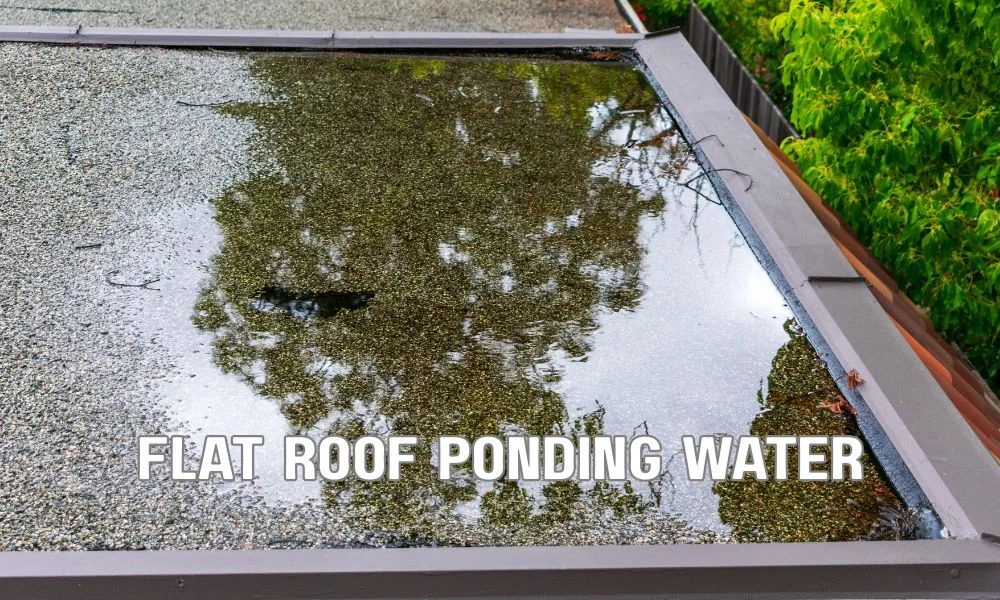
Ponding water refers to any standing water that remains on a low-slope or flat roof surface for more than 48 hours after rainfall. This seemingly innocuous condition is a major concern for building owners and facility managers because it significantly compromises roof integrity and longevity. The continuous presence of water accelerates the aging process of roofing materials, leads to potential structural stress, and increases the risk of leaks that can damage the building’s interior.
Critical Fact 1: The National Roofing Contractors Association (NRCA) defines ponding as water that remains on the roof more than 48 hours after a rain event, emphasizing that any such condition must be rectified.
What are the primary causes of flat roof ponding?
Flat roof ponding primarily stems from a combination of design flaws, structural issues, and inadequate maintenance. Common causes include insufficient roof slope, where the roof deck itself does not have enough pitch to direct water towards drainage points, leading to accumulation in depressions. Structural deflection, often due to overloaded joists or settled supports, can create low spots where water naturally gathers. Furthermore, clogged internal drains, obstructed scuppers, or damaged gutters prevent water from exiting the roof efficiently, exacerbating ponding issues, as do improperly installed or settled insulation layers that create uneven surfaces.
Code Compliance and Structural Implications
What do building codes say about ponding water?
Building codes, such as those established by the International Building Code (IBC) and local amendments, indirectly address ponding water by mandating proper roof drainage and structural integrity. While codes don’t always explicitly prohibit ponding, they require roofs to be designed with a minimum slope—typically 1/4 inch per foot (2%)—to ensure positive drainage and prevent water accumulation. Failure to meet these slope requirements or adequately maintain drainage systems can lead to code violations, as ponding directly undermines the performance standards set for roof systems. Rectifying ponding issues is often a prerequisite for code compliance during inspections or repairs.
How does ponding water impact roof structure and materials?
Ponding water exerts continuous hydrostatic pressure on the roofing membrane and the underlying roof deck, leading to a host of detrimental effects. The constant weight of the water can stress structural components, potentially causing further deflection and creating larger ponding areas. For materials, sustained water exposure accelerates degradation; UV stabilizers in membranes break down faster under water, leading to embrittlement, cracking, and blistering. This saturation can also compromise insulation, reducing its R-value and inviting mold or mildew growth. Over time, these combined stresses significantly shorten the roof’s lifespan and make it more susceptible to breaches.
Critical Fact 2: Each inch of ponding water on a flat roof adds approximately 5.2 pounds per square foot (PSF) of load to the structure, significantly increasing stress on beams, joists, and the roof deck.
Permanent Solutions for Drainage and Prevention
What are effective strategies for resolving existing ponding issues?
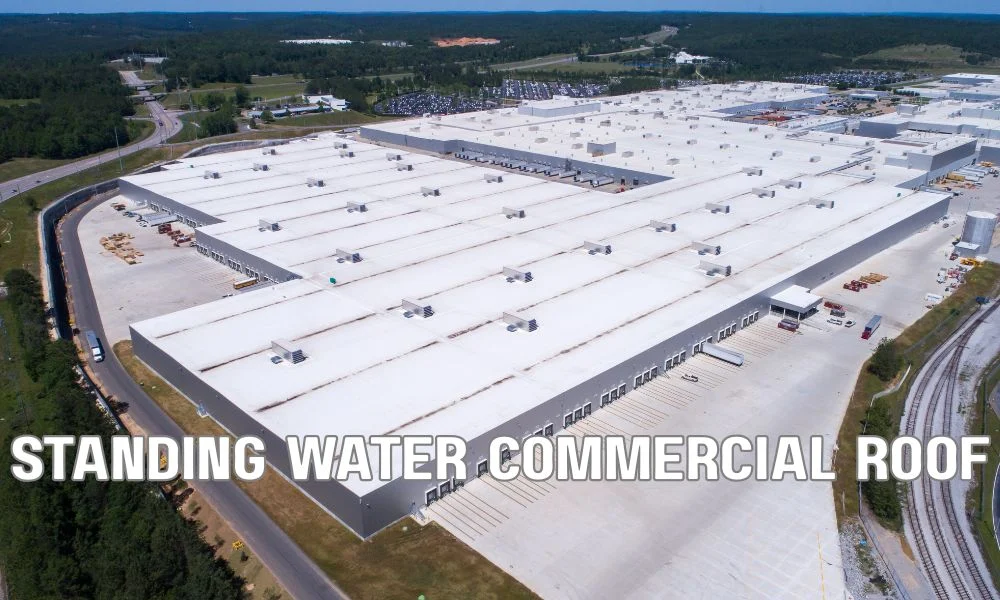
Resolving existing ponding issues requires a multi-faceted approach, often beginning with a detailed roof inspection and commercial roof leak detection and repair to identify the exact causes and pinpoint any moisture that has already breached the membrane. Effective strategies include installing tapered insulation or a “cricket” system to create positive slope towards existing drains or scuppers. Adding new drains or relocating existing ones to low points can also significantly improve water removal. In cases of structural deflection, reinforcing the roof deck or adding new supports might be necessary before applying new roofing materials. Re-sloping the roof deck with lightweight concrete or a self-leveling overlay can also be a viable, albeit more involved, solution.
Which drainage systems are best for long-term flat roof performance?
For long-term flat roof performance, a combination of well-designed and maintained drainage systems is crucial. Tapered insulation systems are highly effective, providing built-in slope directly beneath the roofing membrane, directing water flow. Internal drains, strategically placed at low points and equipped with overflow protection, are excellent for large commercial roofs. Scuppers and leader heads are ideal for perimeter drainage, particularly when combined with proper gutter systems. Siphon drainage systems, which create a full-bore flow using negative pressure, offer high-efficiency water removal for large areas. Regular cleaning and inspection of all components are paramount to ensure their continued functionality.
How can regular maintenance prevent future ponding?
Regular maintenance is the cornerstone of preventing future ponding and extending roof lifespan. This includes routine inspections, typically bi-annually and after major storms, to check for debris accumulation in drains, scuppers, and gutters. Clearing leaves, twigs, and other blockages ensures unimpeded water flow. Inspecting the roofing membrane for signs of wear, cracks, or blistering and scheduling prompt commercial roof repair prevents minor issues from escalating. Ensuring sealants around penetrations remain intact and addressing any structural movement early can also avert future ponding. A proactive maintenance schedule drastically reduces the likelihood of water accumulation.
Choosing the Right Materials and Design for Flat Roofs
What design considerations minimize ponding from the outset?
Minimizing ponding from the outset primarily involves integrating positive drainage into the roof’s initial design. This means designing the roof with a minimum slope of 1/4 inch per foot (2%) across the entire surface, ensuring water consistently moves towards drainage points. Strategically placing drains at the lowest elevations and ensuring an adequate number of drains for the roof area and anticipated rainfall are critical. Incorporating sumps around drains to create localized low points and specifying tapered insulation systems as part of the roofing assembly are essential proactive measures that eliminate potential for water accumulation. Proper structural engineering to prevent deck deflection is also fundamental.
Which roofing materials offer the best resistance to ponding?
While no roofing material is entirely immune to the effects of ponding, some perform significantly better under constant water exposure. Single-ply membranes like TPO (Thermoplastic Polyolefin) and EPDM (Ethylene Propylene Diene Monomer) are highly resistant due to their monolithic, heat-welded or adhesive seams and inherent flexibility. PVC (Polyvinyl Chloride) is particularly robust against standing water and chemicals. Modified bitumen membranes, especially those with granulated surfaces, offer good durability, but their seams can be more vulnerable. Built-up roofs (BUR) with aggregate surfacing can also perform well if correctly installed and maintained, but membrane systems generally provide superior ponding resistance.
| Material Type | Ponding Resistance | Seam Integrity | Flexibility | Typical Lifespan (Years) |
|---|---|---|---|---|
| TPO (Thermoplastic Polyolefin) | Excellent | Heat-welded, very strong | High | 20-30+ |
| EPDM (Ethylene Propylene Diene Monomer) | Excellent | Adhesive/tape, strong | Very High | 20-30+ |
| PVC (Polyvinyl Chloride) | Excellent (Chemical Res.) | Heat-welded, very strong | High | 20-30+ |
| Modified Bitumen (Mod-Bit) | Good | Heat-applied/cold-applied, good | Medium | 15-25 |
| Built-Up Roof (BUR) | Fair to Good | Layered, good if sealed | Low | 15-30 |
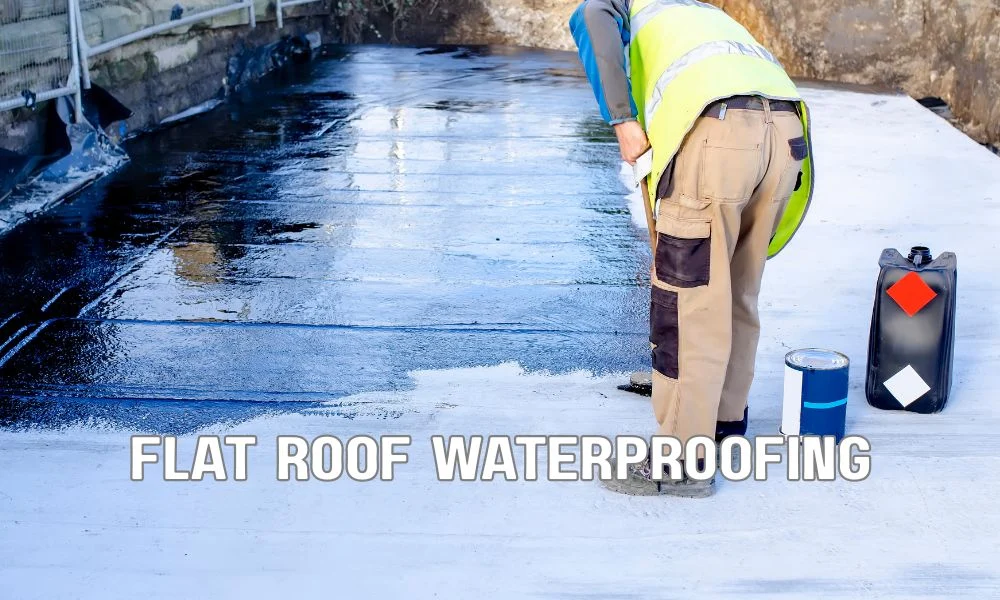
Critical Fact 3: Proactive roof design incorporating a minimum 1/4 inch per foot slope and strategically placed drains can mitigate over 90% of future ponding water issues on flat roofs.
Frequently Asked Questions
How quickly should water drain from a flat roof?
Water should ideally drain from a flat roof within 24-48 hours after a rainfall event. Any standing water remaining beyond this period is considered ponding and indicates a drainage issue that requires attention.
Can ponding water cause a flat roof to collapse?
While rare, severe and prolonged ponding can significantly increase the load on a roof, potentially leading to structural failure or collapse, especially if the roof structure is already weakened or not designed for such loads.
Is tapered insulation the only way to solve ponding?
No, tapered insulation is a common and effective solution, but not the only one. Other methods include adding crickets, installing new drains, adjusting existing drain locations, or re-sloping the deck with lightweight concrete.
What’s the difference between a cricket and a sump?
A cricket is a small, sloped structure designed to divert water around roof obstructions like HVAC units. A sump is a recessed area built around a drain to create a localized low point, ensuring water flows directly into the drain.
Does ponding water void roof warranties?
Many roof material manufacturers’ warranties explicitly state that ponding water exceeding 48 hours will void the warranty, as it accelerates material degradation and is indicative of improper installation or maintenance.
How often should flat roof drains be cleaned?
Flat roof drains should be inspected and cleaned at least twice a year – typically in spring and fall – and after any severe weather events to prevent debris buildup and ensure optimal drainage.
Can I fix ponding issues myself?
Minor ponding issues, like clearing clogged drains, might be DIY. However, significant ponding due to structural issues, insufficient slope, or complex drainage system failures should always be assessed through professional commercial roof inspections and fixed by a qualified roofing contractor.
What are the signs of structural damage from ponding water?
Signs include visible deflection or sagging of the roof deck, cracks in interior ceilings, water stains on walls or ceilings, and the persistent recurrence of ponding in the same areas despite minor interventions.
