
Executive Summary
- Inspect TPO seam welds for consistent, smooth adhesion and uniform width, as inconsistencies often indicate weak points susceptible to water infiltration.
- Utilize a blunt probing tool carefully along all seams and flashings to detect unadhered areas, which are critical indicators of potential installation defects.
- Examine flashing details meticulously for proper termination, tight seals around penetrations, and absence of “fishmouths” or gaps where water can enter.
- Conduct thorough quality assurance checks during and after installation, verifying substrate preparation, material integrity, and adherence to manufacturer specifications.
- Recognize that water staining, blistering, or delamination are clear visual cues of a failing TPO system, necessitating immediate professional assessment and repair.
- Prioritize installer experience and certification, as proper training significantly reduces the likelihood of critical installation errors that compromise roof longevity.
When evaluating the longevity and performance of a TPO (Thermoplastic Polyolefin) roofing system, the quality of its installation is paramount. A TPO roof is only as good as its weakest weld, its most vulnerable flashing, or its least adherent seam. Identifying poor workmanship early can save property owners from significant expenses related to leaks, premature material failure, and extensive repairs down the line. Understanding the key indicators of a substandard TPO installation empowers stakeholders to ensure their investment provides the intended protection and durability.
Critical Fact 1: Up to 90% of all commercial roof failures can be attributed to faulty installation practices rather than material defects, making vigilant inspection of TPO welding and flashing techniques essential.
Understanding TPO Seam Welds
What are the characteristics of a properly welded TPO seam?
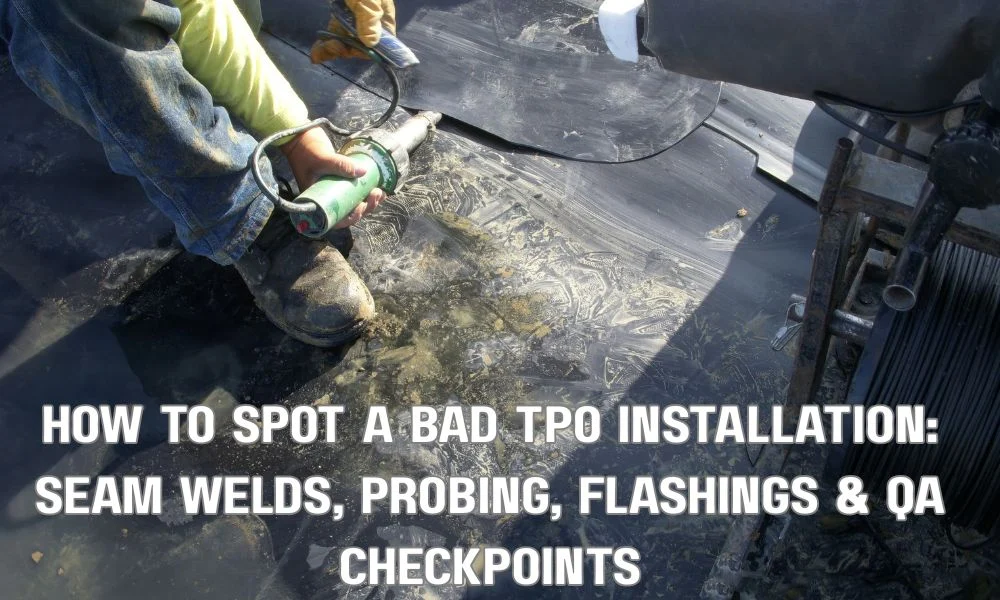
A properly welded TPO seam is characterized by a consistent, uniform appearance, strong adhesion, and absence of visible defects. It should look smooth, with a consistent bead of extruded material that indicates a complete thermal fusion between the two TPO sheets. The weld should be free of burn marks, wrinkles, or channels, showing uniform width and thickness along its entire length, demonstrating adequate heat, speed, and pressure were applied during the welding process.
How can I identify poorly welded TPO seams?
Poorly welded TPO seams can be identified by several tell-tale signs, including inconsistent widths, visible gaps or delamination, and excessive scorching or charring. Look for seams that appear wavy, brittle, or have areas where the top ply can be easily lifted with a gentle tug or probe. Overheated welds may appear shiny or discolored, indicating the material has been compromised, while cold welds will show an incomplete bond, often looking dull and easily separable. These imperfections are direct pathways for water intrusion and compromise the roof’s integrity.

The Art of Probing and Inspection
Why is probing critical for TPO roof inspection?
Probing is critical for TPO roof inspection because it allows for the tactile identification of areas where seams and flashings have not been adequately welded or adhered, which are not always visible to the naked eye. This process helps uncover hidden defects like cold welds, inadequate fusion, or areas where debris might have prevented proper bonding. Systematically probing every lineal foot of seam and flashing is the most effective way to ensure the entire roof membrane is watertight and properly sealed.
What tools and techniques are used for effective TPO probing?
Effective TPO probing requires a specialized blunt-tipped seam probe, usually a steel tool with a rounded or hooked end, designed to test the weld without puncturing the membrane. The technique involves applying gentle, firm pressure along the entire length of every seam, around all penetrations, and along the edges of all flashing details. A properly welded seam will resist the probe, while a weak or unadhered section will allow the probe to slide underneath the top ply, indicating a critical defect that requires immediate attention and repair.
Critical Fact 2: A single unsealed inch in a TPO seam can allow thousands of gallons of water into a building over a year, highlighting the profound importance of thorough probing.
Flashing Failures: Common Weak Points
What defines proper TPO flashing installation?
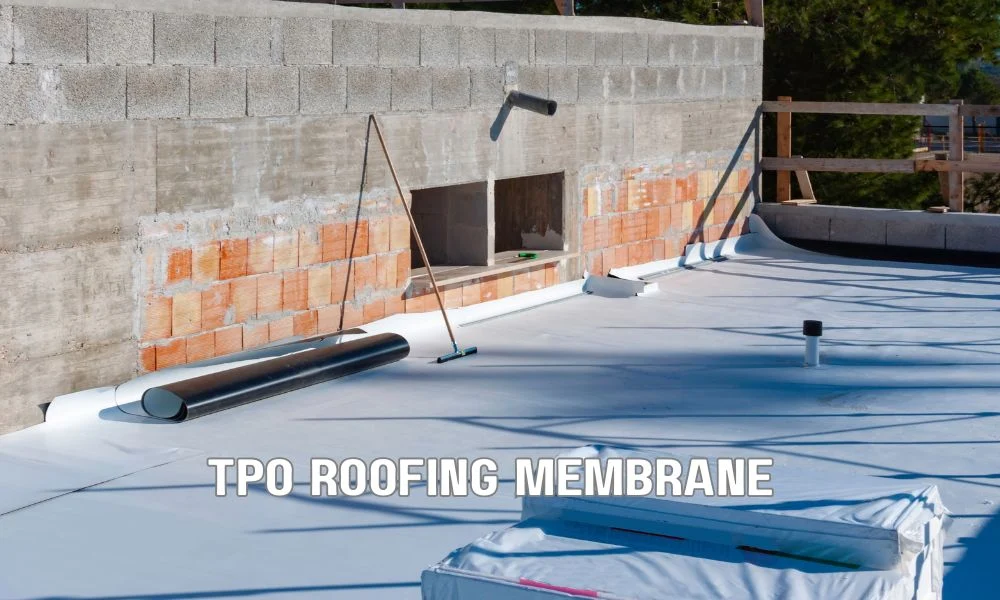
Proper TPO flashing installation is defined by clean, tight, wrinkle-free application that creates a continuous, watertight seal around all penetrations, edges, and transitions. Flashing should extend sufficiently high, typically 8 to 12 inches above the finished roof surface, and be mechanically fastened at the top, typically with termination bar or appropriate sealant. There should be no “fishmouths” (openings at the ends of seam overlaps), gaps, or excessive wrinkles, ensuring water is directed away from vulnerable points.
What signs indicate faulty TPO flashing?
Faulty TPO flashing is indicated by loose edges, visible gaps, inadequate height, and the presence of wrinkles, creases, or “fishmouths” that prevent a watertight seal. Look for areas where the flashing material is pulling away from the substrate, showing signs of poor adhesion or insufficient mechanical fastening. Water streaks originating from flashing points, dark discoloration, or vegetation growth can also signal chronic leaks. Poorly wrapped corners, uncured caulk, or inconsistent termination points are also red flags indicating substandard workmanship.
Comprehensive QA Checkpoints for TPO Roofs
What are essential pre-installation quality assurance steps?
Essential pre-installation quality assurance steps for TPO roofs include a thorough inspection of the roof deck to ensure it is clean, dry, smooth, and structurally sound, free from sharp edges or debris. Materials should be inspected upon arrival for any manufacturing defects, damage during shipping, or incorrect specifications. Furthermore, ambient weather conditions must be suitable for TPO installation, typically within specific temperature and humidity ranges to ensure proper adhesion and welding efficacy. Confirming installer certifications and reviewing the project plan are also crucial.
What post-installation checks ensure long-term TPO performance?
Post-installation checks to ensure long-term TPO performance involve a comprehensive walkthrough to inspect every seam, flashing, and penetration for integrity. This includes a systematic probing of all welds, verification of drain and scupper functionality, and examination of all termination points for proper securement and sealing. A final water test, if feasible, can confirm the watertightness of critical areas. Additionally, reviewing photo documentation of the installation process and ensuring all warranty documentation is in order provides added assurance. Any observed deficiencies should be documented and rectified immediately to prevent future issues.
| Characteristic | High-Quality TPO Installation | Poor-Quality TPO Installation |
|---|---|---|
| Seam Welds | Smooth, consistent, uniform width (1.5″ minimum), no burn marks, strong peel test. | Wavy, inconsistent width, gaps, scorch marks, easily probed open, brittle appearance. |
| Flashing Adhesion | Tight, wrinkle-free, fully adhered, no “fishmouths,” consistent height. | Loose, wrinkled, lifting edges, visible gaps, insufficient height, unsealed corners. |
| Penetration Seals | Neat, fully encapsulated, properly booted, secure, no exposed mastic/sealant. | Gaps around pipes/curbs, cracking sealant, loose boots, visible water entry points. |
| Membrane Condition | Flat, taut, no wrinkles or delamination, clean surface, properly fastened. | Blistering, delamination, wrinkles, visible punctures, debris under membrane. |
| Drainage | Clear, functional drains/scuppers, no standing water (ponding) after rainfall. | Clogged drains, significant standing water, debris accumulation around drains. |
Critical Fact 3: Proactive, systematic inspection of TPO roof installations, ideally by an independent third-party, can extend the roof’s lifespan by up to 30-50% and prevent costly failures.
Frequently Asked Questions
What is TPO roofing and why is its installation quality so important?
TPO (Thermoplastic Polyolefin) roofing is a single-ply membrane widely used for commercial flat and low-slope roofs. Its installation quality is paramount because the entire system’s watertight integrity relies on perfect seam welds and flashing, making it highly susceptible to leaks if not executed flawlessly. Poor installation can negate material benefits and lead to premature failure.
How often should a TPO roof be inspected after installation?
A TPO roof should ideally be inspected immediately after installation by a third party, and then at least once annually, typically in spring or fall. After severe weather events, an additional inspection is highly recommended to check for storm damage. Regular inspections help identify and address minor issues before they escalate.
Can I perform a TPO seam probe inspection myself?
While property owners can perform superficial visual checks, a detailed seam probe inspection is best left to experienced roofing professionals. They possess the correct tools, knowledge of proper technique, and expertise to distinguish between minor cosmetic flaws and critical installation defects without damaging the membrane.
What causes “fishmouths” in TPO flashing and why are they a problem?
“Fishmouths” are open, unsealed gaps that appear at the edges of overlapping flashing material. They are usually caused by improper cutting, insufficient heating during welding, or inadequate pressure. They are a critical problem because they create direct pathways for water to penetrate beneath the membrane, leading to leaks and system failure.
What should I do if I find evidence of a bad TPO installation?
If you find evidence of a bad TPO installation, document all issues with photos and detailed descriptions. Immediately contact your roofing contractor to report the findings and demand rectification under warranty. If the contractor is unresponsive, consider engaging an independent roofing consultant for an expert assessment.
How do I differentiate between material defect and installation error?
Differentiating between a material defect and an installation error often requires expert assessment. Material defects typically manifest as widespread, consistent issues across the membrane not confined to specific installation points (e.g., widespread blistering). Installation errors are usually localized to seams, flashings, or penetrations, showing signs of poor workmanship.
What is the typical lifespan of a well-installed TPO roof?
A well-installed TPO roof, with proper maintenance, can typically last 20 to 30 years or even longer. High-quality materials and professional installation are key determinants of its lifespan, whereas poor workmanship can drastically reduce it to just a few years.
Are there any preventative measures to ensure TPO installation quality?
Yes, preventative measures include hiring a certified and reputable contractor with proven TPO experience, requesting references, and ensuring they follow manufacturer specifications strictly. Independent third-party inspections during and after installation, along with clear contractual agreements, can also significantly boost installation quality.
