
Executive Summary
- A wind mitigation inspection is a specialized assessment of a home’s ability to withstand high winds, crucial for Florida property owners.
- These inspections often lead to substantial discounts on homeowner’s insurance premiums, potentially saving thousands annually.
- Key areas assessed include roof construction, opening protection (windows/doors), and structural attachments that fortify the home.
- By proving enhanced wind resistance, homeowners reduce their insurer’s risk, directly translating into lower insurance costs.
- The OIR-B1-1802 form documents these features, ensuring insurers accurately apply eligible premium reductions.
- Proactive wind mitigation not only saves money but also significantly enhances a home’s resilience against hurricanes and tropical storms.
- Understanding and implementing mitigation strategies is essential for protecting both property and financial stability in Florida.
Understanding Wind Mitigation for Florida Homeowners
What exactly is a wind mitigation inspection?
A wind mitigation inspection is a specialized assessment of a residential property’s ability to resist damage from high winds, such as those experienced during hurricanes and tropical storms. Conducted by a qualified inspector, this evaluation focuses on specific construction features designed to minimize wind-related vulnerabilities. The primary goal is to identify and document these features, which can then be submitted to insurance providers to qualify for significant premium discounts. This proactive measure not only protects your home but also your wallet in Florida’s challenging insurance market.
Critical Fact 1: A single wind mitigation inspection can reduce homeowner’s insurance premiums by up to 80% on the wind portion of your policy, directly translating to hundreds or even thousands of dollars in annual savings.
Why are wind mitigation inspections particularly important for Florida residents?
For Florida residents, wind mitigation inspections are critically important due to the state’s geographic vulnerability to hurricanes and severe weather events. The high frequency of these storms means that homes are constantly at risk of wind damage, leading to higher insurance premiums compared to many other states. Insurance companies offer substantial discounts to homeowners who can demonstrate their property has specific wind-resistant features, as these features reduce the likelihood and severity of claims. This incentivizes homeowners to fortify their homes, creating a safer and more affordable insurance environment for everyone.
The Financial Impact: How Savings Accumulate
How do wind mitigation features reduce insurance premiums?
Wind mitigation features reduce insurance premiums because they demonstrably lower the risk of property damage during high wind events. When a home is better equipped to withstand hurricanes—for instance, with reinforced roofs, impact-resistant windows, or strong roof-to-wall connections—the likelihood of an insurance claim for wind damage decreases significantly. Insurers view these mitigated homes as lower risk investments, and they pass those savings onto homeowners in the form of substantial discounts on the windstorm portion of their policy. This risk-reduction approach directly translates into tangible financial benefits for the homeowner, often offsetting the cost of the inspection itself within the first year.
What specific home features qualify for premium discounts?
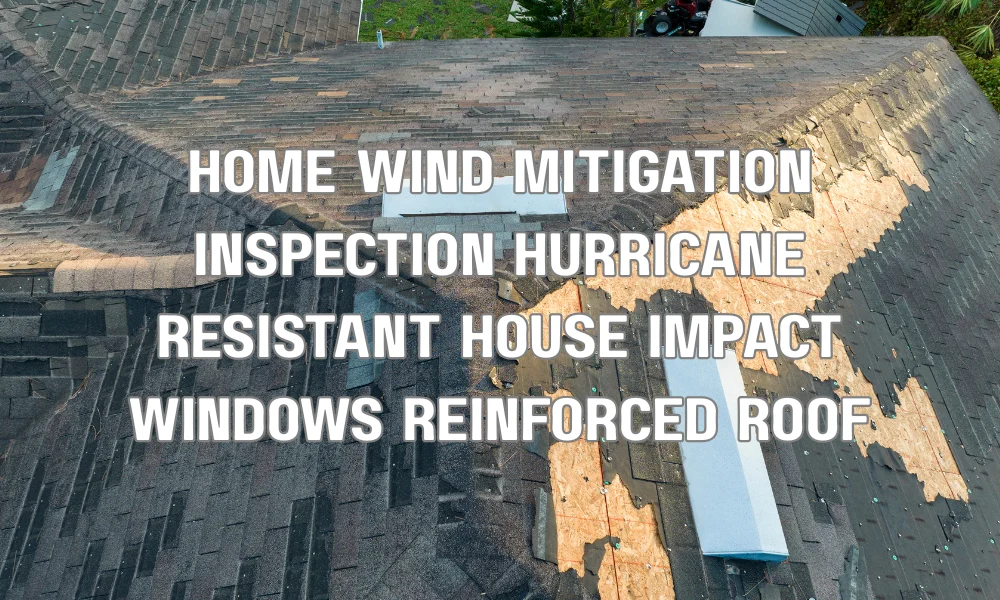
Several specific home features qualify for premium discounts under Florida’s wind mitigation program, all documented on the OIR-B1-1802 form. These typically include the home’s roof-to-wall attachment type (e.g., clips, single wraps, double wraps), the shape of the roof (hip roofs offer better aerodynamic properties than gable roofs), the presence of a secondary water resistance (SWR) barrier under the roof covering, and the age of the roof (newer roofs generally qualify for better discounts). Additionally, protection for all openings, such as impact-resistant windows, doors, and garage doors, or approved hurricane shutters, are crucial for maximizing savings. Each of these features contributes to the overall resilience of the structure against high winds.
Critical Fact 2: Installing an approved Secondary Water Resistance (SWR) barrier on your roof can prevent significant water damage even if your primary roof covering is compromised, often yielding one of the largest wind mitigation discounts.
What does a wind mitigation inspection involve?
A typical wind mitigation inspection involves a certified inspector meticulously examining your home’s exterior and key structural components. The inspector will assess the roof’s geometry, its covering material, and crucially, how it is attached to the wall structure (e.g., hurricane clips, straps). They will also evaluate the presence and condition of a secondary water resistance (SWR) barrier. All windows, doors, and garage doors will be checked for impact resistance or the presence of hurricane protection systems. The findings are documented on a standardized OIR-B1-1802 form, complete with photographs and detailed descriptions, which is then provided to the homeowner for submission to their insurance carrier.
| Mitigation Feature | Description | Estimated Discount Range (Florida Average) | Potential Annual Savings |
|---|---|---|---|
| Hip Roof Shape | Roof slopes on all four sides, reducing wind uplift. | 5% – 15% | $100 – $300 |
| Roof-to-Wall Attachments | Hurricane clips or double straps securely connecting roof trusses to walls. | 10% – 25% | $200 – $500 |
| Opening Protection | Impact-resistant windows/doors or approved hurricane shutters. | 10% – 30% | $200 – $600 |
| Secondary Water Resistance (SWR) | Adhesive barrier beneath roof shingles to prevent water intrusion. | 5% – 15% | $100 – $300 |
| Roof Deck Attachment | Nail spacing and penetration for roof sheathing (e.g., 8d nails at 6″ spacing). | 5% – 10% | $100 – $200 |
How often should Florida homeowners get a wind mitigation inspection?
Florida homeowners should typically get a wind mitigation inspection every five years, or whenever significant renovations affecting the roof or opening protections are completed. While the OIR-B1-1802 report is generally valid for five years, insurance companies may occasionally request an updated inspection sooner, especially if there have been significant changes in building codes or if their underwriting criteria shift. Moreover, if you replace your roof, install new hurricane windows, or upgrade any other key mitigation features, scheduling a new inspection immediately is highly recommended to ensure you receive the maximum eligible discounts.
Beyond Savings: Enhanced Home Protection
What are the long-term benefits of wind mitigation beyond insurance costs?
Beyond the immediate financial savings on insurance premiums, wind mitigation offers significant long-term benefits by enhancing the overall safety and structural integrity of your home. A mitigated home is inherently more resilient to severe weather, reducing the risk of catastrophic damage, costly repairs, and potential displacement during hurricane season. This increased durability protects your most valuable asset, preserving its value and providing greater peace of mind for your family. In the event of a powerful storm, a wind-mitigated home is far more likely to withstand the forces of nature, minimizing disruption and recovery time.
How do I choose a qualified wind mitigation inspector?
Choosing a qualified wind mitigation inspector is crucial for an accurate assessment and maximizing your potential savings. Look for inspectors who are licensed and certified in Florida, preferably with specific experience in wind mitigation and property inspections. They should be well-versed in the OIR-B1-1802 form and its requirements, providing a thorough, detailed report with photographic evidence. Checking reviews, asking for references, and ensuring they have professional liability insurance are also vital steps. A good inspector will explain their findings clearly and answer any questions you may have, guiding you through the process effectively.
Critical Fact 3: The average cost of a wind mitigation inspection in Florida is typically between $75 and $150, an investment often recouped within the first year of insurance premium savings.
Frequently Asked Questions
Q1: What is a wind mitigation inspection in Florida and who can perform one?
A Florida wind mitigation inspection is a formal assessment of a home’s wind-resistance features conducted using the standard OIR-B1-1802 form. It must be performed by a licensed professional in one of the following categories: a Florida-licensed Building Inspector, General Contractor, Architect, or Engineer. The completed and signed form is submitted to the homeowner’s insurance carrier as documentation of qualifying wind-resistant features, triggering applicable premium credits. Inspections typically cost $75–$150 and are valid for 5 years or until the relevant structural features change.
Q2: How much can a wind mitigation inspection save on Florida homeowner’s insurance?
Wind mitigation credits in Florida can reduce the wind portion of a homeowner’s premium by 20–60%, depending on the home’s construction features and the insurer’s rating methodology. The wind portion of Florida coastal insurance premiums typically represents 50–80% of total premium, making this one of the most impactful cost-reduction actions available. For a homeowner paying $10,000/year, a 40% wind credit could save $2,000–$4,000 annually—every year the policy remains in force.
Q3: What roof features earn the most insurance premium credit on a Florida wind mitigation form?
The three features delivering the largest premium credits on Florida’s OIR-B1-1802 form are: (1) roof-to-wall connection type—double-wrap metal straps deliver the highest credit and can alone reduce wind premiums by 20–35%; (2) roof geometry—a fully hip roof earns a major discount versus gable-end geometry; and (3) roof deck attachment—8d ring shank nails at 6/6 or better spacing earns meaningful credit over older nail patterns. Secondary water resistance (self-adhering underlayment) delivers a smaller but still significant credit.
Q4: Does replacing my roof automatically trigger wind mitigation premium discounts?
Not automatically—the discounts require a completed OIR-B1-1802 inspection form signed by a qualified inspector and submitted to your insurer. However, a new roof installation under a valid building permit creates an ideal window for a wind mitigation inspection because: the permit documentation proves current code compliance; the inspector can access framing connections at the eaves before they are covered; and the new underlayment type can be documented at installation. Shieldline recommends scheduling a wind mitigation inspection within 30–60 days of roof completion while installation documentation is fresh.
Q5: What is a “secondary water barrier” for Florida wind mitigation purposes?
A secondary water barrier (SWB) is a self-adhering peel-and-stick underlayment applied directly to the roof deck sheathing, beneath the primary roofing material (shingles, tile, metal). Its purpose is to prevent water intrusion if the primary roofing material is lost or damaged during a hurricane. Qualifying products must meet ASTM D1970 or have a Florida Product Approval as a secondary water barrier. When an approved SWB is documented on the OIR-B1-1802 form, the homeowner receives an insurance premium credit in all Florida rating territories. This credit is one of the easiest to capture through specification at the time of reroof.
Q6: How long is a Florida wind mitigation inspection valid?
A completed OIR-B1-1802 wind mitigation inspection form is generally valid for 5 years from the date of inspection, provided the relevant structural features have not changed. If you replace your roof, add hurricane shutters, or make other structural modifications affecting the wind mitigation features, a new inspection is warranted to capture updated credits. Most insurers require a current form (within 5 years) to apply the wind mitigation credits to your policy.
Q7: Can older Florida homes benefit from wind mitigation inspections, or is it only for new construction?
Older Florida homes absolutely benefit from wind mitigation inspections—in many cases more so than newer homes, because their features are unknown to the insurer. Many pre-2002 Florida homes were built with better connections than their records suggest, or have been upgraded over time. A wind mitigation inspection documents whatever features actually exist, regardless of construction date. Even a home with modest credits (only hip geometry, for example) can achieve meaningful savings. For homes that fail to qualify for significant credits due to older construction, the inspection findings serve as a roadmap for targeted upgrades.
