
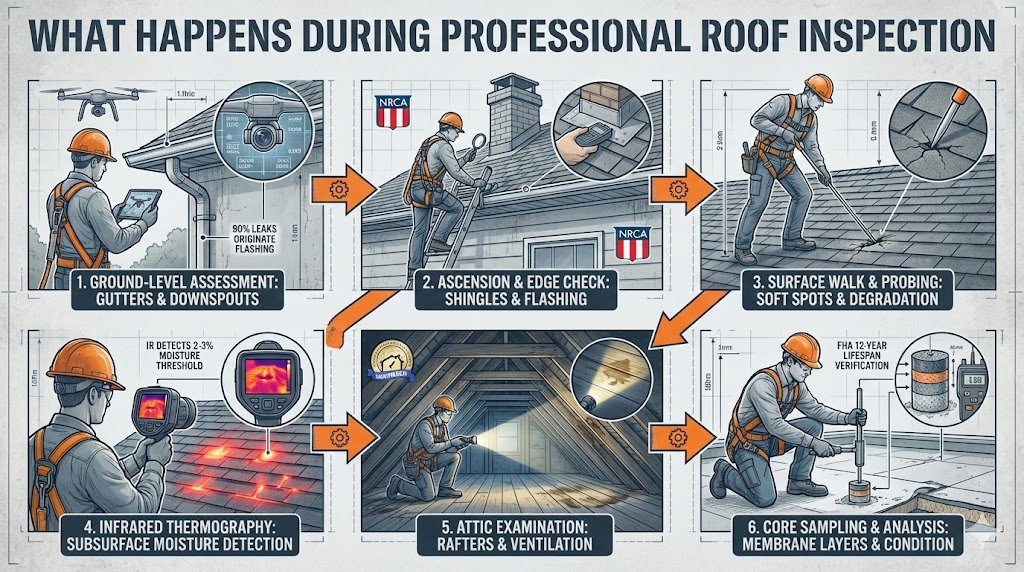
What Happens During a Professional Roof Inspection in Fort Lauderdale & South Florida?
Regular inspections are not just a good idea; they are crucial for proactive maintenance, significantly extending your roof’s lifespan, validating potential insurance claims, and preserving your property’s value against the South Florida elements. Let’s break down the meticulous process of a Shieldline Roofing professional inspection, from the ground up to the detailed report that brings you peace of mind.
Key Takeaways from a Shieldline Roof Inspection:
- A professional roof inspection is a comprehensive, multi-point assessment designed to identify current damage, potential vulnerabilities, and signs of wear on a roofing system, with a specific focus on **Florida Building Code (FBC)** compliance and **HVHZ** standards.
- It covers exterior components (shingles, flashing, gutters) as well as internal structures (decking, attic ventilation) to ensure structural integrity and prevent water intrusion, especially critical in South Florida’s climate.
- Regular inspections are crucial for proactive maintenance, extending roof lifespan, validating insurance claims, and preserving property value against hurricanes, heat, and humidity.
- The process culminates in a detailed report outlining findings, recommendations for repair or replacement, and photographic evidence, providing clear actionable steps for Fort Lauderdale and Hollywood property owners.
1. Initial Consultation and Ground-Level Assessment: Setting the Foundation for a Thorough Inspection
Before our Shieldline Roofing inspector ever steps onto your roof, a crucial preparatory phase ensures we understand your specific needs and the unique history of your South Florida property. This initial stage is vital for tailoring our inspection to your roof’s particular challenges.
Understanding Your Property’s Unique History and Concerns
Every roof tells a story, especially in Fort Lauderdale and Hollywood. We begin with a detailed client consultation. Have you noticed recent leaks? Are there concerns about high energy bills? We’ll review any past maintenance records, permit history, or significant weather events your property has endured. Understanding factors like the roof’s age, previous repairs, and especially its performance during past hurricane seasons gives us valuable context for our assessment. This helps us focus on areas most susceptible to problems in our local climate.
Safety First: Protocols for South Florida Conditions
Safety is paramount for both our team and your property. Before any work begins, our inspectors review and establish strict safety protocols. This includes proper ladder placement, the use of personal protective equipment (PPE), and careful navigation around your property. On a South Florida roof, this also means being mindful of extremely hot surfaces, potential for slipperiness after rain, and even local wildlife in attics or around eaves. Shieldline Roofing is a **licensed and insured contractor**, ensuring peace of mind that all work is performed safely and professionally.
Preliminary Visual Scan: Identifying “Red Flags” from Below
Even before getting on the roof, a thorough ground-level visual assessment can reveal significant clues. We look for obvious issues like sagging roof lines, missing or displaced shingles – a common sign of wind damage during tropical storms – or misaligned gutters. We also observe water runoff patterns around your foundation, which can indicate poor drainage or problems with the roof’s edge. These preliminary observations inform the subsequent, more detailed examination, highlighting potential areas where your roof might not be meeting **FBC** standards for resilience.
2. Comprehensive Exterior Roof Surface Examination: A Deep Dive into Your Roof’s Defense
This is the core of our inspection, where Shieldline Roofing professionals meticulously examine every component of your roof’s exterior. Our expertise, honed in the demanding South Florida climate, allows us to spot the subtle signs of wear and tear that lead to significant problems.
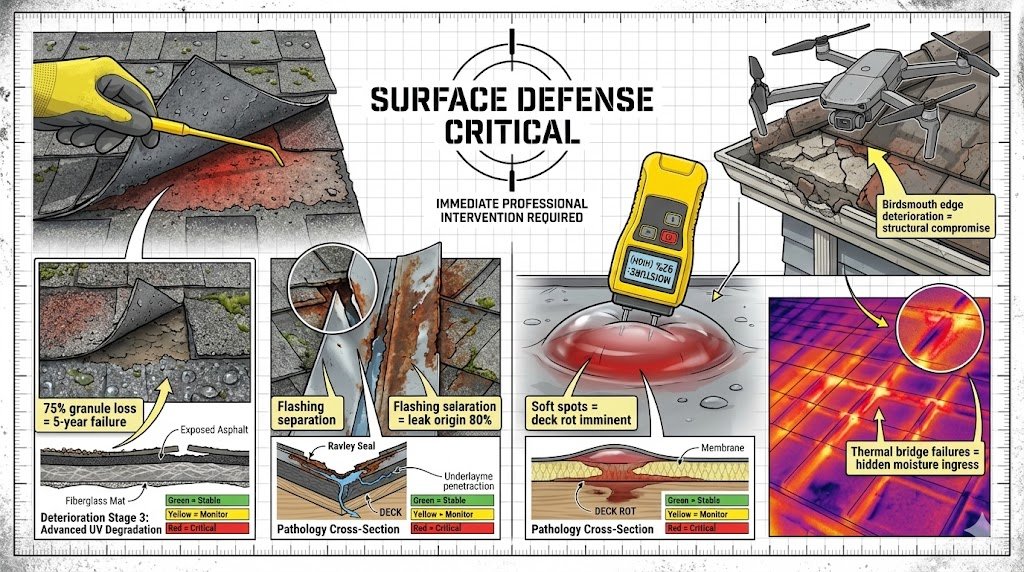
Assessing Roofing Material Integrity Against South Florida Elements
- Asphalt Shingles: We check for granule loss (a key indicator of UV damage from the intense Florida sun), cracking, curling, or blistering, which can be caused by heat and inadequate attic ventilation. Wind uplift, a major concern in **HVHZ** areas, often manifests as missing or creased shingles. We also look for the tell-tale green or black streaks of algae and moss, prevalent in our humid environment, which can trap moisture and accelerate material degradation. For local homes, we often recommend and inspect for **Class 4 Impact Resistance** shingles, offering superior protection against hail and debris.
- Tile Roofs (Clay & Concrete): Beyond obvious cracks or missing tiles (often due to wind or foot traffic), we inspect for loose tiles, which can become dangerous projectiles during a hurricane. The condition of the underlayment beneath the tiles is equally critical, serving as the true **Secondary Water Barrier (SWR)**. We also look for efflorescence, a white powdery substance, which can indicate moisture issues.
- Metal Roofs: In coastal areas like Fort Lauderdale, rust and corrosion are primary concerns. We inspect fasteners for looseness or corrosion, check panel seams for integrity, and look for any signs of physical damage or improper installation that could lead to leaks.
- Flat/Low-Slope Roofs (TPO, Modified Bitumen): Common on commercial properties, we meticulously examine seams for separation, check for membrane tears or punctures, and identify areas of ponding water – a major issue that significantly reduces roof lifespan in our climate.
The Critical Role of Flashing and Penetrations in Preventing Leaks
Over 80% of roof leaks are attributed to issues with flashing, skylights, or chimneys, rather than the primary roofing material itself. In South Florida, where heavy, wind-driven rains are common, properly installed and maintained flashing is non-negotiable for **FBC compliance**. We inspect the sealing around chimneys, skylights, vents, and pipe boots for signs of deterioration, corrosion, or improper installation. This includes:
- Step and Counter Flashing: Ensuring proper overlap and securement around vertical structures.
- Valley Flashing: Checking for cracks, rust, or debris buildup in these critical water channels.
- Pipe Boots: Examining the rubber seals for cracking or decay due to UV exposure.
We emphasize the importance of using high-quality, UV-resistant sealants that can withstand thermal expansion and contraction, a constant factor under the Florida sun. The integrity of the **Secondary Water Barrier (SWR)** beneath these penetration points is also key.
Fasteners, Seals, and Code Compliance: The Unsung Heroes of Roof Security
Our inspection goes beyond surface materials. We look for nail pops, loose screws, or improper sealant application that can compromise the roof’s watertight seal. For shingle roofs, we verify that shingles are properly nailed according to **FBC nailing patterns**, which are specifically designed for enhanced wind resistance in **HVHZ** zones. On tile or metal roofs, securement of each component is paramount to prevent uplift during high winds. Every detail is crucial for ensuring your roof can withstand a hurricane and meet the rigorous demands of the **Florida Building Code**.
3. Assessment of Drainage Systems and Roofline Components: Guiding Water Away From Your Investment
Proper water diversion is absolutely vital for roof longevity and the overall structural health of any property in a rain-heavy region like South Florida. This segment of our inspection focuses on the components designed to manage the significant rainwater runoff we experience.
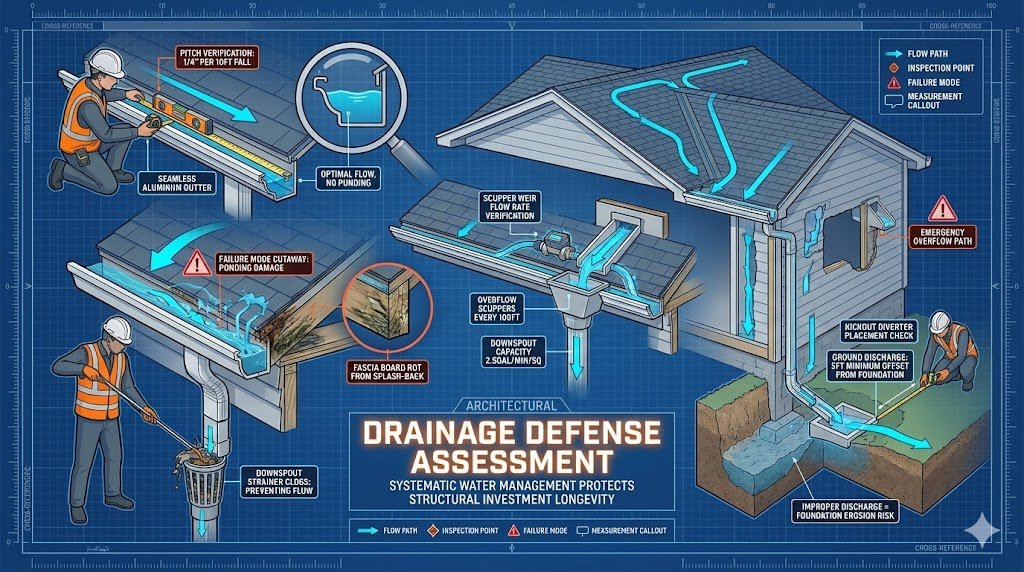
Gutters and Downspouts: Your First Line of Defense Against Water Damage
Often overlooked, gutters and downspouts play a critical role in directing rainwater away from your foundation. Our inspectors meticulously check for:
- Clogs: Accumulations of leaves, pine needles, or shingle granules can prevent proper drainage, causing water to back up and potentially overflow, leading to fascia damage or even foundation issues.
- Damage: Dents, rust, or detached sections compromise their effectiveness.
- Proper Pitch: Ensuring the gutters are angled correctly to facilitate efficient water flow towards the downspouts. Improper pitch can lead to standing water and mosquito breeding grounds, an unwelcome side effect in our climate.
- Securement: Gutters must be securely fastened to withstand heavy rainfall and strong winds.
- Effective Discharge: Downspouts must direct water well away from the foundation to prevent erosion, slab damage, and potential water intrusion into basements or crawl spaces.
Protecting Soffits and Fascia from Humidity, Pests, and Water Intrusion
The soffits and fascia boards are not just decorative; they are integral to your roof’s health. We inspect them for:
- Signs of Rot or Water Damage: Often indicators of gutter overflow, roof edge leaks, or issues with flashing.
- Pest Intrusion: Gaps or damaged sections can become easy entry points for rodents, birds, or insects, which are common unwelcome guests in South Florida attics.
- Improper Ventilation: Adequate airflow through vented soffits is critical for preventing heat and moisture buildup in the attic, which can prematurely age your roof and lead to higher energy bills.
Addressing Ponding Water and its Destructive Potential (Especially for Flat Roofs)
For flat or low-slope roofs, prevalent in many commercial properties and some residential designs in South Florida, identifying areas where water collects – known as ponding water – is a top priority. Ponding water can indicate:
- Drainage Issues: Clogged drains or an insufficient number of drains.
- Structural Sagging: Deflection in the roof deck.
- Improper Design: Insufficient slope.
The consequences are severe: accelerated membrane degradation due to constant saturation and UV exposure, increased load on the roof structure, and heightened risk of leaks. Addressing ponding water is crucial for extending the lifespan of a flat roof in our climate.
4. Interior Attic and Structural Inspection: Uncovering Hidden Vulnerabilities
While the exterior provides the most visible clues, a professional inspection by Shieldline Roofing extends to the interior of your property. Examining the attic is paramount to detecting subtle signs of roof-related problems and ensuring optimal attic health, especially in our humid climate.
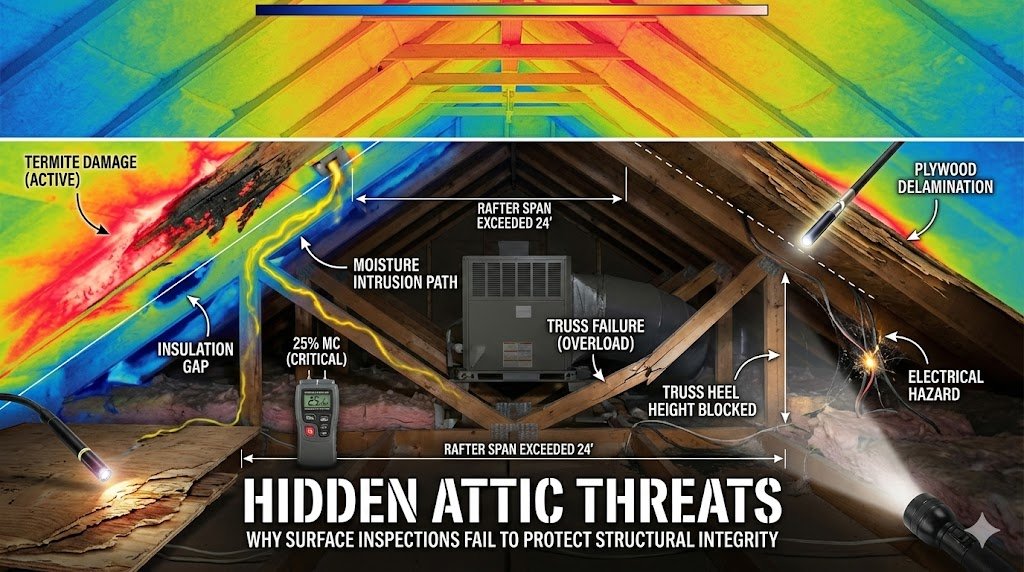
The Underside of Your Roof: Decking, Rafters, and HVHZ Standards
From the attic, our inspectors scrutinize the underside of your roof deck and framing. We look for:
- Water Stains, Mold Growth, or Rot: Clear indicators of active or past leaks. Mold thrives in our humid environment, and unattended moisture can quickly compromise the roof deck (often plywood or OSB) and framing.
- Sagging Decking: A sign of water damage, structural fatigue, or inadequate support.
- Damage to Rafters and Trusses: Cracks, splits, or compromised structural components can affect the entire roof’s integrity, a critical concern for resisting hurricane-force winds.
We pay close attention to the **FBC requirements for roof deck attachment**, specifically verifying proper nailing patterns and nail type. In **HVHZ** zones like Fort Lauderdale, ensuring the roof deck is securely fastened is a primary defense against wind uplift. We also inspect the presence and integrity of your **Secondary Water Barrier (SWR)**, visible from below, which is a crucial layer of protection against water intrusion even if the primary roofing material is compromised.
Insulation and Ventilation: Preventing Heat Buildup and Moisture in South Florida Attics
The attic’s insulation and ventilation systems are intrinsically linked to your roof’s performance and your home’s energy efficiency, particularly in South Florida’s extreme heat. We check for:
- Moisture or Compaction in Insulation: Wet insulation loses its R-value, leading to higher energy bills, and is a prime breeding ground for mold and mildew.
- Proper Coverage: Ensuring insulation is evenly distributed and meets recommended R-values for our climate.
- Evidence of Pest Infestation: Rodents, insects, or even bats often leave signs in insulation.
- Adequate Airflow: We verify the functionality of soffit vents, ridge vents, and static vents. Proper attic ventilation is crucial to expel superheated air and moisture, preventing premature roof aging (e.g., shingle blistering) and significantly reducing cooling costs.
Identifying Light Penetration and Pest Intrusion
One of the most direct ways to spot a hole in your roof system is to look for light penetration from the attic. Any visible light indicates a direct opening, making your home vulnerable to water intrusion and pests. Simultaneously, we look for signs of pest intrusion – droppings, nests, chewed wires, or entry points – as a compromised roof or poorly sealed soffit can offer easy access for squirrels, raccoons, or rodents, common in our urban environment.
5. Detailed Reporting and Recommendations: Your Blueprint for a Secure Roof
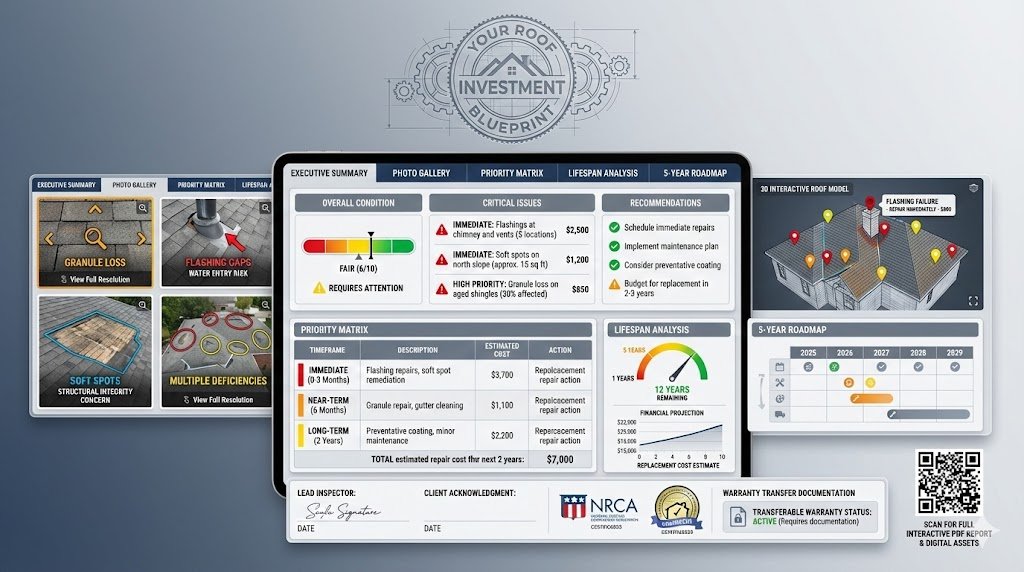
Upon completion of the physical inspection, the Shieldline Roofing professional compiles a comprehensive report, designed to be clear, actionable, and specific to the needs of Fort Lauderdale, Hollywood, and South Florida property owners.
A Transparent and Actionable Report for South Florida Homeowners
Our report provides a clear description of all identified issues, categorized by severity (e.g., critical, significant, minor). We use localized terminology and context, explaining how specific findings relate to **Florida Building Code** compliance, potential hurricane resilience, and the long-term impact of our climate. This detailed document serves as your essential guide for understanding your roof’s health.
Photographic and Video Evidence: Clarity and Validation
To ensure absolute clarity and build trust, our reports include extensive photographic and, where helpful, video evidence. These visuals illustrate the findings, providing irrefutable proof of conditions on your roof. This evidence is not only invaluable for your understanding but also crucial for any potential **insurance claims**, offering clear documentation of damage from storms or wear and tear.
Navigating Repair vs. Replacement: When Code Compliance Matters Most
The report concludes with specific, prioritized recommendations. These actions range from minor repairs (e.g., re-sealing flashing, replacing a few missing shingles) to major interventions (e.g., partial roof section replacement or a full roof replacement). For South Florida properties, we often discuss the **FBC’s 25% rule**, which dictates that if more than 25% of a roof section is damaged, the entire section may need to be brought up to current code during repair or replacement. Our experts provide a clear cost-benefit analysis, considering the lifespan of your existing roof, the extent of damage, and the long-term investment in a code-compliant, durable roofing system.
Insurance Claims Assistance and Peace of Mind
If significant storm damage or wear-and-tear is identified, our detailed reports are instrumental in assisting with insurance claims. Shieldline Roofing has extensive experience working with insurance companies in South Florida, ensuring that all necessary documentation and photographic evidence are provided to support your claim for roof damage. We aim to make the process as smooth as possible, giving you peace of mind during what can be a stressful time.
