
Executive Summary
- Florida’s hot, humid climate creates unique challenges for roof assemblies, where bidirectional vapor drive can lead to pervasive condensation issues.
- Understanding the dew point is crucial for preventing moisture accumulation, as warm, moist air often meets cooler surfaces within the roof structure.
- Properly selected and strategically placed vapor retarders are essential to control moisture migration and protect structural integrity effectively.
- Implementing robust ventilation strategies, whether conventional or conditioned unvented attics, helps manage humidity levels and minimize condensation risk.
- Choosing appropriate insulation types like closed-cell spray foam or rigid boards contributes significantly to both thermal performance and moisture control.
- Integrated design considers the entire building envelope, ensuring continuous air barriers, effective drainage, and material compatibility for long-term resilience.
- Proactive moisture management in roof design safeguards against costly damage, mold growth, diminished energy efficiency, and potential health hazards.
Understanding Vapor Drive in Florida’s Climate
What is vapor drive and why is it critical in Florida?
Vapor drive refers to the movement of water vapor through building materials, driven by differences in vapor pressure from high to low concentrations. In Florida’s subtropical climate, this phenomenon is particularly critical because the high outdoor humidity often creates significant vapor pressure differentials, leading to moisture migration into and out of roof assemblies. This bidirectional movement means that roofs must be designed to manage vapor both from the outside inward during hot, humid periods, and potentially from the inside outward when interior spaces are cooled.
Critical Fact 1: Florida’s average relative humidity often exceeds 70-80%, even indoors, making proper vapor control paramount to avoid persistent moisture problems within building enclosures.
The Perils of Condensation in Roof Assemblies
How does condensation form within roof structures?
Condensation forms within roof structures when warm, moist air comes into contact with a surface that is at or below its dew point temperature. The dew point is the temperature at which air becomes saturated with water vapor and begins to condense into liquid water. In Florida, air conditioning often cools interior spaces significantly below the outdoor ambient temperature, creating cold roof deck surfaces. If warm, humid outdoor air or humid indoor air bypasses an air barrier and reaches these cold surfaces, condensation will occur, leading to trapped moisture.
What are the primary risks associated with trapped moisture?
Trapped moisture within roof assemblies poses numerous significant risks, compromising structural integrity, indoor air quality, and energy efficiency. Primary concerns include the proliferation of mold and mildew, which can trigger respiratory issues and degrade building materials. Wood components are susceptible to rot, fasteners can corrode, and the R-value of insulation dramatically decreases when wet, leading to higher energy consumption. Over time, persistent moisture can weaken the entire roof system, necessitating expensive repairs or premature replacement.
Strategic Solutions for Moisture Control
Which vapor retarders are best suited for Florida’s conditions?
Vapor retarders are materials designed to slow the diffusion of water vapor. For Florida’s hot and humid climate, the strategic placement and appropriate class of vapor retarder are crucial. Typically, a Class I (impermeable, perm rating ≤ 0.1) or Class II (semi-permeable, perm rating > 0.1 and ≤ 1.0) vapor retarder is recommended. In most Florida roof assemblies, especially those with air-conditioned spaces below, the vapor retarder should be placed closer to the interior (warm-in-winter climate logic reversed for cooling dominance) to prevent interior moisture from migrating into the cooler roof cavity. “Smart” vapor retarders that adjust their permeance based on humidity levels can also be effective, allowing for drying in both directions.
| Vapor Retarder Class | Permeance (perms) | Description & Typical Placement Strategy for Florida | Example Materials |
|---|---|---|---|
| Class I (Impermeable) | ≤ 0.1 | Highest resistance to vapor diffusion. Ideal for interior-side placement in conditioned spaces to prevent humid indoor air from condensing in the roof assembly. | Polyethylene sheeting (6-mil+), aluminum foil, self-adhered membranes, some rigid foam insulation with foil facers |
| Class II (Semi-permeable) | > 0.1 and ≤ 1.0 | Moderate resistance. Can be suitable depending on overall assembly design and climate zone. Requires careful consideration to avoid trapping moisture. | Kraft-faced fiberglass batts, asphalt-coated felts (e.g., #15 or #30 felt), some painted gypsum board |
| Class III (Permeable) | > 1.0 | Low resistance. Generally not recommended as a primary vapor retarder in Florida’s hot-humid climate for roof assemblies, as it allows significant vapor movement. | Unfaced fiberglass batt, cellulose insulation, uncoated gypsum board |
How do ventilation strategies prevent condensation?
Effective ventilation strategies are vital for preventing condensation by managing moisture levels and temperatures within roof assemblies. In vented attic systems, continuous soffit and ridge vents promote airflow, flushing out warm, humid air before it can condense on cooler surfaces. This strategy helps equalize temperatures and reduce humidity. For unvented (conditioned) attics, the approach is different: the entire attic space is brought within the conditioned envelope, eliminating the cold surface issue. This requires a continuous air barrier and high R-value insulation directly at the roof deck, often using closed-cell spray foam, which also acts as a vapor retarder.
Critical Fact 2: A 2018 study by the Florida Solar Energy Center found that unvented attics with spray foam insulation can lead to significant energy savings and superior moisture control compared to traditionally vented attics in Florida homes.
What insulation choices optimize moisture performance?
Insulation choices significantly impact moisture performance by controlling heat transfer and, in some cases, acting as air or vapor barriers. Closed-cell spray foam (ccSPF) is an excellent choice for Florida due to its high R-value per inch, inherent air barrier properties, and low vapor permeance (often Class II or Class I). Rigid insulation boards like polyisocyanurate (polyiso) are also highly effective, particularly with foil facers that provide an additional vapor retarder. Extruded polystyrene (XPS) offers good moisture resistance. These materials minimize air leakage and condensation potential when installed correctly and continuously.
Best Practices for Florida Roof Assembly Design
What design principles ensure long-term moisture resilience?
Ensuring long-term moisture resilience in Florida roof assemblies requires an integrated design approach focusing on continuous air barriers, effective drainage, and material compatibility. Design principles should prioritize preventing moisture entry from both the exterior (rain, humidity) and interior (vapor drive). This includes meticulously air-sealing all penetrations and transitions, specifying robust and correctly placed vapor retarders, and incorporating redundant water shedding layers. Proper slope and drainage systems are paramount to quickly remove bulk water, preventing ponding that could lead to leaks and saturation. Material selection should consider local climate, avoiding hygroscopic materials where moisture exposure is high.
How do building codes influence moisture prevention strategies?
Florida’s building codes significantly influence moisture prevention strategies, setting minimum standards for roof assembly performance, energy efficiency, and occupant health. Codes typically mandate specific insulation R-values, ventilation requirements (for vented attics), and often specify air barrier performance. While not always explicit on vapor retarder class for hot-humid climates, codes implicitly guide design by requiring moisture-resistant materials and practices. Adhering to these codes, such as the Florida Building Code (which references ICC and ASHRAE standards), ensures designs meet baseline performance expectations and provides a legal framework for moisture-resilient construction. Staying current with code updates is critical for compliance and optimal moisture management.
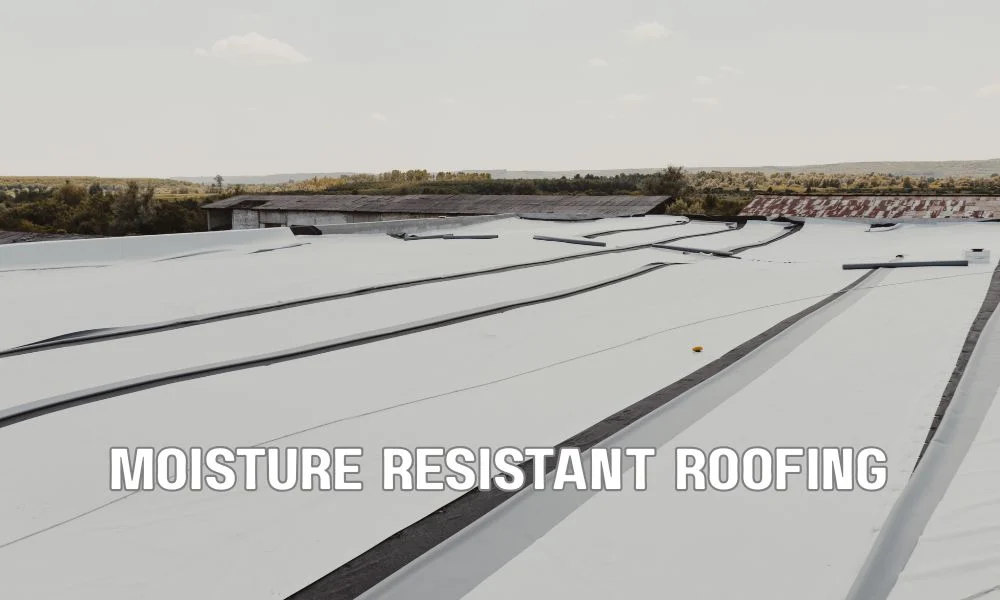
Critical Fact 3: Improperly installed vapor retarders, particularly permeable ones placed on the exterior side of insulation in a cooling-dominated climate like Florida, can actively trap moisture and exacerbate condensation issues.
Frequently Asked Questions
What is the difference between an air barrier and a vapor retarder?
An air barrier controls the movement of air, preventing humid air from reaching cold surfaces and causing condensation. A vapor retarder, conversely, controls the diffusion of water vapor through materials due to vapor pressure differences. While some materials can act as both (e.g., closed-cell spray foam), their primary functions are distinct.
Should I vent my attic in Florida’s climate?
The decision to vent an attic in Florida depends on the overall roof design. Traditionally vented attics rely on soffit and ridge vents to flush out hot, humid air. However, unvented (conditioned) attics, where the insulation is applied directly to the roof deck, are increasingly popular for superior moisture control and energy efficiency in hot-humid climates.
Can condensation occur in metal roofs?
Yes, metal roofs are particularly susceptible to condensation on their underside if there isn’t an adequate air barrier or insulation to prevent warm, moist air from contacting the cold metal surface. Proper underlayment, insulation, and ventilation are crucial for metal roof assemblies in humid environments.
What is the role of continuous insulation in preventing condensation?
Continuous insulation, installed without thermal breaks across the entire roof deck, significantly reduces heat transfer and helps maintain a more consistent temperature across the roof assembly. This minimizes cold spots where condensation is likely to form, improving overall moisture performance.
How can I identify trapped moisture in my roof?
Signs of trapped moisture include water stains on ceilings or walls, a musty odor, sagging drywall, peeling paint, or visible mold growth. In more advanced cases, reduced insulation performance or structural decay might be evident. Professional moisture surveys using thermal imaging can pinpoint hidden issues.
Is it possible to dry out a roof assembly once moisture is trapped?
Drying out a roof assembly with trapped moisture can be challenging and depends on the severity and extent of the issue. Minor issues might resolve through improved ventilation or drying cycles, but significant saturation often requires material replacement, opening up the assembly, or professional remediation.
What impact does roof color have on vapor drive?
Roof color primarily affects surface temperature. Lighter, reflective roofs stay cooler, potentially reducing the solar-driven vapor drive from the exterior inwards. However, the internal vapor drive (from conditioned spaces to the cooler roof deck) is more influenced by interior humidity and temperature differences.
Should I use a “smart” vapor retarder in Florida?
“Smart” vapor retarders, which change their permeance based on humidity, can be highly beneficial in Florida. They allow the roof assembly to dry out in either direction depending on the predominant vapor drive, offering greater flexibility and resilience against moisture accumulation in dynamic conditions.
