
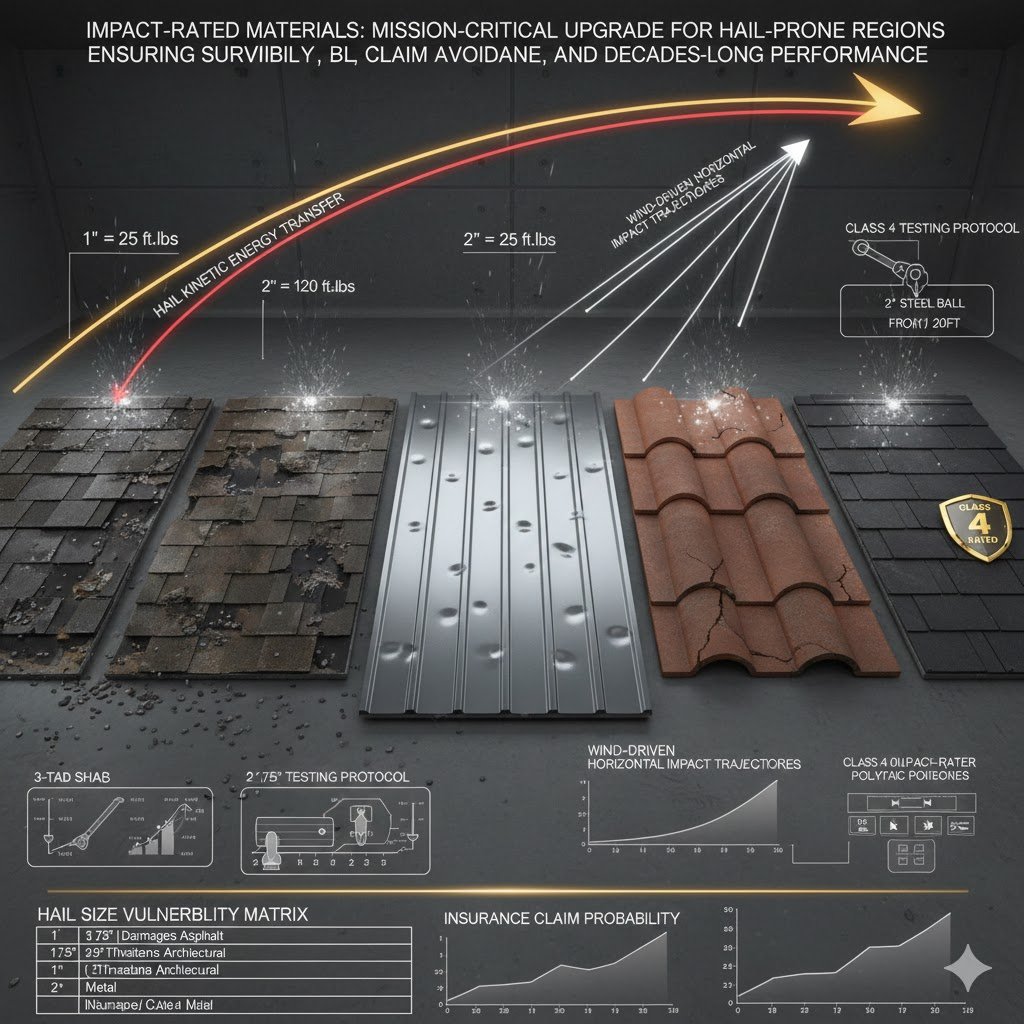
Understanding Hail Damage on Different Roof Types in Fort Lauderdale & South Florida
As homeowners and business owners in Fort Lauderdale, Hollywood, and across South Florida, we’re all too familiar with the dramatic impacts of tropical storms and hurricanes. Yet, lurking within these powerful weather events – and often occurring independently – is a stealthy destroyer: hail. While it might not make headlines like a Category 5 hurricane, hail can inflict significant, often underestimated damage to your roof, leading to costly repairs and compromising your property’s primary defense against our relentless climate.
At Shieldline Roofing, your trusted licensed roofing contractors, we understand that not all roofs react to hail the same way. The type of roofing material on your home or commercial building dictates how hail damage manifests, its severity, and the best course of action for repair. This comprehensive guide will equip you with the knowledge to understand, detect, and address hail damage effectively, ensuring your roof – and your investment – remains secure.
Key Takeaways for South Florida Property Owners
- Hail damage manifests differently across various roofing materials, from cosmetic blemishes to structural compromises, often exacerbated by our humid, high-wind environment.
- Factors such as hail size, density, wind speed, and roof age significantly influence the severity of damage, especially considering the added stress from South Florida’s frequent high winds.
- Early detection and professional assessment by a licensed Fort Lauderdale roofing contractor are critical to prevent minor damage from escalating into major issues like leaks, mold, or accelerated roof degradation, which are common problems in our local climate.
- Understanding your specific roof type’s vulnerabilities helps in proactive maintenance and informed decisions regarding repairs or replacements, always adhering to the latest Florida Building Code (FBC).
- Timely repairs and proper documentation are essential for successful insurance claims and protecting your property’s long-term integrity against future storms.
1. Introduction to Hail and Its Impact on South Florida Roofing
1.1 What is Hail and Why is it a Threat Here?
Hailstones are frozen precipitation that forms in severe thunderstorms. As water droplets are carried upward into extreme cold by updrafts, they freeze, growing in layers as they collide with supercooled water. When they become too heavy for the updraft, they fall to earth. While less frequent than in the Midwest, hail in South Florida often accompanies strong fronts and tropical systems, falling with immense force that can exceed 60 mph. Understanding its formation is the first step to appreciating its destructive potential.
1.2 Factors Influencing Damage Severity on Your Roof
The extent of hail damage isn’t just about the size of the hailstone. Several critical factors come into play, especially in our unique South Florida context:
- Hail Size & Density: Larger, denser hailstones obviously cause more significant impact.
- Wind Direction & Speed: Hail driven by high winds (common during our storm seasons) strikes roofs and other property surfaces at an angle, increasing impact force and spreading damage across different slopes and elevations. This is particularly crucial in areas designated as High-Velocity Hurricane Zones (HVHZ) like ours.
- Roof Slope & Orientation: Steeper slopes might offer less direct impact, but can be more exposed to wind-driven hail.
- Roof Age & Condition: Older roofs with degraded materials (e.g., brittle shingles, oxidized metal) are far more susceptible to damage than newer, well-maintained ones. Sun exposure and humidity in Florida naturally accelerate material aging.
- Underlying Deck Condition: A strong, properly installed roof deck, compliant with FBC standards, provides a better foundation to absorb impact without secondary structural damage.
1.3 Visible vs. Latent Damage: A South Florida Concern
It’s crucial to distinguish between immediate, visible damage (like a broken tile or obvious dent) and latent, harder-to-detect impacts. Latent damage might include granule loss on asphalt shingles that’s only visible upon close inspection, or micro-fractures in membranes that slowly lead to leaks. In our humid climate, even a tiny compromise to your roof’s integrity can lead to water intrusion, quickly escalating to mold growth, rot, and extensive structural damage if not addressed promptly.
2. Hail Damage Across Common South Florida Roof Types
South Florida features a diverse array of roofing materials, each with unique vulnerabilities to hail.
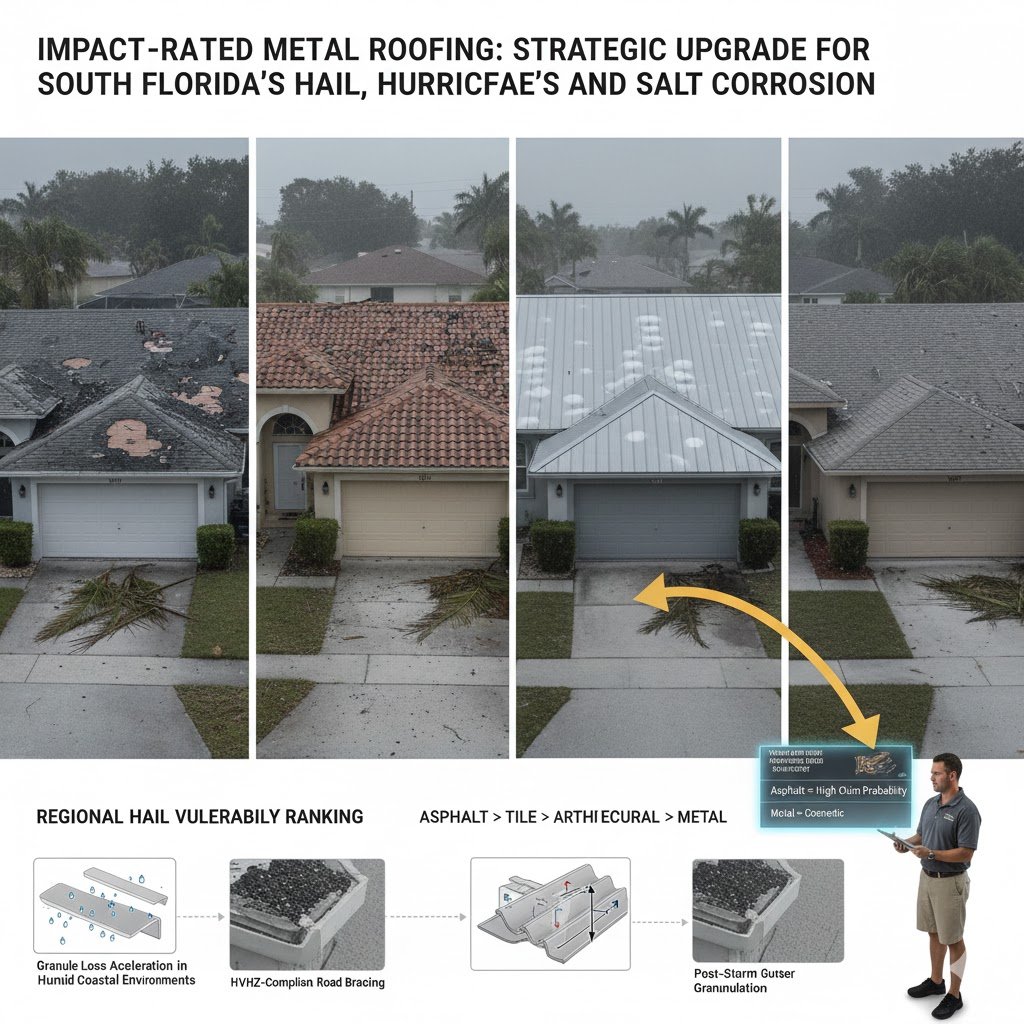
2.1 Asphalt Shingle Roofs: The Most Common Victim
Approximately 80% of residential roofs in North America are asphalt shingles, making them the most frequently damaged roof type by hail. Average hail-related asphalt shingle roof replacement costs range from $8,000 to $15,000.
2.1.1 Primary Damage Indicators for Shingles
- Granule Loss: Hail impacts dislodge the protective mineral granules that shield the asphalt mat from UV rays. This exposes the asphalt, accelerating aging and degradation.
- Bruising or Softening: Even without visible granule loss, hail can “bruise” the shingle, creating soft spots or indentations where the mat has been compromised, reducing its lifespan.
- Mat Fracturing & Cracking: Severe impacts can cause the fiberglass mat to fracture, leading to cracks that penetrate the shingle, creating direct pathways for water.
- Cracked or Broken Shingles: Extremely large hail can physically crack or break the shingle, especially older, brittle ones.
2.1.2 Loss of Shingle Sealing & Wind Uplift
Hail impacts can disrupt the adhesive seal between shingle tabs. In high-wind areas like Fort Lauderdale and Hollywood, this can lead to shingles being lifted, creased, or completely torn off during subsequent wind events, even if the wind itself wasn’t strong enough to cause damage to a properly sealed roof.
2.1.3 Types of Asphalt Shingles & Resistance
While 3-tab shingles are more prone to hail and wind damage, architectural (laminated) shingles offer slightly better resistance due to their thicker, multi-layer construction. For maximum protection, consider Class 4 Impact-Resistant Shingles, which are specifically designed and tested to withstand significant hail impacts. Shieldline Roofing can help you determine if these advanced options are suitable and code-compliant for your South Florida home, potentially qualifying for insurance discounts.
2.2 Metal Roofs: Resilience and Unique Vulnerabilities
Metal roofs can withstand hail up to **2 inches** in diameter without functional damage, but cosmetic denting can occur with hail as small as 1 inch, depending on gauge. Impact-resistant metal roofs may qualify for insurance discounts of 5-30%.
2.2.1 Damage Manifestations in Metal Roofing
- Denting: The most common form of hail damage. Cosmetic dents may not compromise the roof’s integrity but can severely impact curb appeal. Functional dents, however, can create pathways for water or compromise panel interlocks.
- Chipping or Flaking of Coatings: The protective paint or coating on metal panels can chip, scratch, or flake off where hail strikes, exposing the metal substrate to our high humidity and salt-laden air, which can accelerate corrosion.
- Deformation of Panels: Severe hail can deform entire panels, affecting drainage and potentially leading to pooled water or compromised seams.
2.2.2 Punctures and Fastener Damage
While less common with thicker gauge metal, severe hail can cause punctures in thinner metals. More subtly, repeated impacts can loosen or damage fasteners, compromising the roof’s attachment, which is critical for meeting FBC wind-load requirements in South Florida.
2.2.3 Impact on Protective Coatings & Corrosion
Damage to the protective coating is a significant concern in our coastal environment. Once the barrier is breached, the underlying metal becomes vulnerable to oxidation and rust, potentially leading to premature roof failure, especially near the ocean where salt spray is prevalent.
2.3 Tile Roofs (Clay & Concrete): Durability vs. Brittleness
While extremely durable against fire and rot, clay and concrete tiles are inherently brittle; a single cracked tile can compromise a significant roof section. Replacement of specialty tiles can exceed $30 per tile.
2.3.1 Damage Profile: Cracking and Breakage
- Cracking, Chipping, and Breakage: Tiles are strong but brittle. Hail impacts, especially at edges or ridges, frequently result in cracking, chipping, or complete breakage of individual tiles.
- Dislodged Tiles: Strong winds accompanying hail can dislodge already damaged or weakened tiles, creating direct openings to the underlayment.
- Underlayment Exposure: A single cracked or missing tile can expose the crucial Secondary Water Barrier (SWB) and underlayment to sun, rain, and debris. Over time, this exposure compromises the SWB, leading to water infiltration into your home’s structure.
2.3.2 High Cost and Complexity of Repairs
Replacing individual tiles requires specialized skills and tools to maintain the aesthetic integrity and ensure proper waterproofing and wind resistance, especially for the popular barrel and flat tile styles seen across Fort Lauderdale. Matching color and profile can be challenging, and repairs often require precise integration to meet FBC requirements for tile attachment.
2.3.3 Importance of Underlayment Integrity
In South Florida, the underlayment beneath tile roofs is your primary water barrier. Hail damage to tiles compromises this outer layer, increasing the risk of underlayment exposure and eventual failure, making prompt inspection and repair paramount.
2.4 Wood Shake & Shingle Roofs: Natural Beauty, Unique Damage
Wood shake roofs have a higher impact absorption rate than asphalt, but severe hail can still cause significant splitting, particularly if the wood is aged or dry. Average lifespan of a well-maintained wood shake roof is 20-40 years, which can be significantly reduced by hail damage.
2.4.1 Hail Impacts on Wood
- Splitting and Fracturing: Hail can cause wood shakes and shingles to split or fracture along their grain, creating entry points for water.
- Pitting and Bruising: Impacts can create depressions or pits in the wood surface, which can hold moisture and accelerate rot and decay, particularly problematic in South Florida’s high humidity.
- Loosening of Fasteners: Repeated impact stress can loosen the fasteners holding the shakes/shingles in place, compromising the roof’s resistance to wind uplift.
2.4.2 Accelerated Weathering and Decay
When hail damages the protective surface of wood, it exposes the raw wood to the elements. This accelerates weathering, UV degradation, and makes the wood more susceptible to rot, mold, and algae growth, common issues in our damp climate. This significantly shortens the roof’s lifespan.
2.4.3 Challenges of Repair in Florida
While less common than in other regions due to fire concerns and specific code requirements, existing wood shake roofs in South Florida face unique repair challenges. Finding matching materials that meet current fire and building codes can be difficult, and repairs must ensure the roof remains compliant and watertight.
2.5 Flat and Low-Slope Roofs: Punctures and Surfacing Loss
A 1-inch diameter hailstone can produce a force of over 60 mph, capable of puncturing some commercial-grade membranes. Roughly **25%** of all commercial roof damage claims are hail-related.
2.5.1 Membrane Roofs (TPO, EPDM, PVC) Vulnerabilities
- Punctures and Tears: Hail can directly puncture or tear the single-ply membrane, creating immediate leak points. These can be tiny and difficult to spot without professional inspection.
- Bruising of the Membrane: Hail impacts can create internal damage or bruising within the membrane layers that are not immediately visible but compromise the material’s long-term integrity, leading to premature cracking or failure.
- Damage to Seams or Flashing: Impacts near seams or flashing areas can compromise these critical junctures, which are already vulnerable points on flat roofs, leading to widespread leaks.
2.5.2 Modified Bitumen/Built-Up Roofs (BUR) Issues
- Granule Loss on Cap Sheets: Similar to asphalt shingles, hail can dislodge the protective granules on cap sheets, exposing the underlying bitumen to UV degradation.
- Indentations and Substrate Damage: Hail can create indentations that may hold water, and severe impacts can damage the layers beneath the cap sheet, including insulation or the deck itself.
2.5.3 Exacerbated Ponding Water Issues
Any indentations or compromised drainage caused by hail damage on flat roofs can worsen ponding water issues. Ponding water significantly accelerates roof degradation, promotes algae growth, and puts constant stress on the membrane, especially in South Florida where standing water rarely evaporates quickly.
3. Detecting and Assessing Hail Damage: A Local Perspective
3.1 DIY Visual Inspection Tips (with Caution!)
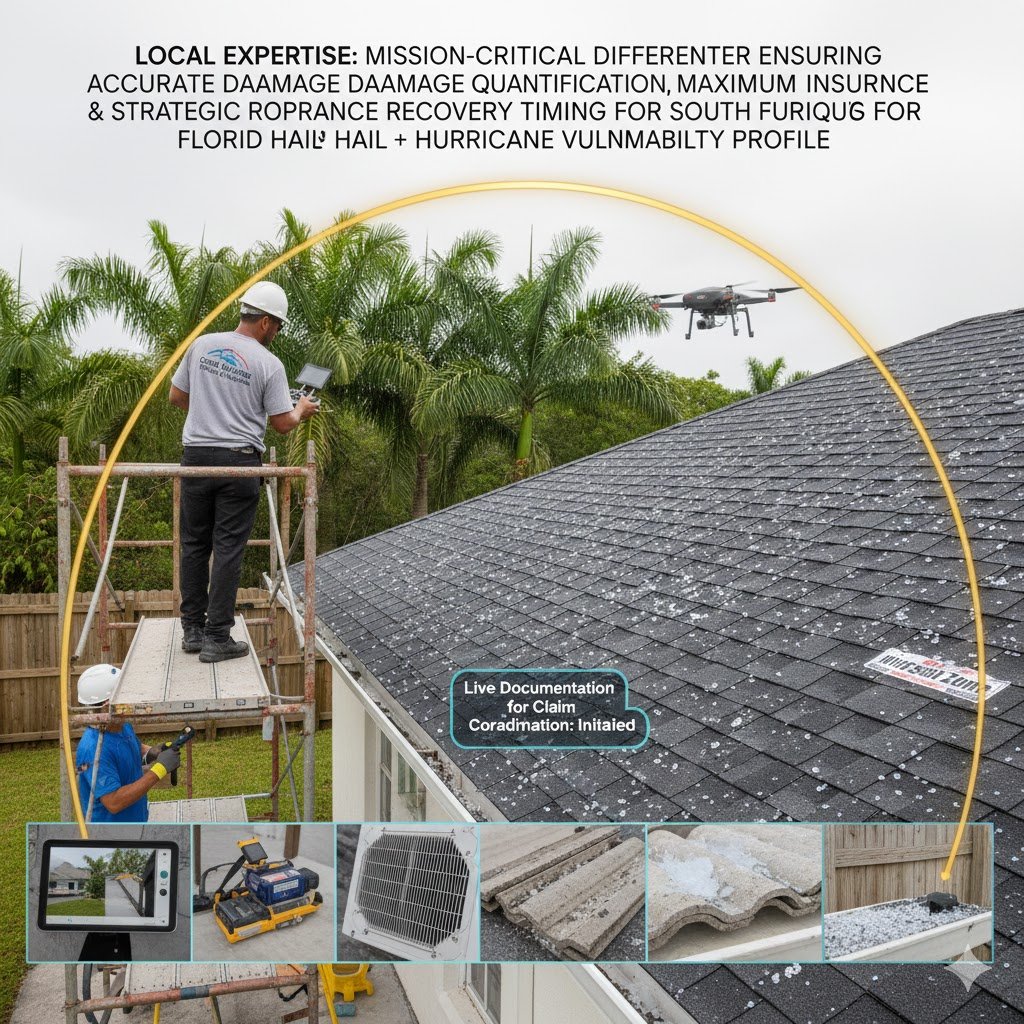
While we always recommend professional inspection, after a hailstorm, you can safely look for obvious signs of damage from the ground. Check collateral items around your property common in South Florida: your pool screen enclosure, aluminum fascia, gutters, downspouts, outdoor AC units, light fixtures, and even your mailbox. If these show dents or damage, it’s a strong indicator that your roof likely sustained impacts too. Look for piles of granules in gutters or downspouts. Always prioritize safety and never climb onto your roof without proper safety equipment and training.
3.2 The Critical Role of Professional Roof Inspectors in South Florida
Distinguishing between superficial blemishes and functional damage requires the trained eye of a professional, licensed roofing contractor like Shieldline Roofing. We have the expertise to:
- Identify subtle or latent damage that DIYers often miss.
- Assess damage on less accessible areas of your roof.
- Determine if damage compromises your roof’s integrity against wind, water, and sun.
- Provide a detailed report compliant with insurance claim requirements.
- Understand the nuances of **FBC** and local code compliance for repairs.
3.2.1 Distinguishing Cosmetic vs. Functional Damage
Some minor dents or granule loss might be considered “cosmetic” and not affect the roof’s immediate performance. However, in South Florida’s climate, even seemingly minor damage can quickly escalate. A small breach can lead to a leak, then to mold, and finally to structural rot. Our team helps you understand the difference and the potential long-term implications of each.
3.2.2 Documenting Damage for Insurance Claims
Thorough documentation is vital for a successful insurance claim. We assist homeowners and businesses by providing comprehensive photos, detailed damage reports, and accurate scope-of-work assessments. We also guide you on collecting storm dates and any available weather reports for your area.
4. Repair and Mitigation Strategies for South Florida Roofs
4.1 The Importance of Timely & Code-Compliant Repairs
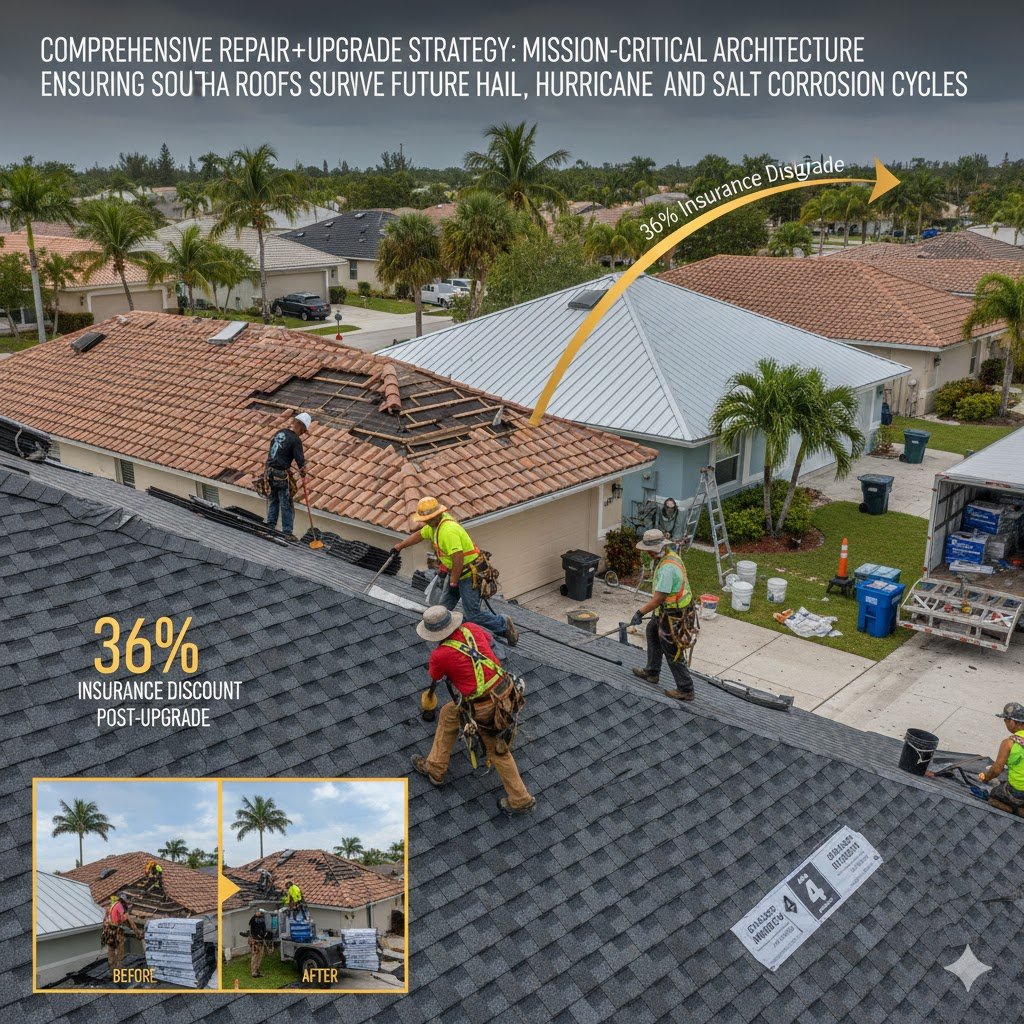
Ignoring hail damage is never an option, especially in our hurricane-prone region. Even minor damage can quickly lead to leaks, mold, compromised structural integrity, and further damage during subsequent wind events. Timely repairs, executed by a qualified, licensed contractor like Shieldline Roofing, ensure your roof is restored to optimal condition and meets all current Florida Building Code (FBC) requirements, protecting your property’s long-term value and safety.
4.2 Matching Materials for Aesthetics, Functionality, and Warranty
When performing repairs, it’s critical to match existing materials not just for aesthetic appeal, but also for consistent functionality and to maintain manufacturer warranties. Our team has extensive experience sourcing materials that seamlessly integrate with your existing roof while ensuring repairs meet modern standards and local codes.
4.2.1 Proactive Measures: Investing in Impact-Resistant Roofing
For South Florida property owners, considering impact-resistant roofing materials (e.g., Class 4 shingles, certain metal profiles) is a wise long-term investment. These materials are designed to better withstand hail and can often lead to insurance premium discounts. During a full roof replacement, Shieldline Roofing always discusses these advanced options and their benefits for our local climate.
4.2.2 Regular Roof Maintenance & Post-Storm Checks
Beyond hail, regular roof maintenance is paramount in South Florida. After any significant storm, including those with hail, a professional inspection can catch issues early. This includes checking for debris, granule accumulation, and ensuring proper drainage – all crucial for extending your roof’s life and preventing costly future repairs.
4.3 Navigating the Insurance Claim Process with Shieldline Roofing
Dealing with insurance claims can be complex. Shieldline Roofing specializes in assisting homeowners and business owners throughout the entire process. We:
- Conduct a thorough inspection and provide a detailed damage report.
- Help you understand your policy coverage and facilitate communication with your insurance adjuster.
- Ensure that all repairs are performed to the highest standards and in compliance with FBC, maximizing your claim’s value and your roof’s longevity.
- Protect you from predatory “storm chasers” by offering transparent, honest, and expert service from a reputable local company.
Shieldline in Action: Real Hail Damage Solutions
Project 1: Resolving “Bruised” Shingles in Hollywood, FL
The Situation: Following a severe May thunderstorm, a homeowner noticed excessive granules in their gutters but saw no “leaks.”
The Shieldline Inspection: Our team identified “bruising”—dark spots where hail had knocked away the protective granules, exposing the asphalt mat to UV degradation. While not leaking yet, the roof’s lifespan had been cut by 50%.
The Result: We provided a detailed digital report for the insurance adjuster. Shieldline performed a full architectural shingle replacement, upgrading the client to Impact-Resistant (IR) Shingles to prevent future recurring damage.
Project 2: Cracked Tile Restoration in Fort Lauderdale
The Situation: A commercial property had visible cracks in their concrete tiles after a hail event involving 1.25-inch ice pellets.
The Shieldline Inspection: Beyond the visible cracks, we found that the impact had compromised the Secondary Water Barrier (SWB) in three locations, which would have led to major internal mold issues during hurricane season.
The Result: We performed a targeted tile-matching repair and reinforced the underlayment. The property passed its city inspection on the first attempt, saving the owner from a total roof replacement cost.
The Data: Hail Risk in South Florida & Fort Lauderdale
Many South Florida property owners believe hail is rare in our tropical climate. However, meteorological data shows that severe thunderstorms in Broward County frequently produce damaging ice pellets that compromise roofing systems.
47
Severe Events (2025)
In 2025 alone, South Florida recorded 47 damaging wind or large hail events, with peak activity occurring in May.
1.5″
Max Hail Size
Recent storms in the Fort Lauderdale-Hollywood area have produced hail up to ping-pong ball size, capable of fracturing tiles and bruising shingles.
20%
Disaster Share
According to regional risk assessments, hail accounts for approximately 20% of all storm-related disaster events in Broward County.
The Economic Impact:
In Florida, typical hail-related roof repairs range from $1,900 to $9,000. However, for homes with premium tile or metal roofing, specialized repairs for impact damage can exceed $20,000 if the underlying water barrier is compromised. Source: NWS/NOAA Weather Summaries 2025-2026.
5. FAQs from Our Fort Lauderdale & Hollywood Clients
5.1 How can I tell if my roof has hail damage?
Look for dents on gutters, downspouts, fascia, and air conditioning units. Check for missing or bruised granules on asphalt shingles (often found in gutters). For metal, look for dents or chipped paint. For tiles, look for cracks or breakage. For flat roofs, visible punctures or indentations. Always follow up with a professional inspection from Shieldline Roofing for definitive assessment.
5.2 Is cosmetic hail damage covered by insurance?
This varies by policy and insurer. Some policies offer “cosmetic damage exclusion” riders. It’s crucial to review your specific policy. However, in South Florida, even cosmetic damage can quickly lead to functional issues due to our climate, making an argument for repair more pressing.
5.3 How long do I have to file a hail damage claim in Florida?
Generally, in Florida, you have a limited time (often one year from the date of loss, but this can change) to file an initial claim. However, it’s always best to file as soon as possible after detecting damage. Delaying could jeopardize your claim. Contact Shieldline Roofing immediately after a storm for guidance.
5.4 Can hail damage lead to leaks even if I don’t see any immediately?
Absolutely. Latent damage, such as bruising on shingles or micro-fractures in membranes, might not cause immediate leaks but can compromise the roof’s waterproofing over time, leading to leaks months or even years later. In Florida’s high humidity, even a slow leak can quickly cause extensive mold and rot.
5.5 What are “impact-resistant” shingles, and are they worth the investment in South Florida?
Impact-resistant (IR) shingles are typically rated Class 4, meaning they’ve passed stringent tests for hail impact. They feature modified asphalt or reinforced mats designed to withstand significant hail. For South Florida, they are a worthwhile investment, providing superior protection against both hail and wind, potentially reducing insurance premiums, and ensuring greater longevity for your roof.
5.6 Should I inspect my roof myself after a hailstorm?
You can perform a ground-level inspection of surrounding property for signs of hail. However, for safety and accuracy, we strongly recommend against climbing onto your roof yourself. Roofing can be dangerous, and identifying subtle hail damage requires professional expertise. Call Shieldline Roofing for a safe, thorough, and professional inspection.
5.7 How does roof age affect hail damage claims?
Insurance policies often differentiate between actual cash value (ACV) and replacement cost value (RCV). Older roofs, closer to the end of their lifespan, may only be covered for ACV, meaning depreciation is factored in. Newer roofs are more likely to receive RCV. The condition and age of your roof prior to the hail event significantly influence the claim outcome. A pre-storm inspection report can sometimes help.
Protect Your South Florida Investment with Shieldline Roofing
Understanding hail damage is crucial for every property owner in Fort Lauderdale, Hollywood, and the wider South Florida region. While our roofs are built tough, the insidious nature of hail can compromise even the most robust structures. Don’t wait for a small problem to become a major headache.
Shieldline Roofing is your local expert, committed to providing honest, transparent, and code-compliant roofing solutions. From meticulous inspections to expert repairs and full replacements, we ensure your roof is ready to stand strong against anything South Florida weather throws its way. We prioritize your safety and the longevity of your property.
Ready for a Free, Code-Compliant Roof Inspection? Contact Shieldline Roofing Today!
Disclaimer: This article provides general information and should not be considered legal or insurance advice. Always consult with a licensed roofing contractor and your insurance provider for specific guidance regarding your property and policy. All repairs by Shieldline Roofing adhere to current Florida Building Code (FBC) regulations.
