
Navigating Roofing Services in Boca Raton, FL: A Homeowner’s Strategic Guide
Key Takeaways:
- Boca Raton’s unique climate (intense sun, humidity, and hurricane threats) necessitates specialized roofing solutions and durable, code-compliant materials.
- Prioritize licensed, insured, and locally experienced contractors with strong references specific to South Florida construction.
- Proactive inspections and timely repairs are crucial for mitigating storm damage, preventing costly leaks, and extending roof lifespan.
- Understand the suitability and benefits of common local roofing materials, such as tile, metal, and high-performance flat roofing systems.
- Factor in Florida-specific insurance claims processes and financing options when planning major roofing projects.
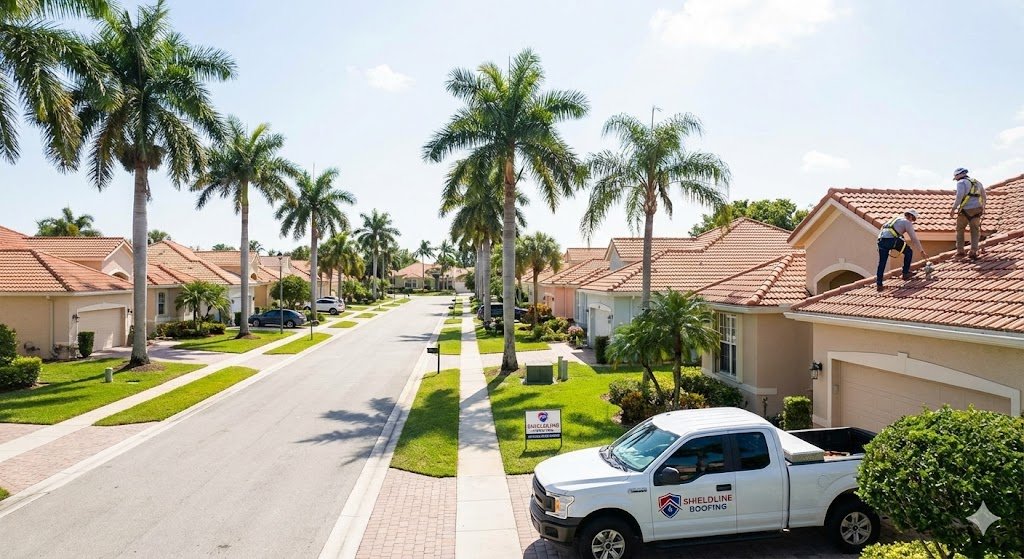
As experienced, licensed roofing contractors serving Boca Raton, Fort Lauderdale, Hollywood, and the wider South Florida region, we at Shieldline Roofing understand the critical importance of a robust, code-compliant roof. Your roof is your home’s first line of defense against our challenging subtropical climate. This comprehensive guide is designed to empower Boca Raton homeowners with the knowledge needed to make strategic roofing decisions, ensuring the longevity and security of your investment.
1. Boca Raton’s Roofing Landscape: Unique Challenges and Considerations
The beautiful coastal city of Boca Raton, like much of South Florida, presents distinct environmental factors that heavily influence roofing needs. Ignoring these challenges can lead to premature roof failure and significant expense.
1.1. Subtropical Climate Impact
Extreme heat, prolonged sun exposure, and high humidity are constant adversaries to roofing materials. These elements accelerate degradation, causing materials to expand and contract, leading to cracking, fading, and a reduced lifespan. Our installation methods at Shieldline Roofing always account for these conditions, using materials and techniques designed for maximum resilience.
1.2. Hurricane Season Preparedness
Hurricane season is a fact of life in South Florida, making the critical need for wind-resistant materials and installation methods paramount. Boca Raton homeowners must ensure their roofing system can withstand severe weather events. Historically, South Florida experiences, on average, **7-8 named storms** annually, a significant portion of which can impact our coastal communities. The **Florida Building Code (FBC)**, particularly the specific requirements for Palm Beach County, mandates stringent standards for wind uplift resistance, requiring advanced fastening techniques and robust materials.
1.3. Coastal Proximity Effects
Living near the coast means exposure to salt air and moisture, which contribute to corrosion on certain metal components and can foster mold and algae growth on others. Specialized coatings and materials designed to resist these corrosive and organic factors are often necessary to maintain your roof’s integrity and aesthetic appeal.
1.4. Local Building Codes and Permits
Strict adherence to Boca Raton city and Palm Beach County regulations for roofing installations and repairs is not just a legal requirement but a crucial safety measure. These codes, updated regularly (e.g., **FBC 2023**), dictate everything from underlayment specifications to fastening schedules and the necessity of a **Secondary Water Barrier (SWB)**. Shieldline Roofing meticulously handles all permitting processes to ensure your project is fully compliant.
2. Common Roofing Types and Materials in Boca Raton
Understanding the best roofing materials for Boca Raton’s climate is key to a long-lasting roof. Each material offers distinct advantages in terms of durability, aesthetics, and performance.
2.1. Tile Roofs (Clay & Concrete)
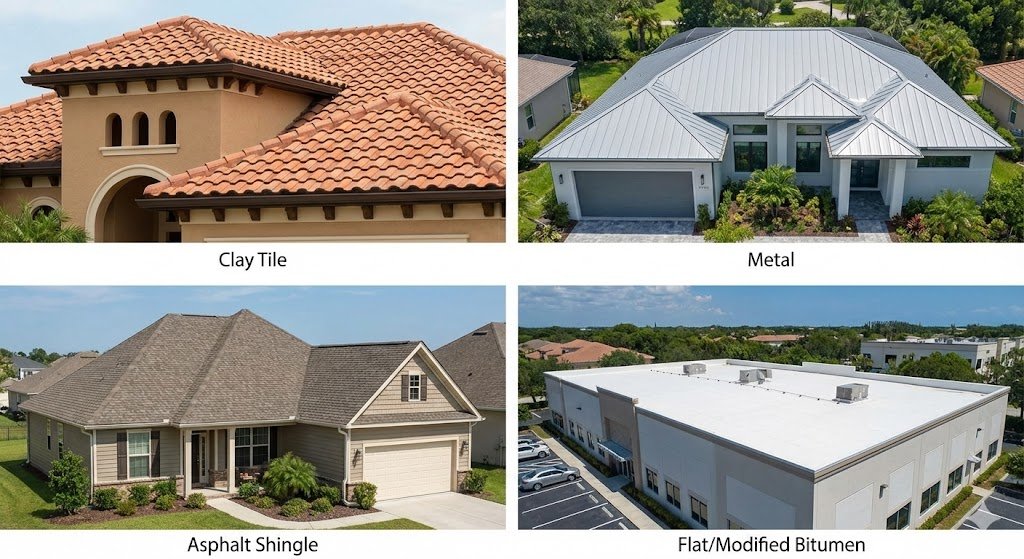
Valued for their classic aesthetic appeal, exceptional durability, and excellent heat reflection, tile roofs have a long lifespan in the Florida sun. Both clay and concrete tiles are highly wind-resistant when properly installed and offer superior protection against UV degradation, making them a popular choice for their elegance and resilience.
2.2. Metal Roofs
Gaining significant popularity, metal roofs offer superior longevity, outstanding energy efficiency, and high wind resistance. Available in a wide range of styles and colors, they are an excellent investment. Recent industry reports indicate that **over 20%** of new residential roofs in Florida are now metal, a testament to their growing popularity and suitability for our climate. Their interlocked panels provide exceptional protection against hurricane-force winds.
2.3. Asphalt Shingles
While often a more budget-friendly option, asphalt shingles in Boca Raton require specific impact-resistant and high-wind rated variants suitable for the region. Standard shingles simply won’t suffice. Choosing higher-quality, architectural shingles with enhanced granule adhesion and a proper **Secondary Water Barrier (SWB)** is essential for adequate protection. While asphalt shingles might last 20-25 years in cooler climates, the intense South Florida sun often reduces their effective lifespan to **12-15 years**.
2.4. Flat/Low-Slope Roofs
Common for modern architectural designs and commercial properties, flat or low-slope roofs often utilize modified bitumen, TPO (Thermoplastic Polyolefin), or PVC (Polyvinyl Chloride) membranes for superior waterproofing. These systems require expert installation to ensure proper drainage and prevent ponding water, a common issue in our heavy rainfall. TPO and PVC are particularly favored for their reflectivity and energy efficiency.
2.5. Sustainable & Energy-Efficient Options
Boca Raton homeowners are increasingly exploring “cool roofs” (like highly reflective metal or light-colored TPO/tile) and solar panel integration. These options significantly reduce energy costs by reflecting sunlight and generating clean power, aligning with modern sustainability goals and potentially offering tax incentives.
3. Recognizing the Signs: When Do You Need Roofing Services?
Proactive identification of roof issues can save homeowners significant money and prevent extensive damage. Don’t wait for a major leak to act.
3.1. Visible Damage
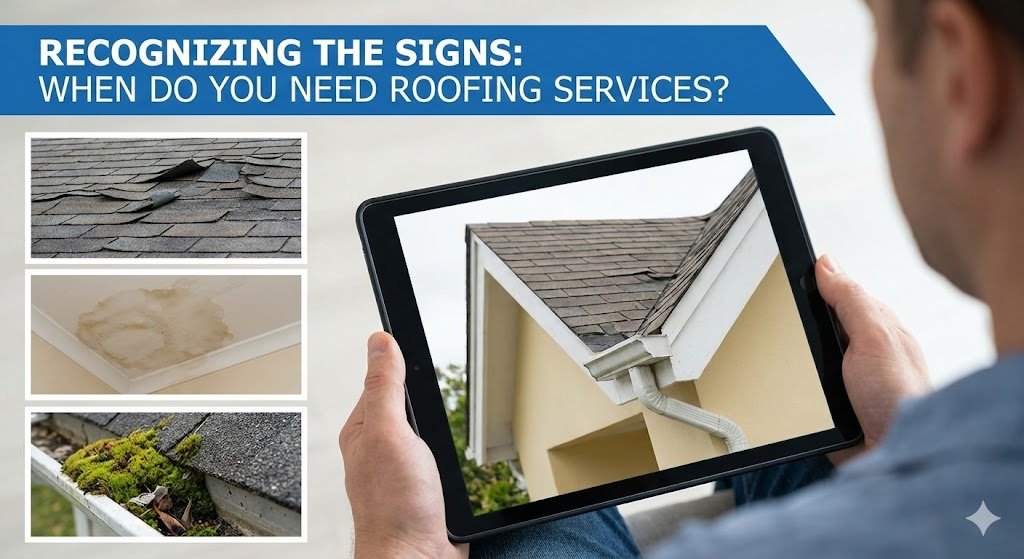
Regular visual inspections (from the ground for safety) can reveal missing, cracked, or curled tiles/shingles. Look for sagging roof lines, exposed underlayment, or granules accumulating in gutters. These are clear indicators of a compromised roof system needing immediate attention.
3.2. Interior Leaks and Water Stains
The most obvious and alarming indicators of a compromised roof system are interior leaks or water stains. These often appear on ceilings or walls, sometimes far from the actual roof breach due to water traveling along structural elements. Any sign of moisture indoors warrants an immediate professional inspection.
3.3. Granule Loss (Asphalt Shingles)
If you have asphalt shingles, excessive accumulation of shingle granules in gutters is a significant warning sign. These granules protect the asphalt layer from UV rays. Their loss signals advanced wear and reduced UV protection, meaning your shingles are nearing the end of their functional life.
3.4. Age of Roof
Understanding the typical lifespan of different roofing materials in Florida’s harsh climate is crucial. Even without visible damage, an aging roof can be less resilient. For example, while some asphalt shingles are rated for 20-30 years, South Florida’s sun often reduces their effective life to 12-15 years. Metal and tile roofs can last 30-50+ years, but even they benefit from periodic inspections after the 20-year mark.
3.5. Post-Storm Assessment
Following strong winds, heavy rains, or hail, a professional roof inspection is critically important. Even if you don’t see immediate damage, high winds can loosen tiles, compromise flashing, or lift shingles, creating vulnerabilities that will become apparent with the next heavy rain. Shieldline Roofing offers comprehensive storm damage assessments.
4. Choosing the Right Roofing Contractor in Boca Raton
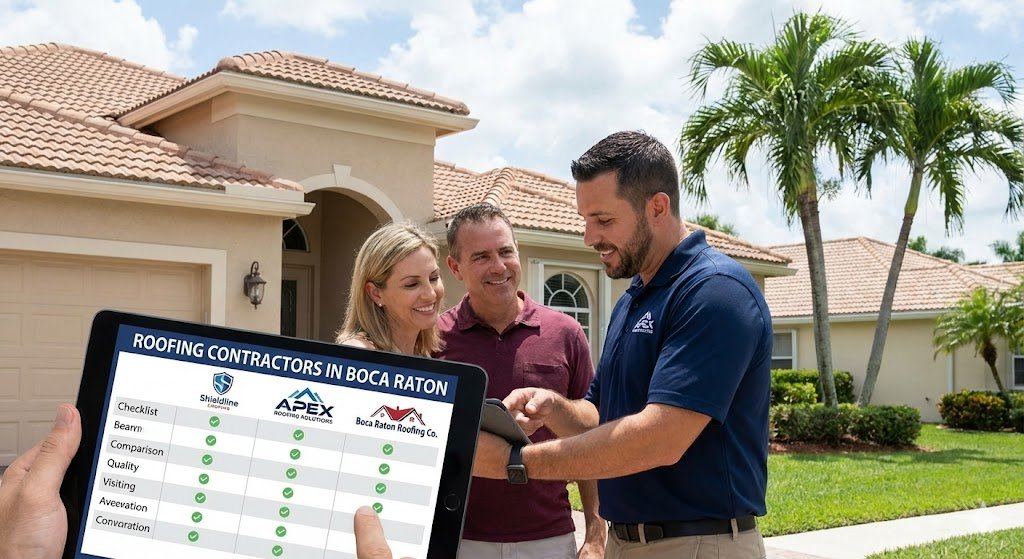
Selecting a reputable and qualified roofing contractor is the most critical step in any roofing project. Your choice directly impacts the quality, compliance, and longevity of your new or repaired roof.
4.1. Licensing and Insurance
Always verify active Florida state contractor licenses (e.g., **Certified Roofing Contractor – CCC**) and comprehensive liability and workers’ compensation insurance. Shieldline Roofing holds all necessary licenses and insurance, providing peace of mind that you are working with a legitimate and responsible company. Never work with an unlicensed contractor – it’s illegal and leaves you vulnerable to liability and poor workmanship.
4.2. Local Experience and Reputation
Selecting contractors with a proven track record specifically in Boca Raton and Palm Beach County is paramount. They will be familiar with local codes, common issues, and the best material suppliers for our region. Shieldline Roofing brings extensive local experience to every project, ensuring solutions tailored to South Florida’s unique demands.
4.3. References and Reviews
Checking recent customer testimonials, online reviews (Google, Yelp, Angi, etc.), and requesting local project references provides invaluable insight into a contractor’s reliability and quality of work. Studies show that over **90%** of homeowners now consult online reviews before hiring a contractor, and for good reason—they offer genuine insights into customer satisfaction.
4.4. Warranty Information
Understand both the material manufacturer warranties and the contractor’s workmanship warranty. A reputable contractor like Shieldline Roofing will offer a robust workmanship warranty, standing behind their installation for years to come. Clarify what is covered, for how long, and any exclusions.
4.5. Detailed Estimates and Transparency
Insist on clear, itemized quotes outlining all materials (including specific brands and types), labor costs, permitting costs, and project timelines. Transparency in pricing and process is a hallmark of a trustworthy contractor. Avoid any contractor who provides vague estimates or demands full payment upfront.
5. The Roofing Process: From Inspection to Completion
Understanding the typical stages of a roofing project can help you prepare and know what to expect from your chosen contractor.
5.1. Initial Roof Inspection and Assessment
The process begins with a thorough evaluation by our experts at Shieldline Roofing. We diagnose issues, identify damage (including potential underlying problems), and recommend appropriate, code-compliant solutions, whether it’s a repair or a full replacement.
5.2. Permitting Process
For all significant roofing work in Boca Raton, securing necessary permits from the City of Boca Raton or Palm Beach County is mandatory. This ensures the project adheres to local **FBC** standards. Shieldline Roofing manages the entire permitting process on your behalf, navigating the bureaucratic requirements efficiently.
5.3. Material Selection and Project Planning
We work collaboratively with you to select the best roofing materials, colors, and design elements that meet your aesthetic preferences, budget, and performance needs. This phase also includes outlining project logistics, scheduling, and addressing any specific concerns you may have.
5.4. Installation/Repair Phase
During the work, our highly trained and safety-conscious crews adhere to strict safety protocols and efficient site management. We minimize disruption, protect your property, and perform the installation or repair with precision, always conforming to the latest **Florida Building Code** standards, including proper fastening, flashing, and **Secondary Water Barrier (SWB)** installation.
5.5. Final Inspection and Cleanup
Upon completion, Shieldline Roofing conducts a rigorous final inspection to ensure quality control, adherence to all codes, and your complete satisfaction. This is followed by a thorough site cleanup, leaving your property spotless and your new roof gleaming.
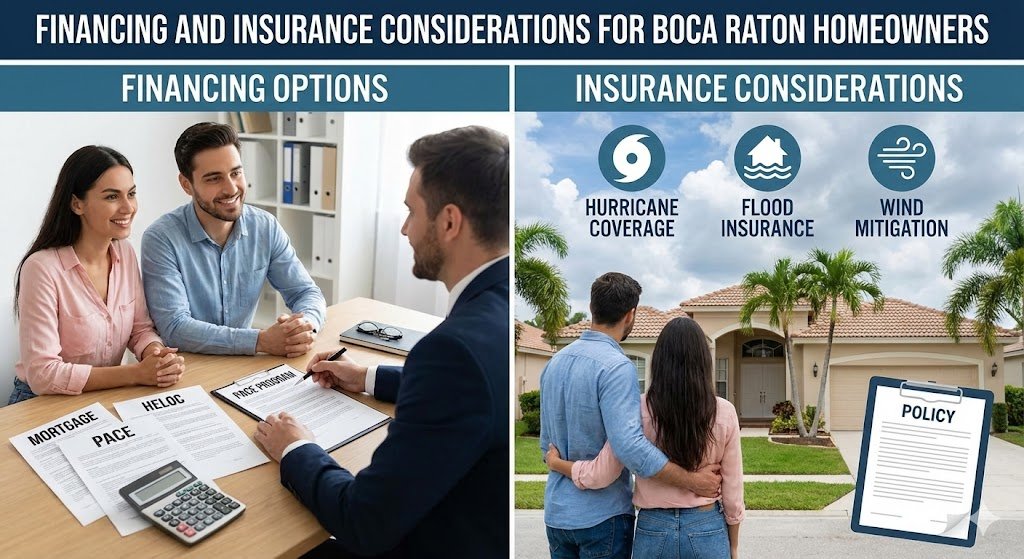
6. Financing and Insurance Considerations for Boca Raton Homeowners
Navigating the financial aspects of a major roofing project, especially after storm damage, requires careful planning and understanding of your options.
6.1. Understanding Homeowners Insurance Coverage
It’s vital to differentiate between **Replacement Cost Value (RCV)** and **Actual Cash Value (ACV)** policies. RCV policies generally cover the cost to replace your roof with new materials, while ACV policies factor in depreciation. Understand your deductible, any hurricane deductibles, and specific exclusions. Review your policy annually with your agent.
6.2. Navigating Insurance Claims
If your roof is damaged by a storm, effective claims processing is crucial. Document damage thoroughly with photos and videos, contact your insurer promptly, and work effectively with insurance adjusters. Shieldline Roofing can provide detailed damage assessments and assist homeowners in navigating the complexities of insurance claims, ensuring you receive the coverage you’re entitled to.
6.3. Financing Options
For planned replacements or repairs not covered by insurance, explore various financing solutions. Options may include home equity loans, Home Equity Lines of Credit (HELOCs), and contractor-offered financing solutions. In some areas, **PACE (Property Assessed Clean Energy)** programs might also be available for energy-efficient upgrades, offering low-interest, long-term financing repaid through your property taxes.
7. Maintaining Your Boca Raton Roof for Longevity
A well-maintained roof lasts longer, performs better, and provides greater peace of mind. Regular maintenance is a small investment that yields significant returns.
7.1. Regular Professional Inspections
Scheduling annual or bi-annual professional inspections is paramount, particularly before and after hurricane season. These inspections catch minor issues before they escalate, prolonging your roof’s life and preventing costly emergency repairs. Shieldline Roofing offers comprehensive maintenance programs.
7.2. Gutter Cleaning and Debris Removal
Regular gutter cleaning and removal of leaves, branches, and other debris from your roof are essential. Clogged gutters lead to water accumulation, which can cause fascia and soffit rot, ice dams (though rare in Florida, standing water is corrosive), and pest infestations. Debris on the roof surface can also trap moisture, leading to premature material degradation.
7.3. Moss, Algae, and Mildew Treatment
In our humid climate, moss, algae (often appearing as black streaks), and mildew are common. These organic growths not only detract from your roof’s appearance but can also degrade materials by retaining moisture and breaking down shingle granules. Professional, safe cleaning and treatment with appropriate solutions (e.g., zinc strips or specific chemical treatments) are vital.
7.4. Prompt Minor Repairs
Addressing small leaks, loose tiles, damaged flashing, or sealant issues proactively is critical. What starts as a minor problem can quickly escalate into a major, expensive repair if left unattended. Don’t procrastinate on small repairs; they are often the most cost-effective way to preserve your roof.
8. Conclusion: Secure Your Investment with Strategic Roofing Choices
Your roof is one of the most significant investments in your Boca Raton home or business. By understanding the unique challenges of our South Florida climate, selecting the right materials, and partnering with a reputable, licensed, and insured contractor like Shieldline Roofing, you can ensure your property is protected for decades to come. Don’t compromise on quality or compliance – your peace of mind depends on it.
Ready for a free, code-compliant roof inspection or need expert advice on your Boca Raton property? Contact Shieldline Roofing today – your trusted partner for superior roofing solutions in South Florida.
FAQs:
How often should I have my roof inspected in Boca Raton?
We recommend at least annual inspections, ideally before or after hurricane season, to identify potential issues early and ensure your roof is prepared for severe weather.
What is the best type of roof for hurricane resistance in South Florida?
Metal roofs and properly installed tile roofs (clay or concrete) generally offer the highest hurricane resistance, thanks to their robust fastening systems and material strength. Always ensure they meet or exceed **Florida Building Code** wind-load requirements.
Do I need a permit for roof repairs or replacement in Boca Raton?
Yes, any significant roof repair or full replacement in Boca Raton (and Palm Beach County) requires a permit to ensure compliance with local building codes and safety standards. A reputable contractor will handle this for you.
How long does a typical roof replacement take in Boca Raton?
The duration varies based on roof size, material type, and weather conditions, but a typical residential roof replacement can take anywhere from 3 days to 2 weeks. Tile roofs often take longer due to material handling and intricate installation.
Will my homeowner’s insurance cover roof damage from a hurricane?
Most homeowner’s insurance policies in Florida cover sudden and accidental damage from hurricanes, but specific terms, deductibles (especially hurricane deductibles), and depreciation calculations (RCV vs. ACV) vary. It’s crucial to review your policy details.
What should I look for in a roofing contractor’s warranty?
Look for both a material manufacturer warranty (covering defects in the roofing product) and a contractor’s workmanship warranty (covering installation errors). A strong workmanship warranty demonstrates a contractor’s confidence in their quality of work.
Are there energy-efficient roofing options suitable for Boca Raton’s climate?
Absolutely. “Cool roofs” with high solar reflectivity (e.g., light-colored metal, TPO membranes, or specific tile options) significantly reduce heat absorption, lowering attic temperatures and decreasing your home’s cooling costs. Solar panel integration is also a growing energy-efficient choice.
How much does a new roof cost in Boca Raton, FL, on average?
The average cost for a new roof in Boca Raton can vary widely from $15,000 to $40,000+, depending on factors like roof size, material choice (asphalt shingles being less, metal or tile being more), complexity, and code upgrades. Getting a detailed, itemized quote is essential.
