
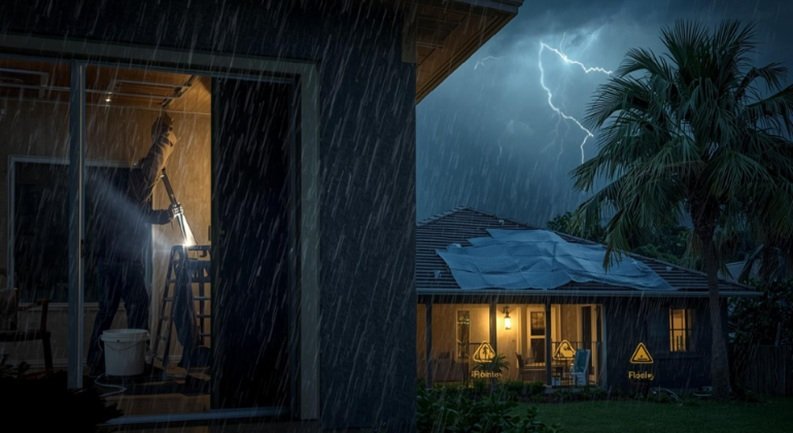
Emergency Roof Leak at Night: Your Strategic Playbook for Fort Lauderdale & South Florida
As experienced, licensed roofing contractors serving Fort Lauderdale, Hollywood, and the entire South Florida region, we at Shieldline Roofing understand the unique anxieties that come with a sudden roof leak. When that leak strikes in the dead of night, under the cover of darkness and perhaps even during a torrential downpour, the situation can escalate from concerning to downright terrifying. Panic is a natural reaction, but it’s crucial to remember that a strategic, informed response can significantly mitigate damage and ensure safety.
This playbook, developed from decades of hands-on experience in Florida’s challenging climate, provides you with immediate, actionable steps to navigate a night-time roof emergency. Our goal is to empower homeowners and business owners across South Florida with the knowledge to react decisively, protect their property, and set the stage for professional, lasting repairs.
Key Takeaways for Your Night-Time Leak Response:
- Prioritize Safety First: In the dark and rain, electrical hazards and structural integrity are paramount.
- Execute Rapid Containment: Swift action to minimize water spread is crucial for limiting collateral damage.
- Mobilize Improvised Solutions: Your home likely holds temporary fixes. Know how to leverage them.
- Document for Future Intelligence: Every detail, photo, and observation is vital for insurance and repair planning.
- Formulate a Long-Term Resilience Plan: Move beyond immediate crisis to sustainable prevention and code-compliant solutions.
1. Initial Threat Assessment & Safety Protocols in South Florida Homes
Before you even think about placing a bucket, your absolute first priority must be safety. In South Florida, where humidity and older electrical systems can combine with sudden water intrusion, the risks are amplified. Do not underestimate these dangers.
Identifying Immediate Dangers in the Dark
A night-time leak obscures vision, making hazards less apparent. You must be acutely aware of potential electrical shorts – a common and extremely dangerous consequence of water mixing with wiring. Listen for crackling, popping, or buzzing sounds. Be vigilant for the signs of ceiling collapse, which might manifest as bulging drywall, sagging plaster, or unusual cracking noises. Always assume the worst and proceed with extreme caution. Slip hazards from standing water are also a significant risk, especially on tile or wood floors.
Securing the Affected Area: Power Off, Protect Valuables
Upon discovering a leak, your immediate action should be to clear the area directly beneath the leak. Move furniture, electronics, and any other valuables that could be damaged. More critically, locate your electrical panel. If the leak is near any electrical fixtures (lights, outlets, ceiling fans), or if you hear any electrical disturbances, immediately shut off power to the compromised circuit. If you’re unsure, or the leak is widespread, it’s safer to turn off power to the entire affected zone, or even the whole house. This proactive step is non-negotiable for preventing electrocution or fire, especially in the often-humid conditions of Fort Lauderdale.
Prioritizing Human Safety: Evacuating & Ensuring Clear Pathways
Human life and well-being always come before property. If the leak is severe, the ceiling is visibly sagging, or electrical concerns are high, evacuate vulnerable individuals (children, elderly, pets) from the immediate area. Ensure that pathways to exits are clear and well-lit (using battery-powered flashlights, not plugged-in lamps) to prevent falls. This may sound extreme, but in the chaos of a night-time emergency, clear thinking and swift action can prevent serious injury.
2. Tactical Containment & Damage Mitigation – Shieldline Roofing’s Emergency Approach
Once safety is assured, the next critical step is to minimize the spread of water. Every minute counts in preventing further structural damage, mold growth, and the destruction of personal property. Shieldline Roofing emphasizes using readily available household items for rapid, effective containment.
Deploying Water Collection Assets Strategically
Think quickly and resourcefully. You’ll need a variety of items to catch and absorb water. Strategically place buckets, large mixing bowls, trash cans, or even empty laundry bins directly under the leak. For wider areas, or if the water is dripping from multiple points, consider using large tarps or plastic sheeting draped over furniture to create a collection funnel into a single larger receptacle. Remember that water can saturate quickly; have towels and old blankets ready to absorb smaller drips and protect flooring.
Constructing Temporary Diversion Channels to Protect Your Home
Sometimes, simply catching water isn’t enough; you need to direct it away from critical areas. Heavy-duty garbage bags, plastic sheeting, or even a shower curtain can be used to create temporary diversion channels. Tape these materials to the ceiling or walls (carefully, ensuring stability) to funnel water away from electronics, expensive furniture, or load-bearing walls towards your collection points. Even a slight slope can guide water effectively, preventing it from spreading across a larger ceiling or soaking into drywall where it can cause extensive, hidden damage.
Protecting High-Value Assets: Electronics & Furnishings in South Florida Homes
Electronics are particularly vulnerable to water damage and should be moved immediately. Unplug and elevate them onto tables or chairs if possible. Cover larger items like televisions or computers with plastic bags or tarps. Furniture, especially upholstered pieces, can be quickly damaged by water. Move pieces away from the leak, elevate them on blocks or even cans of food, and cover them with plastic sheeting. The humid Fort Lauderdale climate means that even brief water exposure can lead to rapid mold growth, making quick protection vital.
3. Resource Mobilization for Temporary Stabilization – Fort Lauderdale Solutions
While the long-term solution will require professional expertise from Shieldline Roofing, implementing temporary measures is crucial to prevent further damage until help arrives. This means looking around your home for materials that can serve as stopgaps.
Leveraging On-Hand Emergency Supplies: Beyond Buckets
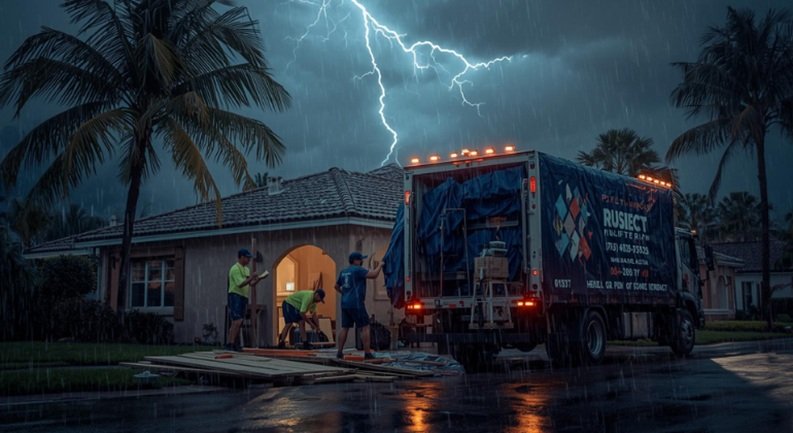
Beyond water collection, consider what you might have for temporary patching. Many South Florida homes, particularly those in hurricane zones, keep tarps, plastic sheeting, and duct tape on hand for storm preparedness. These are invaluable now. A sturdy tarp can be spread over a wider interior area or, if safely accessible and conditions allow (which is rare at night), carefully draped over the exterior roof to cover the perceived source of the leak. Plywood scraps, sealants, or even heavy-duty construction adhesive can be used to cover or seal smaller holes from the interior if the leak source is definitively identified and safe to access without climbing on the roof.
Improvising Solutions with Household Items for Stopgap Measures
Necessity is the mother of invention. A shower curtain can be cut and taped to funnel water. Plastic bags, when opened and taped together, can create a larger sheet. Strong adhesive tapes (like gorilla tape or heavy-duty packing tape) can be surprisingly effective for holding plastic in place or even sealing small, non-structural cracks. The key is to be creative and use what’s available to create a barrier or diversion, understanding these are temporary fixes designed to buy time, not permanent solutions.
Initiating External Support Protocols: Call Shieldline Roofing First!
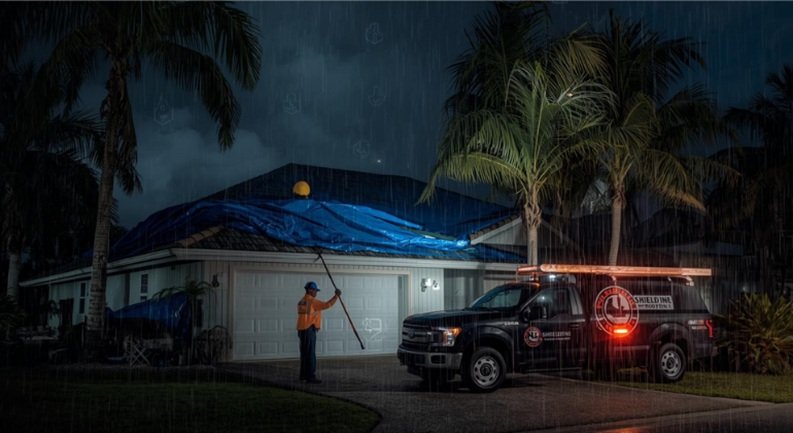
This is arguably the most critical step. Once initial containment is in place and your family is safe, do not attempt to climb onto a wet, dark roof yourself. This is incredibly dangerous, especially in South Florida where roofs can be steep and slippery, and severe weather can intensify rapidly. Your first point of contact should be a trusted, licensed, and insured local roofing contractor like Shieldline Roofing. We offer 24/7 emergency services for Fort Lauderdale, Hollywood, and surrounding areas. We can provide immediate, safe assessment and temporary patching, ensuring compliance with **Florida Building Code (FBC)** standards even for emergency repairs. Leveraging neighborhood support networks for moral support or extra hands can also be beneficial, but always defer to professional expertise for anything involving the roof structure itself.
4. Intelligence Gathering & Post-Incident Documentation for South Florida Claims
Once the immediate crisis is under control, your focus should shift to documentation. This “intelligence gathering” is vital for future insurance claims and for informing your permanent repair strategy. Insurance companies in Florida can be particular, so thorough documentation is key.
Collecting Visual Evidence: High-Resolution Photos & Videos
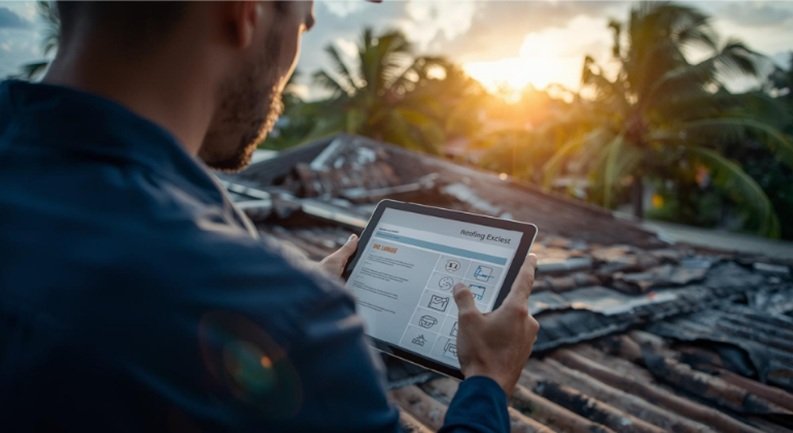
Before and after any temporary repairs, take extensive, high-resolution photos and videos. Document the leak source (if visible from inside), the water flow, the internal damage (ceiling, walls, floors, furniture), and the temporary measures you’ve put in place. Capture images from multiple angles, wide shots showing the full extent of the damage, and close-ups detailing specific issues. If possible, take photos of the roof exterior in daylight once it’s safe. This visual evidence will be invaluable for your insurance claim and for helping your Shieldline Roofing contractor understand the full scope of the issue.
Detailed Incident Logging: A Chronological Record
Start a detailed log of the incident. Note the exact time you discovered the leak, the weather conditions at that moment, the estimated location of the leak, the progression of the damage, and every action you took (e.g., “11:30 PM: Discovered drip in living room, placed bucket. 11:45 PM: Shut off power to living room circuit. 12:15 AM: Called Shieldline Roofing.”). Include names of anyone who assisted. This chronological record provides a clear, factual account of the event, which is essential for insurance adjusters and for the Shieldline Roofing team to accurately assess the situation and plan repairs in compliance with **FBC** standards.
Preliminary Insurance Notification: Understanding Florida Claim Procedures
After securing your property and documenting the incident, initiate the first steps for reporting the incident to your homeowner’s or business owner’s insurance company. Understand their specific claim procedures, which can sometimes be complex in Florida. Provide them with your initial incident log and mention that you have visual evidence. It’s often beneficial to notify your insurer quickly, but avoid making definitive statements about the cause or full extent of damage until a professional assessment from a licensed contractor like Shieldline Roofing has been completed. Be prepared to discuss your deductible and the next steps for an adjuster visit.
5. Strategic Planning for Long-Term Resilience with Shieldline Roofing
A night-time leak is a severe warning sign. Once the immediate crisis is addressed, the focus must shift from temporary fixes to a durable, code-compliant, and preventative long-term solution. This is where the expertise of Shieldline Roofing becomes indispensable for homeowners and businesses in Fort Lauderdale, Hollywood, and South Florida.

Scheduling Professional Assessment & Permanent Repair
Immediately after containment and documentation, contact Shieldline Roofing to schedule a thorough professional assessment. Our certified roofing contractors will conduct a comprehensive inspection to pinpoint the exact source of the leak, assess the full extent of hidden damage (e.g., to decking, insulation, or underlying structure), and recommend the most effective permanent repair. This could range from specific flashing repairs to shingle replacement or even a full roof replacement, depending on the age and condition of your roof. We ensure all repairs meet or exceed current **Florida Building Code (FBC)** requirements, including the crucial **Secondary Water Barrier (SWB)** which is essential for hurricane resilience in our **HVHZ (High Velocity Hurricane Zone)**. Delaying a permanent repair risks further, more extensive damage and potential voiding of insurance coverage.
Implementing a Preventative Maintenance Schedule Tailored for South Florida
A reactive approach is costly. Shieldline Roofing strongly advocates for a proactive preventative maintenance schedule. This includes routine inspections at least once a year, and especially after severe weather events typical of South Florida (tropical storms, hurricanes). Regular gutter cleaning is vital to prevent water backup, which is a common cause of leaks in our heavy rainfall climate. Proactive roof integrity checks can identify minor issues – like loose shingles, cracked flashing, or worn sealants – before they escalate into catastrophic night-time leaks. Our maintenance plans are designed to extend your roof’s lifespan and provide peace of mind.
Developing an Emergency Preparedness Kit for Future Contingencies
Learning from experience is key to resilience. Develop and maintain an emergency preparedness kit specifically for roof leaks. This kit should include items like a sturdy tarp, heavy-duty plastic sheeting, rolls of strong duct tape or roofing tape, multiple buckets and large bins, absorbent towels, a powerful flashlight (battery-operated), safety glasses, work gloves, and most importantly, the readily accessible contact information for Shieldline Roofing’s 24/7 emergency services. Store this kit in an easily accessible location, ensuring you’re always ready for the unexpected, especially during hurricane season in Fort Lauderdale and Hollywood.
Key Roofing Statistics for South Florida Homeowners:
- Approximately 40% of all homeowners will experience a roof leak at some point, with severe weather being a primary trigger.
- Water damage claims are among the most frequent homeowner insurance claims, averaging around $11,000 per claim nationally.
- A single square foot of water can weigh over 60 pounds, highlighting the rapid structural stress a significant leak can cause.
- The average lifespan of an asphalt shingle roof is 20-25 years, yet many go without regular inspection, increasing vulnerability to sudden, catastrophic failure.
- In Fort Lauderdale and Hollywood, roofs are subject to the Florida Building Code, which often requires enhanced wind resistance, especially in High-Velocity Hurricane Zones (HVHZ).
Frequently Asked Questions about Night-Time Roof Leaks
Is it ever safe to climb onto a wet, dark roof at night to find a leak?
Absolutely NOT. As licensed roofing contractors with extensive experience in South Florida, we cannot stress this enough: climbing onto a wet, dark roof at night is incredibly dangerous. The risks of slipping, falling, or encountering unseen hazards (like live electrical wires or compromised structural areas) are extremely high. Your personal safety is paramount. Instead, focus on interior containment and immediately contact a professional emergency roofing service like Shieldline Roofing. We have the proper safety equipment and training to handle such dangerous situations.
Who should be my first point of contact after containing the immediate leak indoors?
After ensuring human safety and implementing immediate interior containment, your first call should be to a reputable, licensed, and insured local roofing contractor like Shieldline Roofing. We are equipped to handle emergency assessments and temporary repairs safely and efficiently. While notifying your insurance company is also important, having a professional roofer assess the damage first can provide you with the expert documentation and repair strategy needed for a smoother claims process in Florida.
What specific information will my insurance company need for a roof leak claim?
Your insurance company will typically require detailed documentation. This includes high-resolution photos and videos of the leak (source, water flow, and damage to interior structures/belongings), a detailed incident log outlining when the leak was discovered and actions taken, and potentially a police report if extreme weather was involved and reported. They will also need the professional assessment and repair plan from your chosen roofing contractor. Be prepared to provide dates, times, and a clear narrative, as Florida insurance adjusters appreciate thorough records.
How long can a temporary patch effectively hold, and what are the risks of delaying a permanent repair?
A temporary patch is exactly that—temporary. In South Florida’s climate, with its intense sun, heavy rains, and potential for high winds, a temporary patch may only hold for a few days to a few weeks at best. Delaying a permanent, code-compliant repair is extremely risky. It can lead to further, more extensive water damage, mold growth, structural deterioration, and potentially even void future insurance claims if the insurer deems you neglected to make timely, proper repairs. Always prioritize scheduling a professional, permanent repair with Shieldline Roofing as soon as possible.
Are there specific materials or tools I should always keep on hand for a roof emergency?
Yes, preparing an emergency roof leak kit is a smart move for any South Florida homeowner. We recommend including: a large, sturdy tarp (at least 20×30 feet), heavy-duty plastic sheeting, a roll of strong duct tape or roofing repair tape, several large buckets or bins, absorbent towels, a powerful battery-operated flashlight, safety glasses, and durable work gloves. Crucially, always have the emergency contact information for Shieldline Roofing readily accessible. This kit will enable you to perform basic, safe containment until professional help arrives.
A night-time roof leak in Fort Lauderdale or anywhere in South Florida is a stressful event, but it doesn’t have to lead to catastrophe. By following this strategic playbook—prioritizing safety, acting quickly to contain, leveraging available resources, and meticulously documenting—you can mitigate immediate damage. However, the most critical step for long-term protection and peace of mind is engaging a trusted, licensed professional.
Here at Shieldline Roofing, we are dedicated to providing expert, code-compliant roofing solutions that stand up to Florida’s unique climate challenges. From emergency response to thorough assessment and durable repairs, we are your reliable partner in protecting your most valuable asset.
Ready for a Free, Code-Compliant Roof Inspection? Contact Shieldline Roofing Today!
