
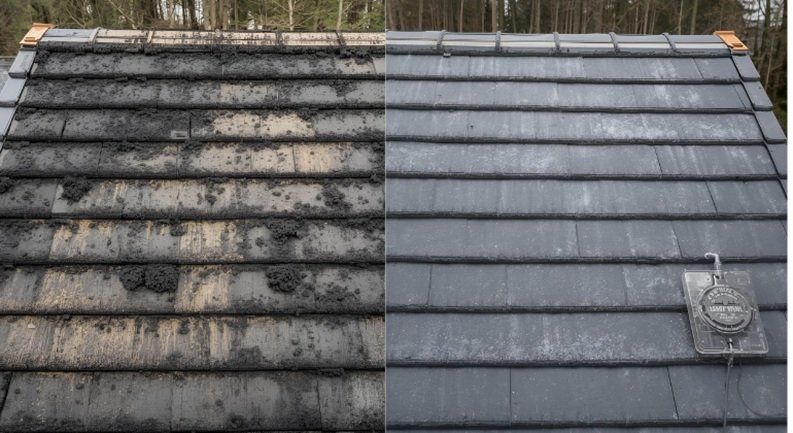
How to Clean Algae and Stains Off Your South Florida Roof Safely
As a homeowner or business owner in Fort Lauderdale, Hollywood, or throughout South Florida, you’re no stranger to the relentless combination of heat, humidity, and abundant sunshine. While these elements make our region beautiful, they also create a perfect breeding ground for unsightly and damaging roof invaders: algae, moss, and various stains. At Shieldline Roofing, we understand that maintaining your roof’s integrity and aesthetic appeal is paramount. But approaching roof cleaning without the right knowledge can lead to serious damage, voided warranties, and even personal injury.
This comprehensive guide, penned by our licensed and highly experienced roofing contractors, will equip you with the expert insights needed to safely and effectively tackle roof grime. We prioritize your safety, your roof’s longevity, and compliance with the stringent demands of the Florida Building Code (FBC). Let’s ensure your roof not only looks pristine but continues to protect your investment for years to come.
Key Takeaways for a Pristine & Protected South Florida Roof
- Prioritize personal safety and roof integrity above all else. This isn’t a task to take lightly.
- Understand your roof material – whether it’s asphalt shingle, barrel tile, or metal – to choose the least invasive cleaning method.
- Absolutely avoid high-pressure washing, which can cause severe, irreversible damage and void crucial warranties, especially in our High-Velocity Hurricane Zone (HVHZ).
- Embrace gentle, environmentally conscious cleaning solutions tailored for our unique climate.
- Implement preventative measures specifically designed for South Florida’s conditions to minimize future algae and stain recurrence.
Understanding the Threat: Algae, Moss, and Stains on Your South Florida Roof
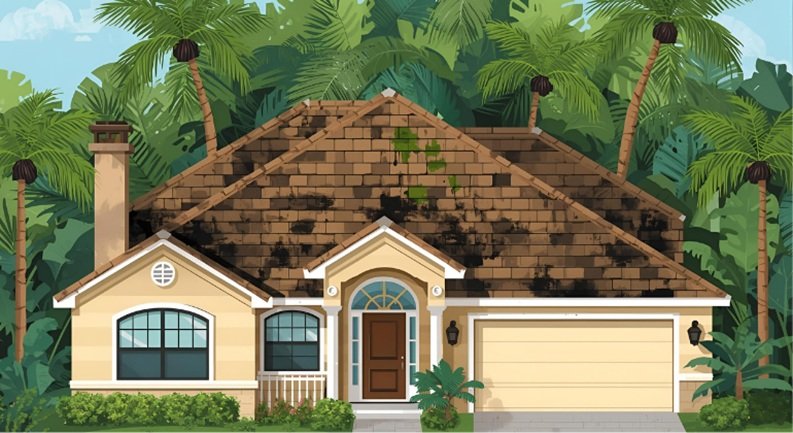
In a region like Fort Lauderdale, where lush landscapes and a tropical climate define our environment, your roof is constantly exposed to elements that encourage biological growth. Understanding these threats is the first step in effective management.
The Local Culprits: Why Growth Thrives in Our Humid Climate
The primary drivers for algae, moss, and lichen growth on your roof are moisture and shade. Our abundant rainfall, high humidity levels, and common overhanging tree branches create ideal conditions for these organisms. Airborne spores, carried by the wind, easily settle on damp roof surfaces. Additionally, the limestone aggregates in asphalt shingles can serve as a food source for certain types of algae, leading to those dark, streaky stains so common in our area. Unlike drier climates, South Florida’s perpetual moisture means these growths rarely dry out completely, allowing them to flourish.
The Damage: Beyond Aesthetics to Structural Integrity
While unsightly, the problems caused by algae and moss go far beyond curb appeal. These organisms actively degrade your roofing materials. Moss, in particular, can lift shingles, creating gaps where water can penetrate and compromise your roof’s vital **Secondary Water Barrier**. They trap moisture against the roof surface, preventing it from drying out properly and accelerating the deterioration of shingles, tiles, and sealants. This constant dampness can lead to granular loss on asphalt shingles, erosion of tile surfaces, and even corrosion on metal roofs if left unchecked.
Long-Term Implications for Your Investment
Neglecting roof algae and moss can significantly shorten your roof’s lifespan, costing you thousands in premature replacement. The reduced reflectivity of a darkened roof also means increased energy costs as your attic absorbs more heat, forcing your AC to work harder – a significant concern in our sweltering summers. Over time, trapped moisture can lead to wood rot in the decking or fascia, potentially compromising the structural integrity of your entire roofing system and making it less resilient against future hurricane events.
Prioritizing Safety: Before You Even Think About Cleaning
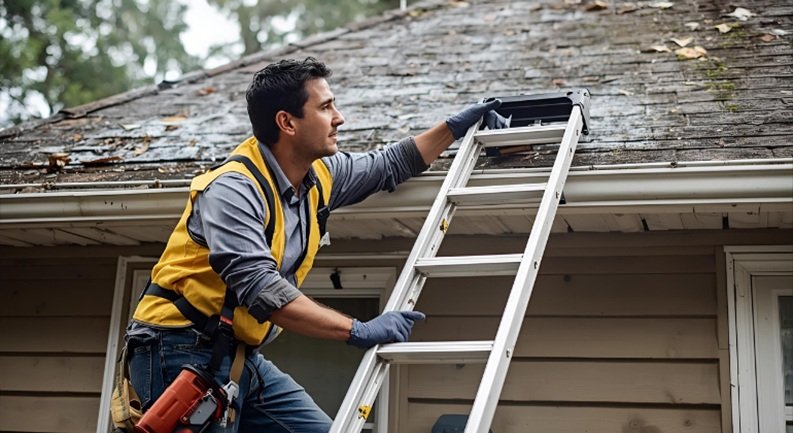
Cleaning your roof is not a job for the faint of heart or the unprepared. As licensed roofing contractors in Fort Lauderdale, Shieldline Roofing cannot stress enough the importance of safety protocols. A fall from a roof or ladder can result in severe, life-altering injuries.
Essential Personal Protective Equipment (PPE) for Roof Work
Before stepping onto any ladder or roof, ensure you are fully equipped. This includes **non-slip, soft-soled shoes** (to protect both you and your roof surface), durable gloves for chemical protection and grip, eye protection against splashes and debris, and long sleeves and pants to protect your skin. Consider a fall arrest system if you’re working on steep pitches, though for most DIY cleaning, avoiding steep roofs altogether is the safest bet.
Ladder Safety Protocols: A Shieldline Roofing Imperative
Ladder safety is paramount. Always use a sturdy, extendable ladder rated for the job. Ensure it’s placed on stable, level ground and extends at least three feet above the edge of the roof. Secure the ladder at the top to prevent slipping. Maintain **three points of contact** (two hands and one foot, or one hand and two feet) at all times when ascending or descending. Never overreach; reposition the ladder as needed. Be acutely aware of power lines and keep all equipment, and yourself, a safe distance away. We always recommend working with a spotter to ensure stability and provide assistance in an emergency.
Comprehensive Roof Safety Assessment: Understanding Your South Florida Roof’s Challenges
Before any work begins, thoroughly assess your roof. Identify fragile areas, such as skylights, vents, or older, brittle tiles. Understand the pitch challenges – steep roofs are inherently more dangerous. Avoid slippery spots caused by existing algae, moss, or morning dew. Be extra cautious around roof valleys and low-slope areas where water might accumulate. For complex roof systems common in South Florida – multi-pitch designs, integrated flat roof sections, or delicate barrel tiles – it’s always safer to consult with professionals like Shieldline Roofing.
Choosing Your Weapon: Safe & Effective Cleaning Solutions for South Florida Roofs
The choice of cleaning solution is critical, not just for effectiveness but for preserving your roof’s lifespan and warranty. In our humid climate, a targeted, gentle approach is key.
Gentle Approaches: What Shieldline Roofing Recommends for Our Climate
- Low-Pressure Water Rinsing (Garden Hose with Nozzle): For minor, recent growth, a simple rinse with a standard garden hose can be surprisingly effective. Always spray from the ridge downwards to avoid forcing water under shingles or tiles.
- Specialized Oxygen Bleach-Based Roof Cleaners: These are often our preferred choice. They are non-corrosive, biodegradable, and highly effective against biological growth without damaging roof materials or harming surrounding landscaping. Brands like Wet & Forget or OxiClean-based solutions work by slowly breaking down the algae and moss over weeks or months, allowing rain to wash it away naturally.
- Diluted Household Bleach Solutions (Use with Extreme Caution): A solution of 50/50 household bleach and water can kill algae. However, it’s highly corrosive, can damage plants, and must be rinsed thoroughly. **Shieldline Roofing advises extreme caution** and ample environmental protection if considering this method. Ensure proper dilution (never stronger than 50/50), apply sparingly, and rinse extensively from the top down.
- Vinegar-Based Solutions: While more eco-friendly, a diluted white vinegar solution is generally less effective than bleach or oxygen bleach for aggressive South Florida algae. It can work for very mild stains but requires more frequent reapplication.
Solutions to AVOID at All Costs on Your Fort Lauderdale Roof
This cannot be emphasized enough, especially for delicate materials and in our wind-prone region:
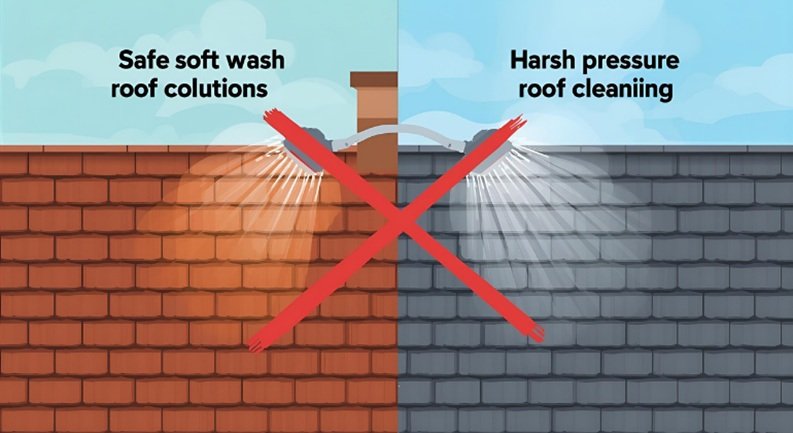
- High-Pressure Washers: These are the archenemy of your roof. High-pressure water can blast away the protective granules on asphalt shingles (drastically reducing their lifespan), dislodge or crack tiles, force water underneath flashing and shingles leading to leaks, and even damage the **Secondary Water Barrier**. This type of damage can instantly void your roof’s warranty and compromise its ability to withstand our hurricane season.
- Wire Brushes or Abrasive Tools: Never scrub your roof with anything that could physically abrade the surface. This causes permanent damage to protective layers.
- Strong Acids, Lye, or Petroleum-Based Solvents: These chemicals are far too aggressive for roofing materials and can cause severe degradation, discoloration, and structural weakening. They are also incredibly hazardous to the environment and anyone working with them.
The Granule Preservation Factor: Why Soft Washing Wins for South Florida Roofs
The granular surface of asphalt shingles is their primary defense against UV radiation, weather, and impact. Losing these granules due to aggressive cleaning methods is akin to removing your roof’s sunscreen. **High-pressure washing can reduce shingle lifespan by up to 50% due to granule erosion,** leaving your roof vulnerable. Soft washing, using low pressure and specialized detergents, cleans without physical abrasion, preserving these crucial granules and extending your roof’s life, keeping it compliant with manufacturer specifications and local **FBC** durability requirements.
The Cleaning Process: Shieldline Roofing’s Step-by-Step for Optimal Results
Once you’ve chosen a safe cleaning solution and geared up with your PPE, follow these steps for effective and safe roof cleaning, designed to protect your property in Fort Lauderdale, Hollywood, and beyond.
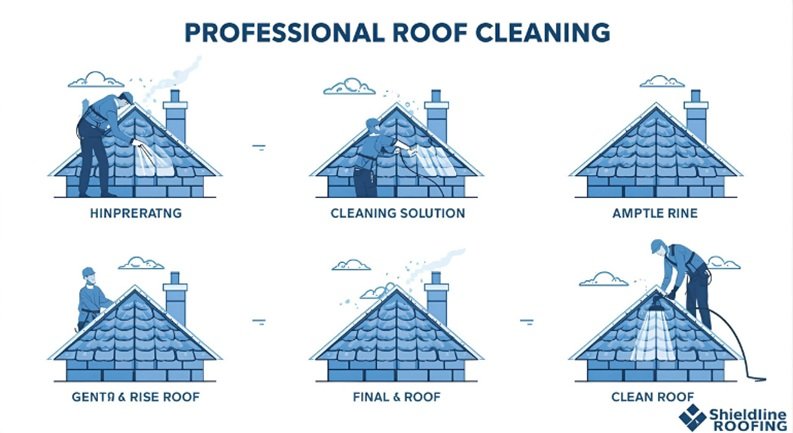
Meticulous Preparation: Protecting Your South Florida Landscape
Before applying any cleaning solution, take time to prepare your surroundings. Generously wet down all surrounding plants, shrubs, and trees with plain water. This creates a protective barrier that dilutes any accidental overspray. If using a stronger chemical like diluted bleach, consider covering sensitive plants with tarps. If your gutters drain into a rain barrel or permeable landscape areas, temporarily divert the runoff or cover your gutters to prevent solution contamination. Clear your roof of any loose debris like leaves or twigs.
Application: Ridge to Eave, Ensuring Proper Dwell Time
Always apply your chosen cleaning solution evenly, working from the **ridge downwards towards the eaves**. This ensures that the solution flows naturally and prevents streaking. Follow the product instructions precisely for dwell time – the duration the solution needs to sit on the roof to be effective. For oxygen bleach solutions, this might be minutes; for “leave-on” products, it could be weeks or months. Ensure uniform coverage to avoid patchy results.
Gentle Rinsing: Ensuring a Clean Finish and Preserving Materials
After the appropriate dwell time, if rinsing is required, perform a gentle, low-pressure rinse with your garden hose, again working from **top to bottom**. This removes the cleaning solution and any loosened algae, moss, or dirt. Be thorough, but avoid directing a powerful stream into shingle overlaps or under tiles, which could force water into the roof deck. The goal is to wash away debris, not to blast it off. For “leave-on” products, nature will handle the rinsing with subsequent rain showers.
Long-Term Prevention: Keeping Your Fort Lauderdale Roof Pristine
Cleaning is only half the battle. For lasting results in our tropical climate, proactive prevention is essential. Shieldline Roofing recommends these strategies for homeowners and business owners in South Florida.
Proactive Vegetation Management: Trimming for Longevity
Overhanging tree branches are a primary contributor to roof algae and moss. They create shade, which keeps your roof damp longer, and shed leaves and debris that accumulate and hold moisture. Regularly trimming branches so they are at least 10-15 feet away from your roof will significantly reduce shade, improve air circulation, and minimize organic debris. This simple act reduces the conditions favorable for growth and helps your roof dry out faster after our frequent rain showers.
Optimizing Drainage: The Role of Gutters in a Humid Climate
Clogged gutters and downspouts are another major culprit. When gutters overflow, water constantly spills over the roof’s edge or saturates fascia boards, creating a perpetually damp environment ideal for algae. Ensure your gutters are cleaned regularly and functioning correctly, diverting rainwater effectively away from your foundation and roofline. Proper drainage is crucial for maintaining your roof’s integrity and preventing water intrusion, a key aspect of **FBC** compliance for property protection.
Strategic Material Integration: Zinc or Copper Strips for Local Conditions
For a lasting preventative measure, consider installing zinc or copper strips along the ridges of your roof. As rain washes over these metallic strips, it carries microscopic ions down the roof surface. These ions are toxic to algae, moss, and fungi, effectively inhibiting their growth in the streaks below. This eco-friendly, passive solution is highly effective and particularly beneficial in humid climates like ours, offering continuous protection without chemical application. **Homes in humid climates with significant tree cover are 80% more likely to develop aggressive algae and moss growth,** making these strips a smart investment.
When to Call Shieldline Roofing: Knowing Your South Florida Limits
While DIY cleaning can be an option for some, there are many scenarios where calling a licensed and insured professional like Shieldline Roofing is not just recommended, but essential for safety and optimal results. Our expertise ensures your roof is treated correctly, maintaining its warranty and structural integrity.
Steep Pitches or Multi-Story Challenges
If your roof has a steep pitch (anything greater than 4:12), is multi-story, or involves complex architectural elements, attempting DIY cleaning becomes extremely dangerous. Professionals have specialized safety equipment, training, and insurance to handle these challenges. Your safety should always be the priority.
Extensive or Persistent Growth: Beyond DIY Capacity
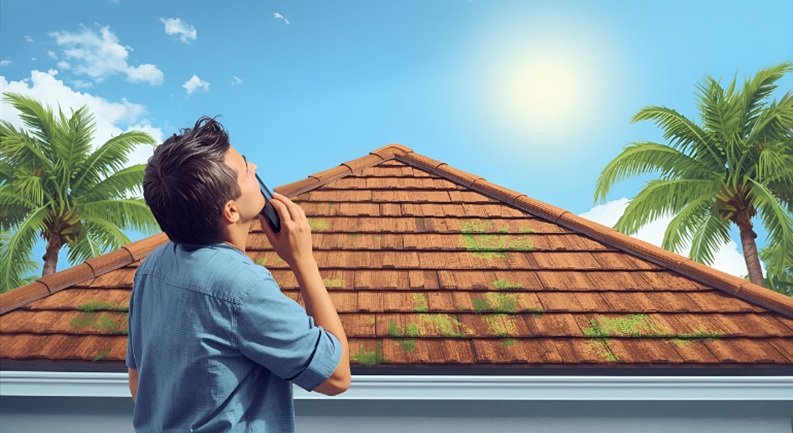
If your roof is covered in a thick layer of moss, has deep-set lichen, or if previous DIY attempts haven’t yielded lasting results, it’s time to call in the experts. Extensive growth can indicate deeper underlying issues or require more robust, yet safe, cleaning techniques that are best left to trained professionals. Shieldline Roofing has the tools and expertise to tackle even the most stubborn South Florida roof grime.
Specialized Roofing Materials & Warranty Concerns
South Florida features a diverse range of roofing materials, from delicate clay and concrete barrel tiles to standing seam metal and specialized flat roof membranes (like TPO or modified bitumen). Each requires specific cleaning methods. Incorrect cleaning can permanently damage these materials or, crucially, void their warranties. For example, some tile manufacturers prohibit certain chemicals or cleaning methods. A licensed contractor like Shieldline Roofing understands these nuances and can clean your roof without compromising its protection or warranty.
The Cost of Inexperience: Why Licensed Contractors are Essential
Attempting a roof cleaning without proper equipment, experience, or safety knowledge can lead to serious injury or costly damage to your roof. The statistics are stark: **Ladder-related injuries in residential settings account for over 500,000 emergency room visits annually,** a risk not worth taking. Shieldline Roofing’s team is trained, equipped, and insured, providing peace of mind that the job will be done safely, effectively, and in compliance with all local standards. We protect your roof and your family.
FAQs About Roof Cleaning in Fort Lauderdale & South Florida
Is pressure washing ever safe for roofs?
Generally, no. As expert roofers in South Florida, Shieldline Roofing strongly advises against traditional high-pressure washing. Only very low-pressure (“soft washing,” typically less than 500 PSI) applied by trained professionals might be considered for specific materials, but even then, granule loss on asphalt shingles remains a significant risk. We prioritize methods that preserve your roof’s integrity and warranty.
How often should I clean my roof?
It depends heavily on your specific microclimate in South Florida, the amount of shade your roof receives, and surrounding vegetation. Typically, every 3-5 years is a good guideline, or as soon as significant algae, moss, or staining is noticed. Regular visual checks can help you catch growth early.
Will cleaning void my roof warranty?
Potentially. This is a critical point for South Florida homeowners. Always check your roof manufacturer’s warranty regarding approved cleaning methods and solutions. Most manufacturers explicitly prohibit high-pressure washing or the use of harsh, abrasive chemicals. Using a licensed contractor like Shieldline Roofing ensures methods are warranty-compliant.
What are zinc or copper strips, and how do they work?
These strips are installed along the roof ridge. Rainwater washes over them, picking up metallic ions. These ions are then carried down the roof surface, creating an environment that is toxic to algae, moss, and fungi, effectively preventing their growth in the path of the runoff. They are a popular and effective preventative measure in humid climates.
Are there any eco-friendly cleaning options?
Yes, absolutely. Oxygen bleach-based cleaners (e.g., those containing sodium percarbonate) are generally more environmentally friendly than chlorine bleach, as they break down into oxygen and soda ash. Diluted vinegar solutions are also eco-friendlier, though often less potent. When using any cleaner, careful runoff management, such as wetting down plants and diverting gutter outflow, is crucial to minimize environmental impact.
Protect Your Investment with Shieldline Roofing
Your roof is your property’s first line of defense against the demanding South Florida climate. While it’s tempting to tackle roof cleaning yourself, the risks to your safety, your roof’s integrity, and its warranty are substantial. At Shieldline Roofing, we bring unparalleled expertise, safety protocols, and a deep understanding of local roofing challenges in **Fort Lauderdale, Hollywood, and the wider South Florida region**.
Don’t risk damaging your roof or compromising your safety. Trust the licensed professionals who understand the nuances of roof care, ensuring your property remains beautiful, protected, and compliant with all **Florida Building Code** standards. From meticulous inspections to safe, effective cleaning and long-term prevention strategies, Shieldline Roofing is your partner for a resilient, pristine roof.
Ready for a Free, No-Obligation Roof Inspection? Contact Shieldline Roofing Today!
