
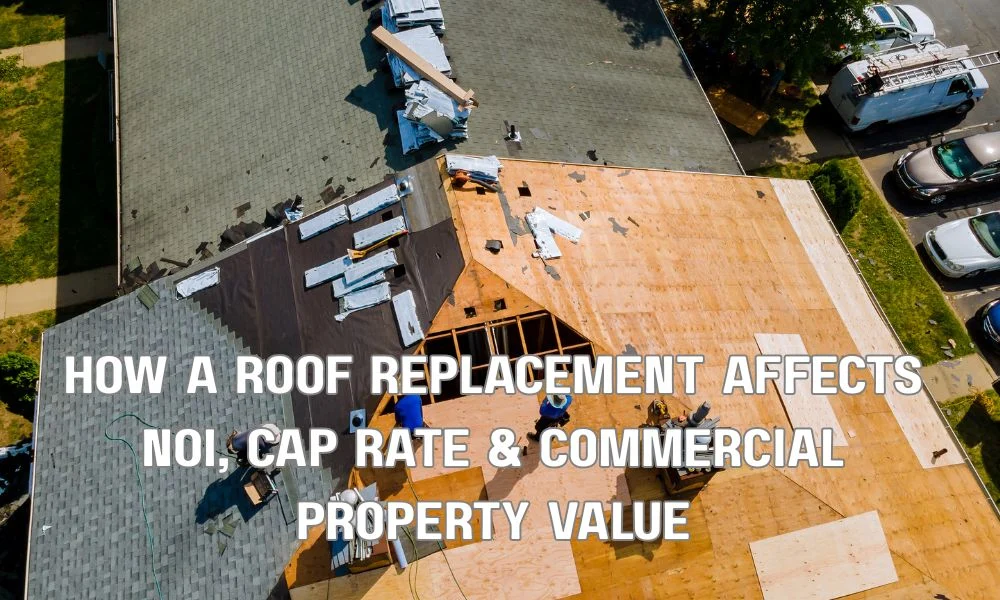
Executive Summary
- Proactive roof replacement significantly boosts Net Operating Income by cutting recurring repair costs and enhancing energy efficiency.
- A new commercial roof positively impacts the capitalization rate by signaling lower future capital expenditures and reduced investment risk.
- Strategic roofing upgrades demonstrably increase commercial property value, attracting higher-quality tenants and securing premium lease rates.
- Modern, energy-efficient roofing systems can lead to substantial reductions in utility expenses, directly flowing into the property’s bottom line.
- Investing in a durable, high-performance roof improves tenant satisfaction and retention, minimizing vacancies and associated revenue losses.
- A well-maintained, new roof extends the property’s lifespan and improves its marketability, justifying a higher asking price during sale.
- Updating the roof mitigates insurance liabilities and potentially lowers premium costs due to reduced risk of property damage.
For commercial property owners and investors, understanding the intricate relationship between capital improvements and financial metrics is paramount. A roof replacement, often viewed as a mere maintenance expense, is in fact a strategic investment capable of profoundly influencing a property’s Net Operating Income (NOI), Capitalization Rate (Cap Rate), and overall market value. This comprehensive guide will dissect how a strategic roofing upgrade can transform these key financial indicators, ultimately enhancing your commercial asset’s profitability and long-term appeal.
Critical Fact 1: A well-executed commercial roof replacement can reduce operational expenses by an average of 15-20% through energy savings and diminished maintenance needs, directly bolstering Net Operating Income.
Understanding the Fundamentals of Commercial Property Valuation
What are the core metrics in commercial real estate valuation?
The core metrics in commercial real estate valuation primarily revolve around Net Operating Income (NOI) and the Capitalization Rate (Cap Rate). NOI represents the annual income generated by an income-producing property after accounting for all necessary operating expenses, excluding mortgage payments and income taxes. The Cap Rate, on the other hand, is the rate of return on a commercial property based on the income that the property is expected to generate, calculated by dividing the property’s NOI by its current market value.
These two metrics are inextricably linked in the valuation process. Investors use the Cap Rate to estimate the potential return on investment and to compare similar properties. A property with a higher NOI will generally command a higher value, especially if its Cap Rate is favorable, reflecting lower perceived risk and stronger income potential. Understanding how a roof replacement influences these foundational elements is crucial for any strategic property enhancement decision.
The Immediate Impact of Roof Replacement on Net Operating Income (NOI)
How does a new roof directly influence NOI?
A new roof directly influences NOI by significantly reducing operating expenses and potentially increasing revenue streams. Firstly, modern roofing systems offer superior insulation and reflectivity, leading to substantial energy savings from reduced heating and cooling costs, which directly cuts down utility expenses—a major component of operating costs. Secondly, a new roof eliminates recurring repair and maintenance expenditures associated with an aging, failing roof, freeing up capital that would otherwise be spent on reactive fixes.
Furthermore, a high-quality roof enhances tenant satisfaction and retention, reducing vacancy rates and associated turnover costs. Tenants are more likely to lease and remain in a building that is well-maintained and offers comfort. A robust roof also minimizes the risk of water damage and other structural issues, preventing costly insurance claims and potential increases in premiums. These combined effects—lower expenses and stable or improved revenue—directly contribute to a healthier Net Operating Income.
Capitalization Rate (Cap Rate): A Key Valuation Driver
In what ways does a roof replacement affect the Cap Rate?
A roof replacement affects the Cap Rate primarily by influencing the investor’s perception of risk and future capital expenditures, which in turn impacts the denominator in the Cap Rate formula (Property Value = NOI / Cap Rate). A new, high-quality roof signifies a reduced need for major capital outlays in the near to medium term, making the property a more attractive and less risky investment. This reduced risk translates to a willingness among investors to accept a lower Cap Rate, which directly implies a higher property valuation for a given NOI.
Essentially, a well-maintained roof system removes a significant deferred maintenance liability from the property’s balance sheet. Investors discount properties that have immediate, substantial capital expenditure requirements. By proactively addressing the roof, property owners mitigate this discount, effectively lowering the market’s perceived Cap Rate for their asset. This shift in investor perception can lead to a considerable uplift in the property’s overall market value.
Critical Fact 2: A decrease in the capitalization rate by even 0.25% due to improved property condition, like a new roof, can increase a commercial property’s value by hundreds of thousands or even millions of dollars, depending on its NOI.
Enhancing Overall Commercial Property Value Through Strategic Roofing
Beyond immediate metrics, how does a roof upgrade elevate long-term property value?
Beyond immediate metrics, a roof upgrade elevates long-term property value by enhancing the asset’s structural integrity, aesthetic appeal, and marketability. A new roof ensures the longevity of the entire building by protecting it from environmental damage, which is a critical factor for long-term investors. It also significantly boosts curb appeal, presenting a professional and well-cared-for image that can attract premium tenants and command higher lease rates.
Moreover, modern roofing solutions often come with extended warranties, transferable upon sale, offering future owners peace of mind and reducing their perceived risk. This added value makes the property more competitive in the market, shortening listing times and potentially securing a higher sale price. A strategic roof upgrade is not just an expense; it’s a statement of quality and foresight that resonates deeply with sophisticated commercial real estate buyers and tenants.
Choosing the Right Roofing System for Maximum ROI
What are the best roofing material options for commercial ROI, and how do they compare?
Choosing the right commercial roofing system is critical for maximizing ROI, balancing upfront cost, longevity, energy efficiency, and maintenance requirements. While the “best” option depends on specific building needs, climate, and budget, several materials consistently offer excellent returns. TPO (Thermoplastic Polyolefin) and EPDM (Ethylene Propylene Diene Monomer) are popular single-ply membranes known for their durability and energy efficiency, particularly TPO’s reflective properties. Metal roofing, though higher in initial cost, provides exceptional longevity, sustainability, and resistance to extreme weather.
Built-up Roofing (BUR) and Modified Bitumen (Mod-Bit) offer robust, multi-layered protection, ideal for heavier traffic or specific structural needs. The optimal choice will consider factors like the roof’s slope, expected foot traffic, desired R-value for insulation, and local building codes. Investing in a system with a long warranty and proven performance will safeguard your asset and ensure long-term value appreciation.
| Roofing Material | Average Cost (per sq. ft.) | Typical Lifespan (Years) | Energy Efficiency | Maintenance Level |
|---|---|---|---|---|
| TPO (Thermoplastic Polyolefin) | $7 – $12 | 15 – 25 | Excellent (White is highly reflective) | Low |
| EPDM (Ethylene Propylene Diene Monomer) | $6 – $11 | 20 – 30 | Good (Darker, absorbs heat) | Low |
| Metal (e.g., Standing Seam) | $10 – $20 | 40 – 70+ | Very Good (Reflective coatings available) | Very Low |
| Modified Bitumen (Mod-Bit) | $8 – $14 | 20 – 30 | Good | Medium |
| Built-Up Roofing (BUR) | $7 – $15 | 20 – 40 | Good | Medium |
Ultimately, a commercial roof replacement is far more than a simple repair; it’s a powerful lever for financial optimization. By strategically investing in a new roof, property owners can significantly reduce operational costs, enhance energy efficiency, improve tenant satisfaction, and mitigate future liabilities. These benefits collectively translate into a stronger Net Operating Income, a more favorable Capitalization Rate, and a substantial increase in the overall market value of the commercial property. It’s an investment that pays dividends across the entire lifecycle of the asset.
Critical Fact 3: Commercial properties with modern, warrantied roofing systems are often perceived as Class A assets, attracting higher lease rates and commanding a premium of 5-10% in market value compared to properties with aging or compromised roofs.
Frequently Asked Questions
Does a new roof always increase my property’s NOI?
Yes, a new roof almost always increases your property’s Net Operating Income (NOI). This is primarily due to reduced maintenance costs from an old, failing roof, and significant energy savings from improved insulation and reflective properties of modern roofing materials. These cost reductions directly boost your net income.
How quickly can I see ROI from a roof replacement?
The return on investment from a roof replacement can begin immediately through energy savings and reduced repair calls. Significant ROI, especially in terms of increased property value and a lower Cap Rate, becomes apparent when refinancing, selling, or assessing long-term operational costs.
Can a new roof lower my commercial property insurance premiums?
Yes, a new, compliant, and well-installed roof can often lead to lower commercial property insurance premiums. Insurers view newer roofs as less risky for water damage, wind damage, and other perils, potentially offering discounts or better coverage terms.
What is the ideal time to replace a commercial roof for maximum value?
The ideal time is proactively, before significant leaks or structural damage occur, typically when the roof is nearing the end of its expected lifespan (e.g., 75-80% through). Replacing it before it becomes a deferred maintenance liability maximizes its positive impact on NOI and Cap Rate.
Are there financing options available for commercial roof replacements?
Absolutely. Many financing options exist, including traditional bank loans, commercial mortgages, PACE (Property Assessed Clean Energy) financing, and even manufacturer-specific programs. Exploring these options can help spread the cost and preserve working capital.
Does the type of roofing material affect its impact on property value?
Yes, the type of roofing material significantly impacts property value. Energy-efficient options like TPO, durable choices like metal, or sustainable systems enhance appeal and justify higher valuations due to their long-term benefits and reduced operational costs.
How do tenants perceive a new commercial roof?
Tenants generally perceive a new commercial roof very positively. It signals a well-maintained, professionally managed property, enhancing comfort, reducing the risk of disruptions from leaks, and potentially lowering their own utility costs, leading to higher satisfaction and retention.
Will a new roof affect my property taxes?
A new roof is a capital improvement, which generally increases the assessed value of your property. This increase could potentially lead to higher property taxes. However, the benefits in NOI and market value typically far outweigh this incremental tax increase.
