The Geostrategic Choice: Deconstructing 3-Tab vs. Architectural Shingles for Optimal Roofing Decisions in South Florida
As a homeowner or business owner in Fort Lauderdale, Hollywood, or anywhere across South Florida, you understand that your roof isn’t just a covering—it’s your property’s primary defense against our unique climate. From relentless sun and humidity to the ever-present threat of hurricane-force winds, selecting the right roofing material is a decision of paramount importance, a true geostrategic choice for your investment. At Shieldline Roofing, we’re not just contractors; we’re your local partners in protection, providing expert, code-compliant solutions.
Today, we’re deconstructing the two most common asphalt shingle types: traditional 3-tab shingles and modern architectural (laminate) shingles. While both offer protection, their differences in aesthetics, durability, cost-effectiveness, and especially their performance under the stringent demands of the Florida Building Code (FBC) can dramatically impact your home’s longevity, curb appeal, and long-term value. Let’s delve deep into the fundamentals to help you make an informed decision.
Understanding the Fundamentals of Asphalt Shingles for South Florida Homes
Asphalt shingles are the most widely used roofing material in North America, thanks to their versatility, relative affordability, and effective weather resistance. But their role in South Florida takes on an elevated importance. Here, your roof isn’t just shedding rain; it’s enduring prolonged UV exposure, high humidity that can foster algae growth, and extreme wind loads that necessitate robust installation practices.
The Backbone of Your Home’s Defense in South Florida
Every asphalt shingle, regardless of type, is composed of a fiberglass mat base, saturated with asphalt for waterproofing, and then coated with mineral granules. These granules serve multiple critical functions: they protect the asphalt from UV degradation, add color and aesthetic appeal, and provide a degree of fire resistance. The quality and quantity of these components vary significantly between 3-tab and architectural shingles, directly impacting their performance in our demanding environment.
Basic Composition and Function
At their core, asphalt shingles are designed to be a highly effective, multi-layered defense system. The fiberglass mat provides strength, while the asphalt renders them waterproof and flexible. The top layer of ceramic granules reflects UV rays, preventing premature aging and adding to the shingle’s visual appeal. Understanding this basic structure is key to appreciating why certain types excel in specific conditions.
Why Your Shingle Choice Matters More Here
For homeowners and business owners in Fort Lauderdale, Hollywood, and surrounding areas, selecting the right shingle type isn’t merely about personal preference; it’s about resilience. Our proximity to the coast means we’re in a High-Velocity Hurricane Zone (HVHZ), requiring materials and installation methods that meet rigorous FBC standards. A strategic shingle choice means a more resilient roof, potentially lower insurance premiums, and greater peace of mind during storm season.
3-Tab Shingles: The Traditional, Economical Baseline for Certain Applications
For decades, 3-tab shingles were the industry standard. They represent a straightforward, cost-effective roofing solution, and while their popularity has waned in new installations, understanding their characteristics is crucial for any South Florida property owner considering repairs or replacements on older homes.
Description and Historical Context
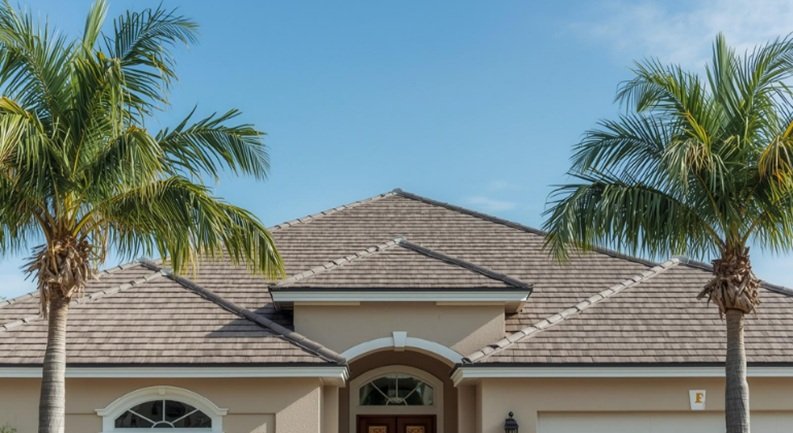
3-tab shingles are characterized by their uniform, flat appearance. Each shingle is a single layer with three distinct cutouts along the bottom edge, designed to mimic the look of individual shingles. This creates a repetitive, patterned aesthetic across the roof. Historically, they were the go-to choice due to their simplicity and affordability. Indeed, **Roughly 60% of roofs installed prior to 1990 used 3-tab shingles.**
Advantages in Specific Scenarios
- Cost-Effectiveness: Without a doubt, 3-tab shingles offer the lowest upfront material and installation cost, making them an attractive option for budget-conscious projects or properties with shorter expected ownership lifespans.
- Lightweight: Their single-layer construction makes them lighter per square foot, which can be advantageous for older roof structures that might not be able to support heavier materials without costly structural reinforcements.
- Simplicity: Their uniform size and shape can lead to a more straightforward and quicker installation process, though adherence to FBC wind-mitigation techniques is always paramount, regardless of shingle type.
Significant Limitations for Our Climate
While economical, 3-tab shingles come with notable drawbacks, particularly when considering the demands of South Florida:
- Aesthetic Limitations: Their flat, uniform appearance offers less visual depth and sophistication compared to modern alternatives. Color and style options are also typically more limited.
- Durability and Lifespan: With a thinner profile, 3-tab shingles are more susceptible to wear and tear from our intense sun, heavy rains, and hail. Their lifespan is significantly shorter.
- Wind Resistance: This is a critical concern for Fort Lauderdale and Hollywood. 3-tab shingles generally have lower wind uplift ratings, making them less suitable for areas prone to severe storms and hurricanes. The FBC has increasingly stricter requirements for wind resistance, often pushing 3-tab shingles out of compliance for new installations in HVHZ zones.
- Warranty: Expect shorter warranty periods, typically 15-20 years, reflecting their shorter expected lifespan.
Lifespan and Local Considerations
The average lifespan of 3-tab shingles is typically 15-20 years. However, in the harsh South Florida climate with its extreme UV exposure and humidity, this lifespan can be further reduced. Algae growth can be a more prevalent issue due to their flatter surface. For any new roof installation or significant repair in our region, Shieldline Roofing strongly advises evaluating whether 3-tab shingles truly meet your long-term needs and the stringent FBC requirements for wind uplift and material performance.
Architectural (Laminate) Shingles: The Modern, Performance-Driven Standard for Florida Homes
Architectural shingles have become the dominant choice for new roofing installations across the country, and for excellent reason, especially in hurricane-prone regions like South Florida. They offer a blend of superior aesthetics and robust performance that addresses many of the limitations of their 3-tab predecessors.
Description and Visual Impact
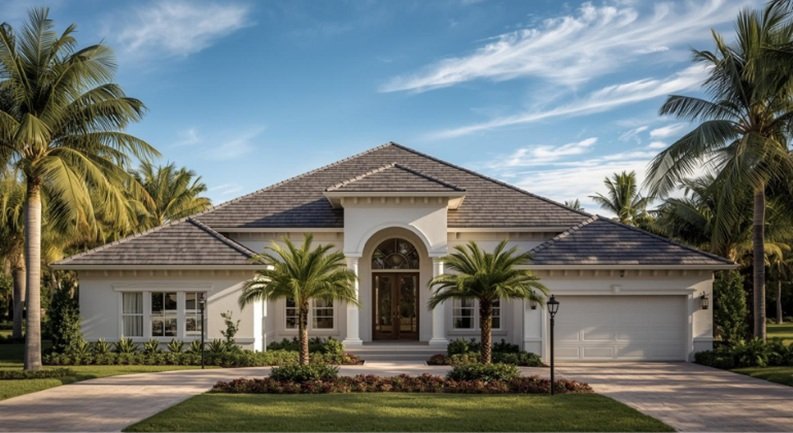
Architectural shingles, also known as laminate or dimensional shingles, are constructed with multiple layers of asphalt and fiberglass, laminated together to create a thicker, more dimensional product. This multi-layered design provides a varied, textured appearance that can mimic the look of natural wood shakes or slate, offering a significant upgrade in curb appeal. They come in a vast array of styles, shapes, and vibrant color options, allowing for greater customization to complement your home’s unique aesthetic. It’s no wonder that **Architectural shingles account for over 80% of new asphalt shingle installations today.**
Unrivaled Benefits for South Florida Weather
- Enhanced Aesthetics: Their dimensional profile and varied granule patterns create a sophisticated, premium look that significantly boosts a home’s curb appeal and perceived value.
- Superior Durability: The thicker, multi-layered construction provides greater resistance to impact from hail, debris, and general wear from our intense sun and heavy rains. This translates to a longer-lasting roof.
- Higher Wind Resistance: This is perhaps their most critical advantage for Fort Lauderdale and Hollywood homeowners. Architectural shingles are engineered with stronger adhesive strips and a heavier construction, making them far more resistant to wind uplift. Many architectural shingles are rated for winds up to 130 mph, compared to 60-80 mph for most 3-tab shingles, aligning better with FBC requirements for HVHZ zones.
- Longer Warranty: Manufacturers often back architectural shingles with substantially longer warranties, typically 30-year to lifetime limited warranties, a testament to their expected longevity and performance.
- Increased Property Value: The premium appearance and superior protection offered by architectural shingles demonstrably contribute to a higher perceived and actual home value, providing an excellent return on investment.
Important Considerations Before Installation
While architectural shingles offer numerous benefits, it’s important to be aware of certain factors:
- Higher Upfront Cost: They do come with a greater initial material and installation expense compared to 3-tab shingles. However, this is often offset by their longer lifespan and superior performance.
- Heavier: Their multi-layered construction means they are heavier than 3-tab shingles. While most standard roof structures can accommodate this weight, Shieldline Roofing always conducts a thorough inspection to ensure your roof decking can support the material, potentially increasing labor if structural upgrades are needed.
Lifespan and Market Dominance
The average lifespan for architectural shingles ranges from 25-50 years, often longer, especially when properly installed and maintained. Their robust construction and enhanced features make them the strategic choice for homeowners in Fort Lauderdale and Hollywood looking for a long-term, high-performance roofing solution that stands up to the demands of the South Florida climate and meets current building codes.
A Side-by-Side Analysis: Key Differentiating Factors for Fort Lauderdale & Hollywood Homeowners
When choosing between 3-tab and architectural shingles for your property in South Florida, a direct comparison of their key attributes, particularly through the lens of our local climate and building codes, is essential. Let Shieldline Roofing guide you through these crucial differentiating factors.
Aesthetics, Curb Appeal, and Local Property Values
- 3-Tab: Offers a flat, uniform appearance with a repetitive pattern. Limited in color and style, often seen as a basic, utilitarian choice. For homes in desirable areas of Fort Lauderdale and Hollywood, this can detract from curb appeal.
- Architectural: Provides a rich, dimensional depth that mimics natural materials like wood shakes or slate. A wide variety of styles and colors allows for significant aesthetic enhancement, boosting curb appeal and aligning with the premium feel of many South Florida properties. This can significantly increase buyer perception and interest.
Durability, Longevity, and Hurricane Resilience
- 3-Tab: Thinner, single-layer construction offers less resistance to our intense UV rays, heavy rains, and potential hail. Expected lifespan is 15-20 years, often less in our harsh conditions. Vulnerable to granule loss and cracking over time.
- Architectural: Thicker, multi-layered construction provides superior resistance to impacts, thermal shock, and UV degradation. Expected lifespan is 25-50 years, proving to be a far more resilient choice against South Florida’s climate. Designed to withstand harsher weather conditions, offering better protection during hurricane season.
Cost: Upfront Investment vs. Long-Term Value in High-Value Areas
- 3-Tab: Lower upfront material and installation costs. However, shorter lifespan means more frequent replacement costs over the life of the property.
- Architectural: Higher initial investment. Architectural shingles typically cost 20-50% more per square than 3-tab shingles. However, their extended lifespan, reduced maintenance, enhanced storm resistance, and greater contribution to property value translate into a superior long-term value and return on investment. This is particularly relevant in high-value real estate markets like Fort Lauderdale and Hollywood.
Weight, Installation Complexity, and FBC Adherence
- 3-Tab: Lighter weight, potentially simpler installation. However, proper adherence to FBC wind mitigation techniques, including advanced fastening and a robust **secondary water barrier**, is still critical.
- Architectural: Heavier due to multi-layering, which contributes to its enhanced wind resistance. Installation may be slightly more complex, but Shieldline Roofing’s experienced, licensed crews are adept at ensuring every architectural shingle installation in Fort Lauderdale and Hollywood fully complies with the latest FBC requirements, including precise nailing patterns and sealant application for maximum wind uplift resistance.
Wind and Weather Resistance: Beyond the Basics for HVHZ Zones
- 3-Tab: Generally rated for winds up to 60-80 mph. In HVHZ regions like ours, these ratings often fall short of current FBC mandates for new construction and significant renovations, making them a less viable option for robust hurricane protection.
- Architectural: Many architectural shingles are rated for winds up to 130 mph, compared to 60-80 mph for most 3-tab shingles. This significantly higher wind rating is a game-changer for South Florida properties, providing critical protection during hurricane events and often meeting or exceeding FBC requirements for wind resistance. Their heavier weight and stronger adhesive bonds make them less likely to lift or tear during extreme weather.
Warranty Coverage: What It Means for You
- 3-Tab: Typically comes with a shorter limited warranty, often 15-20 years. This shorter coverage reflects the material’s expected lifespan and durability.
- Architectural: Often boasts 30-year to lifetime limited warranties, providing greater peace of mind and demonstrating the manufacturer’s confidence in the product’s longevity. Shieldline Roofing ensures you understand the full scope of your warranty, including material and workmanship guarantees, for any installation we perform.
Strategic Selection: When to Choose Which Shingle Type for Your South Florida Property
Making the optimal roofing decision in Fort Lauderdale and Hollywood involves more than just comparing spec sheets. It requires a strategic alignment of your budget, aesthetic preferences, anticipated ownership duration, and crucially, the unique environmental challenges of our region. As your trusted local roofing expert, Shieldline Roofing helps you navigate these choices.
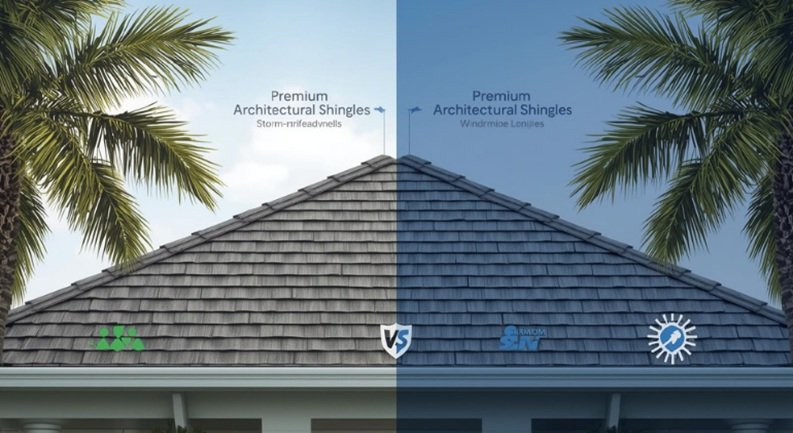
Budgetary Realities and Long-Term Financial Planning
If your primary concern is the absolute lowest upfront cost for a temporary solution or a property you plan to sell quickly, 3-tab shingles might seem appealing. However, it’s imperative to factor in compliance with Florida Building Code for any new installation or significant repair. Architectural shingles, despite their higher initial investment, offer significantly better long-term value by reducing the frequency of replacement and potentially lowering insurance costs due to enhanced wind resistance. Shieldline Roofing provides transparent, detailed estimates to help you understand the full financial picture.
Climate and Weather Resilience: Protecting Against the Unpredictable
For South Florida, this is arguably the most critical factor. Our susceptibility to hurricanes, tropical storms, and intense heat makes wind resistance and durability paramount. Architectural shingles, with their higher wind ratings (often 130 mph+ compared to 3-tab’s 60-80 mph) and robust construction, are the unequivocally superior choice for resilience. They offer better protection against wind uplift and impact, safeguarding your home when it matters most. Shieldline Roofing specializes in installations that exceed FBC wind-load requirements, providing maximum protection.
Aesthetic Goals, Curb Appeal, and Resale Aspirations
If enhancing your home’s curb appeal and market value is a priority, architectural shingles are the clear winner. Their dimensional look, diverse color options, and ability to mimic premium materials instantly elevate your property’s aesthetic. This is especially important in competitive real estate markets like Fort Lauderdale and Hollywood, where first impressions can significantly impact buyer perception and offers. Upgrading to architectural shingles can increase home value by an average of 1-5%.
Expected Lifespan of Ownership vs. Shingle Durability
Consider how long you plan to own your property. If it’s a short-term investment (less than 10-15 years), the lower upfront cost of 3-tab might seem justifiable, provided it meets local codes. However, for properties you intend to keep for 15+ years, or pass down through generations, the longer lifespan (25-50 years) and superior performance of architectural shingles offer far greater peace of mind and eliminate the need for costly re-roofing within your ownership timeframe. Shieldline Roofing helps you project these costs and benefits accurately.
Navigating Florida Building Codes and Local Requirements
This cannot be overstated. The FBC, particularly in HVHZ zones like ours, has strict requirements for roofing materials and installation methods, primarily focused on wind resistance. Many older 3-tab installations may not meet current code for replacement without significant upgrades. New 3-tab installations in HVHZ zones are rare due to these stringent requirements. Shieldline Roofing is intimately familiar with all local building codes in Fort Lauderdale and Hollywood, ensuring every roof we install is 100% compliant, protecting you from potential fines, insurance issues, and structural vulnerabilities.
The Geostrategic Impact on Property Value, Insurance, and ROI in South Florida
Beyond the immediate protection a roof offers, your shingle choice has a profound “geostrategic” impact on your property’s long-term financial health and market position in the South Florida landscape. This isn’t just about shelter; it’s about smart asset management.

Making a Powerful First Impression for Buyers
In a competitive market like Fort Lauderdale and Hollywood, your roof is one of the first things potential buyers see. A worn, faded 3-tab roof can signal deferred maintenance and impending costs, deterring buyers. Conversely, a robust, aesthetically pleasing architectural shingle roof conveys quality, durability, and peace of mind, immediately enhancing buyer perception and making your home stand out. This visual impact directly translates to stronger offers and quicker sales.
Navigating Insurance Implications in High-Risk Zones
South Florida homeowners face some of the highest insurance premiums in the nation due to hurricane risk. Choosing a more durable roofing material like architectural shingles with a high wind rating can directly impact your insurance policy. Many insurance carriers offer wind mitigation credits for roofs that meet enhanced standards, such as those with higher wind resistance, a strong **secondary water barrier**, and proper FBC-compliant installation. Shieldline Roofing provides documentation for these upgrades, helping you potentially secure lower premiums and better coverage.
Maximizing Resale Value and Return on Investment
A new architectural shingle roof is one of the few home improvements that consistently delivers a strong return on investment. It’s not just an expense; it’s an asset. The enhanced durability, longer lifespan, and superior aesthetic appeal contribute significantly to your home’s market value. With Shieldline Roofing, you’re investing in a roof that not only protects but also substantially adds to your property’s overall equity and attractiveness, ensuring a strategic advantage in the South Florida real estate market.
Expert Perspectives: Why Local Knowledge Matters
At Shieldline Roofing, we don’t just lay shingles; we engineer roofing systems specifically for the South Florida climate. Our experts share their insights on why the choice between 3-tab and architectural shingles is more than just an aesthetic one.
“In a High-Velocity Hurricane Zone (HVHZ) like Fort Lauderdale, the roof is your home’s primary defense. While 3-tab shingles are a budget-friendly entry point, they simply don’t offer the structural ‘heft’ required to handle the uplift forces of a major storm. When you choose architectural shingles, you’re investing in multiple fused layers that act as a cohesive shield against 130 mph gusts.”
— Rylee Hage, Founder of Shieldline Roofing
“Our installation crews often see 3-tab roofs failing prematurely due to ‘thermal stress’—the constant cycle of intense Florida sun and sudden afternoon downpours. Architectural shingles are significantly more resilient to this expansion and contraction. Their density helps prevent the cracking and granule loss that typically plagues thinner 3-tab designs after just 10 years in this environment.”
— Shieldline Senior Project Manager, 15+ Years Experience
The Shieldline Promise
According to our team, the biggest mistake homeowners make is choosing a shingle based solely on the upfront cost.
“A ‘cheap’ roof that needs total replacement after a single hurricane is the most expensive roof you’ll ever buy,” says Hage.
That is why Shieldline focuses on quality, honesty, and integrity—ensuring that every shingle we lay meets or exceeds the strict Florida Building Code (FBC) requirements.
Wind Resistance Ratings: 3-Tab vs. Architectural Shingles
One of the most critical differences between shingle types is their ability to withstand high-velocity winds. This is determined by their weight, thickness, and the strength of the adhesive sealant strips.
1. Standard Wind Speed Ratings
| Shingle Type | Standard Wind Rating | High-Wind Installation Rating |
|---|---|---|
| 3-Tab Shingles | 60 – 70 mph | Up to 80 – 90 mph |
| Architectural Shingles | 110 mph | Up to 130 mph |
| Premium/High-Performance | 130 mph | Up to 150 mph |
2. Industry Standard Classifications (ASTM)
Roofing materials are tested according to ASTM D3161 and ASTM D7158 standards to determine their resistance to wind uplift.
- ASTM D3161 Class A: Withstands winds up to 60 mph (Typical for basic 3-tab).
- ASTM D3161 Class F: Withstands winds up to 110 mph (Standard for architectural).
- ASTM D7158 Class H: Highest rating; resists uplift in winds up to 150 mph (Found in premium architectural lines).
3. Factors Impacting Wind Resistance
- Physical Mass: Architectural shingles are approximately 50% heavier than 3-tabs, making them much harder for wind to “catch” and lift.
- Nailing Pattern: Standard installation typically uses 4 nails per shingle. To achieve a 130+ mph rating, most manufacturers require an “enhanced” 6-nail pattern and the use of specific starter shingles.
- Sealant Strength: Architectural shingles feature a larger, continuous adhesive strip compared to the intermittent dots or smaller strips often found on 3-tab shingles.
Note: If you live in a hurricane-prone or high-wind region, local building codes may mandate shingles with a minimum wind rating of 110 mph or higher.
Conclusion: Making an Informed Geostrategic Decision for Your Roof
For homeowners and business owners in Fort Lauderdale, Hollywood, and throughout South Florida, the choice between 3-tab and architectural shingles is a pivotal one. While 3-tab shingles offer a lower initial cost, they fall short in critical areas like durability, wind resistance, and aesthetic appeal—factors that are paramount in our hurricane-prone, high-value region.
Architectural shingles, on the other hand, represent a strategic investment. They deliver superior aesthetics, exceptional durability, higher wind resistance that aligns with FBC standards, and a significantly longer lifespan. This translates to a stronger return on investment, enhanced property value, and, most importantly, unparalleled protection and peace of mind for your most valuable asset.
Don’t leave your roof to chance. At Shieldline Roofing, we are licensed, insured, and deeply experienced in navigating the complexities of South Florida’s climate and building codes. We pride ourselves on providing expert guidance and flawless installation, ensuring your roofing decision is a truly geostrategic one.
Ready to make an informed decision and protect your investment with a code-compliant, high-performance roof? Contact Shieldline Roofing today for a comprehensive, free roof inspection and personalized consultation. We’ll help you choose the optimal roofing solution for your Fort Lauderdale, Hollywood, or South Florida property.
Frequently Asked Questions (FAQs) for South Florida Roofs
Q: Can I mix 3-tab and architectural shingles on the same roof?
A: While technically possible, Shieldline Roofing strongly advises against mixing 3-tab and architectural shingles on the same roof. They have different thicknesses, weights, and installation patterns, which can lead to an uneven appearance, compromise the roof’s structural integrity, and create vulnerabilities to wind and water infiltration. Furthermore, it’s highly unlikely such a mixed installation would meet current Florida Building Code (FBC) requirements for wind resistance, especially in HVHZ zones like Fort Lauderdale and Hollywood.
Q: Is it possible to install architectural shingles over existing 3-tab shingles?
A: Generally, Shieldline Roofing recommends a complete tear-off of existing shingles before installing new architectural shingles. While some local codes or specific situations might allow for a single overlay (installing new shingles over old), it’s rarely the optimal solution, particularly in South Florida. Overlaying adds significant weight, can void manufacturer warranties, makes proper inspection of the roof deck impossible, and may not meet current FBC wind-load requirements for a robust new roof system. A complete tear-off ensures a clean, sound base and allows for the installation of a proper **secondary water barrier** and other FBC-mandated elements crucial for hurricane protection.
Q: How do warranties typically differ between the two types?
A: The warranty differences are substantial and reflect the materials’ expected lifespans and durability. 3-tab shingles typically come with a 15-20 year limited warranty. Architectural shingles, due to their multi-layered construction and superior performance, often carry 30-year to lifetime limited warranties. These warranties usually cover material defects and are often enhanced when installed by a certified contractor like Shieldline Roofing. We always ensure you understand the full terms and conditions of your chosen shingle’s warranty, including wind-speed and prorated coverage details, which are critical in our region.
Q: What is the typical maintenance required for each shingle type in South Florida?
A: Both shingle types benefit from annual inspections and maintenance to maximize their lifespan, especially in South Florida. This includes clearing debris from gutters and the roof surface, trimming overhanging branches, and checking for any signs of damage. For 3-tab shingles, you might see earlier signs of granule loss, curling, or cracking due to less resilience against UV and heat. Architectural shingles, while more durable, are still susceptible to algae and mold growth in our humid climate; “algae-resistant” (AR) options with copper granules are highly recommended and can significantly reduce maintenance for unsightly streaks. Shieldline Roofing offers comprehensive maintenance plans tailored to South Florida’s unique challenges.
Q: Are architectural shingles truly more environmentally friendly?
A: In a lifecycle assessment, architectural shingles often demonstrate a smaller environmental footprint due to their significantly longer lifespan. This means fewer re-roofing projects over the property’s lifetime, translating to less material going to landfills. Many manufacturers also utilize recycled content in their asphalt shingles, and advancements in “cool roof” technology, particularly in architectural shingle lines, can reduce heat absorption, contributing to lower energy consumption for cooling your home in South Florida. While not entirely “green,” their durability and potential for energy efficiency make them a more sustainable choice in the long run compared to shorter-lived 3-tab options.