
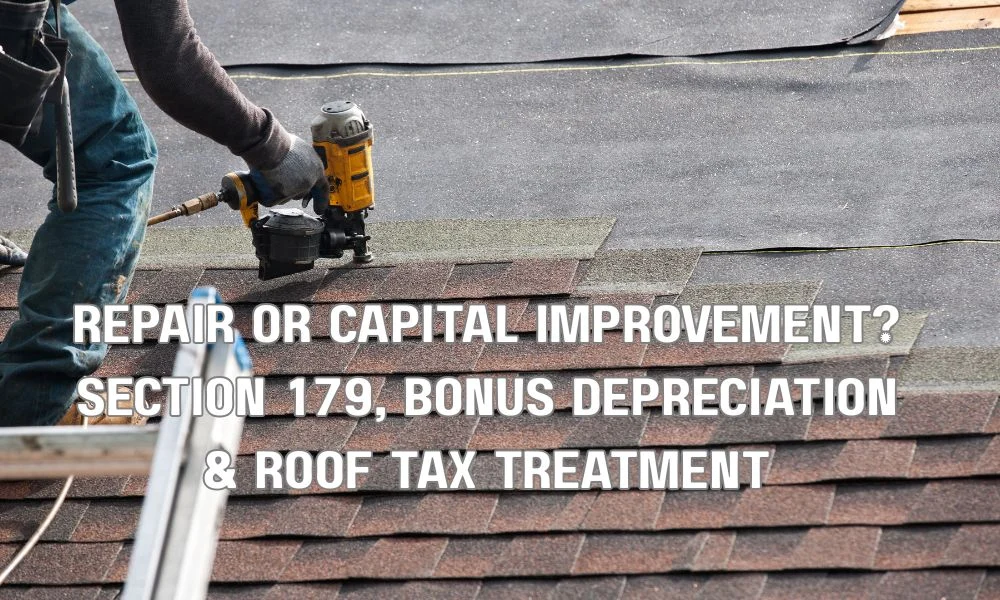
Executive Summary
- Accurately classifying expenditures as repairs or capital improvements is paramount for optimizing business tax liabilities and cash flow.
- Repairs are immediately expensed, reducing current taxable income, while capital improvements are depreciated over many years.
- Section 179 allows immediate deduction of qualifying capital improvements up to a limit, enhancing cash flow and tax savings.
- Bonus depreciation offers an immediate deduction for a significant percentage of eligible new and used property costs, further accelerating tax benefits.
- Roof treatments typically classify replacements as capital improvements and minor patching as expensable repairs, impacting depreciation schedules.
- Strategic planning, detailed record-keeping, and professional tax advice are essential to maximize deductions and navigate IRS regulations effectively.
- Understanding these distinctions prevents misclassification, avoids potential penalties, and ensures full utilization of available tax incentives.
Navigating Tax Implications for Property Improvements
For any business operating a physical property, the distinction between a “repair” and a “capital improvement” isn’t merely semantic; it carries significant financial weight, directly impacting tax obligations, cash flow, and long-term financial planning. The Internal Revenue Service (IRS) has specific guidelines that dictate whether an expenditure can be immediately expensed, offering an immediate tax reduction, or if it must be capitalized and depreciated over several years. Correct classification is crucial not only for compliance but also for leveraging powerful tax incentives like Section 179 and Bonus Depreciation.
Critical Fact 1: Misclassifying a capital improvement as a repair, or vice-versa, can lead to IRS penalties, deferred tax benefits, or missed opportunities for substantial upfront deductions.
Why is Differentiating Repairs from Capital Improvements So Crucial?
Differentiating between repairs and capital improvements is crucial because it directly affects a business’s taxable income and cash flow in the current year versus future years. Repairs are generally considered ordinary and necessary business expenses and can be fully deducted in the year they are incurred. This immediate write-off directly reduces current taxable income, resulting in lower tax payments sooner. Conversely, capital improvements are expenditures that add value, prolong the life of the property, or adapt it to a new use; they cannot be immediately expensed. Instead, their cost must be “capitalized” and recovered through depreciation deductions over a period of years, typically 5, 7, 15, or even 39 years depending on the asset class. This difference impacts a company’s financial statements, tax planning strategies, and overall profitability.
What Criteria Define a “Repair” for Tax Purposes?
A “repair” for tax purposes is generally defined as an expense that keeps property in an ordinarily efficient operating condition without materially adding to its value, substantially prolonging its life, or adapting it to a new or different use. The primary purpose of a repair is to maintain the property’s current condition, restoring it to its original functionality. Examples include patching a roof leak, repainting interior walls, fixing a broken window, or performing routine maintenance on machinery. These expenses are typically considered “ordinary and necessary” business expenses and are fully deductible in the year they occur, providing an immediate reduction in taxable income.
When Does an Expenditure Qualify as a “Capital Improvement”?
An expenditure qualifies as a “capital improvement” when it materially adds value to the property, substantially prolongs its useful life, or adapts it to a new or different use. Unlike repairs, which maintain existing condition, improvements aim to enhance or upgrade the property beyond its original state. Examples include replacing an entire roof, adding a new wing to a building, upgrading to a more efficient HVAC system, or extensive renovations that change the building’s function. The costs associated with capital improvements cannot be immediately expensed but must be capitalized and depreciated over the property’s useful life according to IRS regulations, typically following Modified Accelerated Cost Recovery System (MACRS) schedules.

| Criterion | Repair (Expense) | Capital Improvement (Capitalize & Depreciate) |
|---|---|---|
| Purpose | Restore to original condition, maintain operational efficiency. | Materially add value, prolong life, adapt to new use. |
| Impact on Value/Life | Does not materially add value or extend useful life. | Significantly increases property value or extends useful life. |
| Scope | Minor, incidental, non-structural work on parts of the asset. | Major, structural, or systemic work impacting the entire asset or major components. |
| Tax Treatment | Immediately deductible in the current tax year. | Depreciated over the asset’s useful life (e.g., 5, 7, 15, 39 years). |
| Example | Patching a leaky roof, replacing a broken window pane, painting a room. | Full roof replacement, installing a new HVAC system, building an addition. |
Leveraging Section 179 and Bonus Depreciation for Capital Improvements
While capital improvements typically require depreciation over many years, specific tax provisions like Section 179 and Bonus Depreciation offer powerful mechanisms for businesses to accelerate these deductions. These incentives can significantly improve cash flow by allowing businesses to write off a substantial portion, or even the entire cost, of eligible capital expenditures in the year they are placed in service, rather than slowly over time. This makes significant investments more financially attractive and manageable.
Critical Fact 2: Section 179 and Bonus Depreciation can transform a long-term depreciation schedule into an immediate, substantial tax benefit, significantly boosting a business’s liquidity in the year of investment.
How Can Section 179 Benefit My Business?
Section 179 of the IRS tax code allows businesses to deduct the full purchase price of qualifying equipment and/or software purchased or financed during the tax year, up to certain limits, rather than depreciating it over many years. This immediate write-off reduces current taxable income, providing a powerful incentive for businesses to invest in themselves. For 2023, the maximum Section 179 deduction is $1.16 million, with a spending cap of $2.89 million before the deduction begins to phase out. Qualifying property includes tangible personal property like machinery, equipment, vehicles, and certain qualified real property improvements (e.g., roofs, HVAC, fire protection, security systems).
What is Bonus Depreciation and How Does it Work?
Bonus depreciation allows businesses to immediately deduct a large percentage of the cost of eligible new and used property placed in service during the year, effectively accelerating depreciation. For property placed in service after September 27, 2017, and before January 1, 2023, 100% bonus depreciation was allowed. Starting in 2023, the bonus depreciation percentage began to phase down: 80% for property placed in service in 2023, 60% in 2024, 40% in 2025, and 20% in 2026, reaching 0% in 2027. Unlike Section 179, bonus depreciation has no spending limit and can create a net operating loss. It’s often used in conjunction with Section 179 to maximize first-year deductions.

Specific Tax Treatment for Roof-Related Expenses
Roof-related expenses are a common point of contention when distinguishing between repairs and capital improvements. Given the significant costs involved in maintaining or replacing a commercial roof, understanding the precise tax treatment is vital for property owners. The classification largely depends on the scope and impact of the work performed, directly influencing whether the cost can be expensed immediately or must be depreciated over a prolonged period.
Is a Roof Replacement Always a Capital Improvement?
Generally, yes, a full roof replacement is considered a capital improvement. When an entire roof system is removed and a new one installed, it typically extends the useful life of the building, significantly adds to its value, and often constitutes a major structural undertaking. Therefore, the cost of a full roof replacement must be capitalized and depreciated over the recovery period of the building (typically 39 years for non-residential real property). However, if the replacement qualifies as “qualified improvement property,” it could be eligible for 15-year MACRS depreciation and potentially for Section 179 or bonus depreciation if the rules for qualified real property are met.
Can Roof Repairs Be Immediately Expensed?
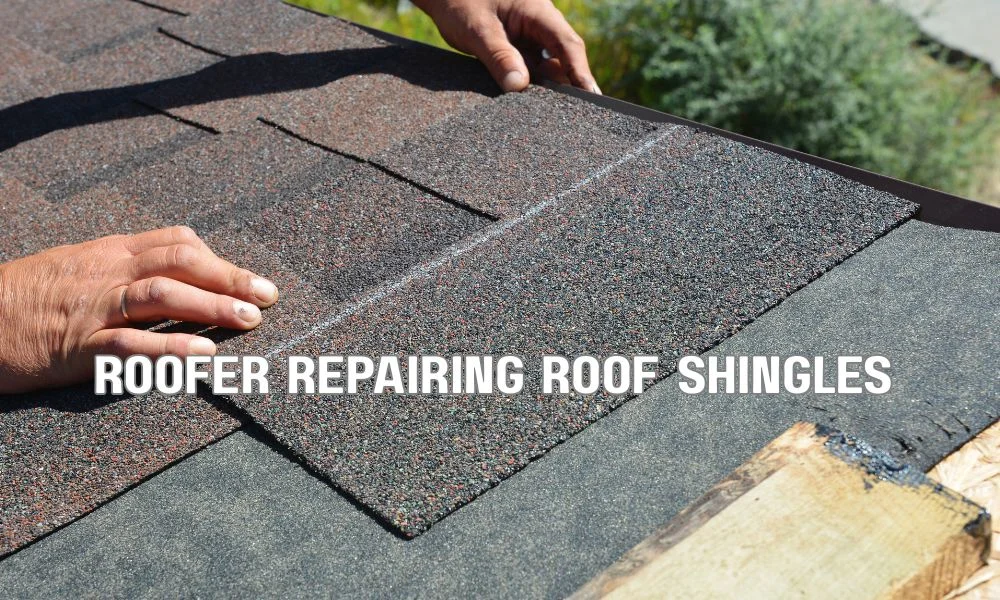
Yes, roof repairs can often be immediately expensed, provided they meet the criteria for a “repair” rather than an “improvement.” Minor work such as patching leaks, replacing a few damaged shingles, sealing cracks, or re-coating a small section of the roof to address specific issues would typically qualify as an ordinary and necessary repair. These actions restore the roof to its original operating condition without extending its overall useful life or significantly adding to its value. Such expenses are fully deductible in the year incurred, offering an immediate tax benefit.
Strategic Planning for Optimal Tax Outcomes
Navigating the complexities of repair versus capital improvement, and subsequently leveraging Section 179 and Bonus Depreciation, requires meticulous planning and a clear understanding of tax law. Businesses should develop a robust strategy that includes detailed record-keeping, clear project scopes, and regular consultations with tax professionals. Proactive planning allows businesses to time investments strategically, ensuring they maximize eligible deductions and optimize their tax position.
Critical Fact 3: Documenting the “why” and “what” of every expenditure – whether it restores, maintains, improves, or replaces – is the strongest defense against IRS scrutiny and key to maximizing tax benefits.
Frequently Asked Questions
What is the primary difference between a repair and a capital improvement for tax purposes?
The primary difference is their tax treatment: repairs are immediately expensed, reducing current year taxable income, while capital improvements are capitalized and depreciated over several years, impacting future tax periods. Repairs maintain, improvements enhance.
Can I use Section 179 for a new roof on my commercial building?
Yes, a new roof on a commercial building can qualify for Section 179 deduction as “qualified real property” if it is placed in service after 2017. This allows you to deduct the cost in the year it’s placed in service, subject to annual limits.
How does bonus depreciation apply to property renovations?
Bonus depreciation can apply to “qualified improvement property” – internal improvements to non-residential real property. It allows for an accelerated deduction of a significant percentage of the cost in the first year, subject to current phase-down rates.
Are there specific record-keeping requirements for repair and improvement expenses?
Yes, the IRS requires detailed records. Businesses must maintain invoices, receipts, contracts, and descriptions of work performed for all expenditures to substantiate their classification as either a repair or a capital improvement.
What happens if I incorrectly classify an expenditure?
Incorrect classification can lead to underpayment of taxes (if a capital improvement is expensed) or overpayment (if a repair is capitalized). This could result in IRS audits, penalties, and interest on underpaid taxes.
Can I combine Section 179 and bonus depreciation for the same asset?
Yes, you can often combine them. Businesses typically apply Section 179 first to immediately deduct a portion of the asset’s cost, and then apply bonus depreciation to any remaining basis, maximizing first-year write-offs.
Does the “de minimis safe harbor” rule affect repair vs. improvement decisions?
The de minimis safe harbor rule allows businesses to expense small-dollar items that would otherwise be capitalized. If an expenditure falls below a certain threshold (e.g., $2,500 per item for non-audited financials), it can be expensed regardless of its nature.
Should I consult a tax professional before undertaking major property work?
Absolutely. Given the complexities of IRS regulations, the significant financial implications, and the potential for penalties, consulting a qualified tax advisor or CPA before embarking on major property work is highly recommended.
