
Executive Summary
- A new energy-efficient roof can qualify Florida homeowners for significant federal tax credits, directly reducing installation expenses.
- The revamped Energy Efficient Home Improvement Credit (25C) offers 30% of project costs up to $1,200 annually for qualifying roof upgrades.
- Eligible roofing materials include specific metal and asphalt products featuring solar-reflective pigments or advanced thermal insulation.
- Homeowners must ensure chosen products carry ENERGY STAR certification and retain all manufacturer documentation for tax credit substantiation.
- Professional installation is paramount to maximize both long-term energy savings and successful qualification for available tax incentives.
- Understanding the federal guidelines and Florida’s unique climate considerations is crucial for optimizing your investment in a new roof.
- This guide provides clear insights into how to navigate eligibility requirements and claim these valuable financial benefits effectively.
Investing in a new roof is a substantial decision for any homeowner, but for those in Florida, it presents a unique opportunity to enhance energy efficiency and simultaneously unlock valuable federal tax credits. With the intense sun and high cooling demands characteristic of the Sunshine State, an energy-efficient roofing system isn’t just an upgrade; it’s a strategic investment that can significantly reduce utility bills and provide a comfortable indoor environment. Furthermore, recent enhancements to federal tax incentives make these improvements more accessible and financially appealing than ever before, directly benefiting homeowners committed to sustainability and savings.
The federal Energy Efficient Home Improvement Credit (25C) was significantly enhanced in 2023, now offering a 30% tax credit on qualified expenditures up to $1,200 annually for eligible energy property improvements like a new roof.
Understanding Federal Energy Tax Credits for Roofing
What Federal Tax Credits Apply to New Roofs?
The primary federal tax credit applicable to new, energy-efficient roofs for homeowners is the Energy Efficient Home Improvement Credit, often referred to as Section 25C of the IRS tax code. This credit allows eligible individuals to claim 30% of the cost of qualified energy-efficient home improvements, including certain roofing materials, up to a maximum of $1,200 per year for roofs installed after January 1, 2023. This incentive is designed to encourage homeowners to invest in upgrades that reduce energy consumption and improve their home’s thermal performance.
To qualify, the roof must be installed on an existing home that serves as your primary residence. New construction or rental properties generally do not qualify for this specific credit, though other commercial or builder credits might apply in different contexts. The credit is non-refundable, meaning it can reduce your tax liability to $0, but you won’t get a refund for any amount beyond what you owe in taxes.
How Do Roofing Materials Qualify for These Credits?
Roofing materials qualify for the federal energy tax credit if they meet specific energy efficiency standards, primarily demonstrated by achieving ENERGY STAR certification. For asphalt and metal roofs, this typically means they must have certain solar reflective properties to reduce heat gain in the home. Specifically, metal roofs with appropriate pigmented coatings and asphalt roofs with specific surface granules are designed to reflect a higher percentage of sunlight, keeping the attic and living spaces cooler.
The credit also extends to insulation materials integral to the roof’s thermal envelope, provided they meet specific Department of Energy criteria. It’s crucial that any qualifying material comes with a Manufacturer’s Certification Statement, which verifies its eligibility for the tax credit. This document is essential for your records when filing taxes.
Maximizing Your Energy Savings and Credit Potential in Florida
Which Roofing Types Are Most Beneficial for Florida’s Climate?
For Florida’s intense heat and humidity, “cool roof” technologies are overwhelmingly the most beneficial roofing types, specifically designed to reduce heat absorption and transfer into the building. Light-colored metal roofs with reflective coatings are highly effective, offering exceptional durability and high solar reflectance that significantly lowers surface temperatures. Similarly, certain asphalt shingles engineered with highly reflective granules can meet cool roof standards, providing a cost-effective alternative.
Tile roofs, while often darker in color, can also be energy-efficient due to their inherent air channels which provide natural ventilation and insulation. Beyond material choice, adequate attic ventilation and proper underlayment are critical components of an energy-efficient roofing system in Florida, working in concert with the roof surface to dissipate heat and minimize cooling loads.
In Florida’s intense heat, a “cool roof” can reduce peak cooling demand by 10-15%, directly translating into substantial savings on your electricity bills, particularly during the peak summer months.
What Documentation is Required to Claim the Tax Credit?
To successfully claim the Energy Efficient Home Improvement Credit (25C), homeowners must maintain thorough documentation of their new roof installation. The most critical piece of documentation is the Manufacturer’s Certification Statement for the qualifying roofing materials. This statement, often found on the manufacturer’s website or provided by your installer, confirms that the product meets the necessary energy efficiency requirements.
Additionally, you will need to keep detailed receipts and invoices for the roofing materials and the cost of their installation. These documents should clearly itemize the expenses, proving the total cost of the eligible improvements. When filing your federal income tax return, you will use IRS Form 5695, “Residential Energy Credits,” to calculate and claim the credit. While you don’t typically submit the certification statement or receipts with your tax return, you must retain them in case of an IRS audit.
Selecting the right roofing material can greatly impact both your home’s energy performance and your eligibility for tax credits. Below is a comparison of common roofing types, highlighting their relevance to energy efficiency in Florida.
| Roofing Type | Initial Cost (per sq ft) | Solar Reflectance Index (SRI) | Average Lifespan | Potential Energy Savings (Annual %) | Credit Eligibility (25C) |
|---|---|---|---|---|---|
| Standard Asphalt Shingle | $4.00 – $6.00 | < 30 | 15 – 25 years | 5% – 10% | Limited (dark colors often ineligible) |
| ENERGY STAR Reflective Asphalt | $5.00 – $7.50 | > 30 | 20 – 30 years | 10% – 15% | Yes (with certification) |
| Cool Metal Roof (Pigmented) | $8.00 – $15.00 | > 60 | 40 – 70 years | 15% – 25% | Yes (with certification) |
| Concrete/Clay Tile (Ventilated) | $10.00 – $20.00 | > 40 | 50 – 100 years | 10% – 20% | Limited (installation dependent) |

Are There Additional Local Incentives for Energy-Efficient Roofs in Florida?
While Florida does not have a state income tax, which precludes state-level income tax credits, some local governments, municipalities, or utility companies may offer additional incentives for energy-efficient home improvements, including roofing. These could come in the form of rebates, grants, or property tax exemptions. For instance, certain utility providers might offer rebates for installing ENERGY STAR-certified roofing materials that reduce peak energy demand.
Homeowners in Florida should always check with their local county or city building department, as well as their electric utility provider, to inquire about any specific local programs or incentives. Resources like the Database of State Incentives for Renewables & Efficiency (DSIRE) can also be a valuable tool for finding comprehensive information on local, state, and federal energy-related incentives.
The Long-Term Benefits of an Energy-Efficient Roof
Beyond Tax Credits, How Does a New Roof Save Money?
Beyond the immediate financial relief provided by tax credits, an energy-efficient new roof delivers substantial long-term savings and benefits for Florida homeowners. Primarily, it dramatically reduces cooling costs, which are a major expense in the state. By reflecting solar radiation and minimizing heat transfer, a cool roof lessens the workload on your HVAC system, leading to lower electricity bills year-round. This reduced strain also extends the lifespan of your air conditioning unit, deferring costly replacements.
Furthermore, an improved thermal envelope contributes to enhanced indoor comfort, creating a more consistent and pleasant living environment without relying excessively on air conditioning. From a property value perspective, homes with energy-efficient features are increasingly attractive to buyers, often commanding higher resale values. An energy-efficient roof represents a wise investment that pays dividends through reduced operating costs, increased comfort, and improved property appeal for decades to come.
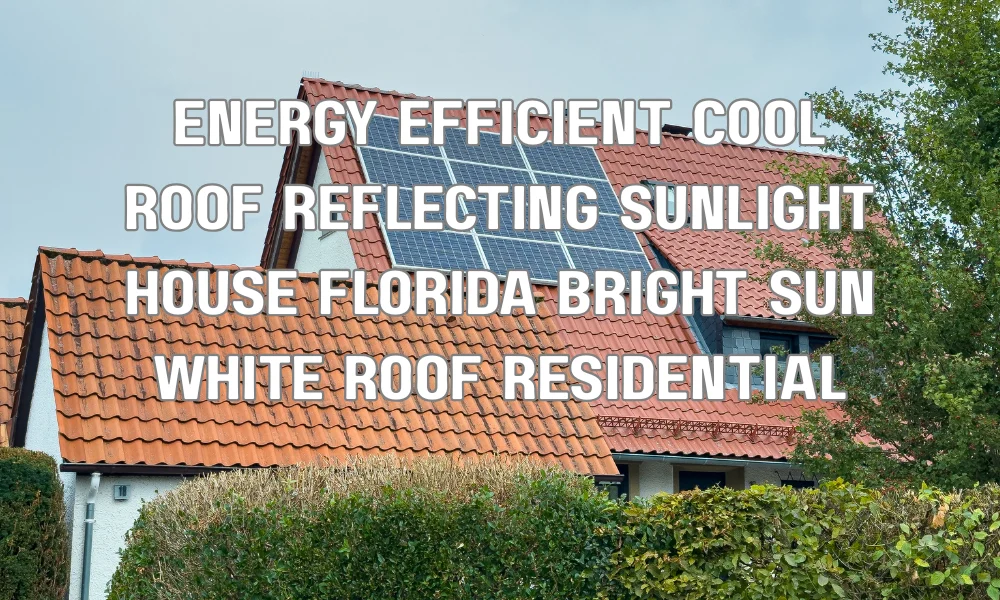
To claim the federal tax credit, homeowners must obtain a Manufacturer’s Certification Statement for their qualifying roofing materials, confirming they meet specific energy efficiency criteria, and retain it with their tax records.
Frequently Asked Questions
How much is the federal tax credit for a new roof?
The federal Energy Efficient Home Improvement Credit (25C) allows you to claim 30% of the cost of eligible roofing materials and installation, up to a maximum credit of $1,200 annually. This applies to qualified roofs installed after January 1, 2023.
What types of roofs qualify for the energy tax credit?
Generally, qualifying roofs include metal roofs with specific pigmented coatings and asphalt roofs with specific solar-reflective granules, provided they are ENERGY STAR certified. Any roof material that significantly improves the home’s thermal envelope and has a Manufacturer’s Certification Statement is eligible.
Do I need to be a Florida resident to claim this federal credit?
No, the Energy Efficient Home Improvement Credit is a federal tax credit, meaning it is available to eligible taxpayers across the United States, regardless of their state of residence, as long as the primary residence criteria are met.
Can I claim the tax credit if my roof is for a rental property?
No, the Energy Efficient Home Improvement Credit (25C) specifically applies to improvements made to an existing home that serves as your primary residence. Rental properties or new construction homes do not qualify for this particular credit.
What documentation do I need to keep for tax purposes?
You must retain the Manufacturer’s Certification Statement for your eligible roofing materials, along with detailed receipts and invoices showing the cost of materials and installation. These documents are necessary for your records, although generally not submitted with your tax return.
Is there an income limit to claim the energy tax credit?
No, there are no specific income limitations to claim the Energy Efficient Home Improvement Credit (25C). Any taxpayer who meets the eligibility requirements for the home improvement and property can claim the credit.
Does roof insulation also qualify for tax credits?
Yes, insulation materials, including those installed as part of a roof replacement, often qualify for the 25C credit if they meet specific Department of Energy criteria and improve the home’s thermal envelope. This is separate from the $1,200 cap for “energy efficient property” that includes roofs, often falling under the $1,200 cap for “home energy audits, insulation materials, air sealing, and general energy-efficient home improvements.”
How do I file for the energy efficient home improvement credit?
You will file for the credit using IRS Form 5695, “Residential Energy Credits,” when you prepare your federal income tax return. You’ll enter the qualifying costs on this form, and the calculated credit will then reduce your tax liability.
