
Executive Summary
- Selecting appropriate roofing materials for Florida’s coast is paramount, as salt air, intense UV, and hurricane forces demand exceptional durability and corrosion resistance.
- Proactive material choices, such as specific metal alloys or robust tile systems, can significantly extend roof lifespans and mitigate costly, premature replacements in marine environments.
- Effective project management during re-roofing projects on occupied hotel properties is crucial for minimizing guest disruption and ensuring uninterrupted operational continuity.
- Strict adherence to local building codes, especially for wind uplift and hurricane resilience, is non-negotiable for safeguarding coastal assets and ensuring structural integrity.
- Implementing a comprehensive, scheduled maintenance program is vital for detecting early signs of corrosion or damage, preserving the roof’s protective capabilities against environmental stressors.
- Understanding the unique logistical challenges of occupied properties, including noise abatement and access control, ensures a smooth and safe renovation process for all stakeholders.
The Unique Challenges of Coastal Roofing in Florida
Why is Florida’s coastal environment so harsh on roofs?
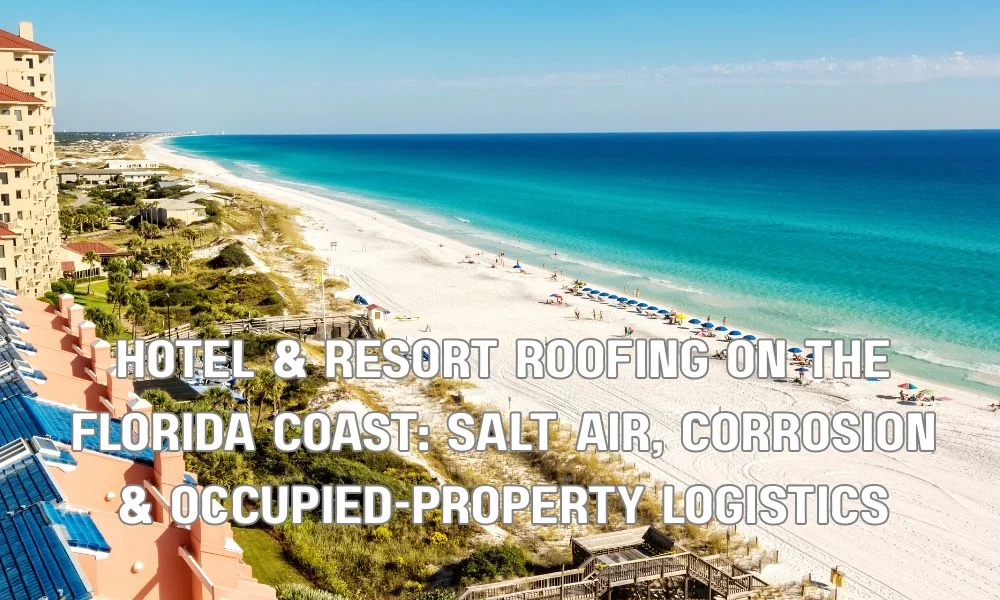
Florida’s coastal environment presents an exceptionally aggressive gauntlet for roofing systems due to a combination of salt-laden air, relentless UV radiation, high humidity, and the constant threat of hurricanes. The proximity to the ocean means salt particles are carried inland, settling on roof surfaces where they accelerate corrosion and degrade materials. This saline exposure, coupled with intense solar UV rays, rapidly breaks down sealants, membranes, and even structural components, leading to premature aging and failure.
Critical Fact 1: Salt crystallization within the pores of roofing materials can exert significant internal pressure, leading to material degradation, cracking, and eventual structural compromise, particularly in porous materials like concrete tiles or asphalt shingles.
What are the primary types of corrosion affecting coastal roofing materials?
Coastal roofing materials primarily suffer from atmospheric corrosion, which is significantly exacerbated by the presence of chlorides from sea salt. Galvanic corrosion is a common issue when dissimilar metals are in contact in a conductive electrolyte (saltwater residue), leading to the faster degradation of the less noble metal. Pitting corrosion creates small, localized holes that can quickly penetrate material thickness, while crevice corrosion occurs in sheltered areas where oxygen is depleted, and corrosive agents concentrate. These types of corrosion attack fasteners, flashing, and metal panels, compromising the roof’s integrity.
Material Selection & Durability for Coastal Resorts
Which roofing materials offer the best defense against salt and corrosion?
For optimal defense against salt and corrosion, specific materials are highly recommended for Florida’s coastal resorts. Metal roofing, particularly aluminum, zinc, or copper, stands out due to its inherent corrosion resistance and longevity. Aluminum forms a protective oxide layer, while zinc and copper develop a patination that shields against further degradation. High-quality tile roofs, such as concrete or clay tiles, offer excellent durability against salt spray and UV, provided their underlayment and fasteners are equally robust and corrosion-resistant. Lastly, single-ply membranes like PVC or TPO, known for their chemical resistance and flexibility, perform well in flat or low-slope applications, resisting both salt and UV damage effectively.
How do wind uplift and hurricane resistance factor into material choice?
Wind uplift and hurricane resistance are paramount considerations, heavily influencing material choice and installation specifications in Florida’s coastal regions. Local building codes, such as the Florida Building Code (FBC), mandate stringent requirements for wind resistance, often specifying higher design pressures for structures in wind-borne debris regions. Materials must be rated to withstand extreme uplift forces, and their attachment methods—fastener type, spacing, and adhesive systems—are critical. For instance, metal roofs require robust clip systems, and tile roofs demand specific mechanical fastening patterns to prevent detachment during high winds. Compliance with these codes ensures the roof can survive a direct hurricane impact, protecting the property and its occupants.
Critical Fact 2: The Florida Building Code (FBC) mandates enhanced wind-uplift resistance for roofs in coastal High-Velocity Hurricane Zones (HVHZ), often requiring specific fastening schedules, denser nail patterns, and specialized underlayments to ensure structural integrity during severe weather events.
Here’s a comparison of common roofing materials suited for Florida’s coast:
| Material Type | Corrosion Resistance | Wind Uplift Rating | Maintenance Frequency | Typical Lifespan (Coastal) | Pros for Coastal | Cons for Coastal |
|---|---|---|---|---|---|---|
| Aluminum Metal Panels | Excellent | Very High (Class 90) | Low | 40-60+ years | Lightweight, rust-proof, high recyclability | Higher initial cost, potential for denting |
| Copper Metal Panels | Exceptional | Very High (Class 90) | Low | 80-100+ years | Forms protective patina, very long lasting, aesthetic appeal | Highest initial cost, specialized installation |
| Clay/Concrete Tiles | Excellent | High (Class 90) | Moderate (inspections) | 50-75+ years | Durable, good insulation, aesthetic, fire resistant | Heavy, requires robust substructure, individual tile damage possible |
| PVC/TPO Membranes | Good (chemical) | High | Moderate (cleaning) | 20-30 years | Lightweight, resistant to many chemicals, UV stable | Less aesthetic for sloped roofs, prone to punctures |
| Asphalt Shingles (Specialty) | Fair (limited) | Moderate (Enhanced) | High | 15-25 years | Lower initial cost, widely available | Shortest lifespan, granule loss, susceptible to mold/algae |
Occupied-Property Logistics & Project Management
How can roof replacement minimize disruption for hotel guests?
Minimizing disruption for hotel guests during a roof replacement requires meticulous planning and execution. This involves scheduling noisy work during off-peak hours, such as mid-day or weekdays, and communicating these schedules clearly to guests in affected areas. Phased project management, where sections of the roof are completed sequentially, allows the hotel to isolate work zones and maintain guest access to amenities. Employing noise-reducing equipment, implementing strict debris management protocols, and providing clear, visible signage for alternative routes are all essential strategies to ensure guest comfort and safety throughout the project.
What safety protocols are critical for active hotel roofing projects?
Critical safety protocols for active hotel roofing projects prioritize the well-being of guests, staff, and contractors alike. This includes establishing secure, clearly marked exclusion zones around the work area to prevent unauthorized access and protect against falling debris. Implementing robust fall protection systems for workers, ensuring proper staging and hoisting of materials, and conducting daily safety briefings are non-negotiable. Furthermore, effective communication plans must be in place for emergencies, and all personnel must adhere to strict personal protective equipment (PPE) requirements. Managing access points and traffic flow for both pedestrians and vehicles is also vital to maintain a safe environment.
What role does maintenance play in extending a coastal roof’s lifespan?
Proactive and regular maintenance plays an indispensable role in significantly extending a coastal roof’s lifespan and ensuring its peak performance. This involves scheduled inspections (at least twice annually and after every major storm) to identify early signs of corrosion, sealant failure, or membrane damage before they escalate. Routine cleaning to remove salt buildup, debris, and vegetative growth prevents material degradation and maintains drainage efficiency. Prompt repair of minor issues, such as loose fasteners, damaged flashing, or small punctures, can prevent widespread structural problems and costly future interventions, thereby maximizing the roof’s protective capabilities.
Critical Fact 3: The economic impact of delaying roof maintenance on a coastal hotel can be substantial; deferred minor repairs often escalate into catastrophic failures during hurricane season, leading to extensive property damage, significant operational downtime, and substantial revenue loss.
Frequently Asked Questions
How often should a coastal hotel roof in Florida be inspected?
Coastal hotel roofs should ideally be inspected at least twice annually – typically in spring and fall – and always after any significant weather event, such as a severe thunderstorm or hurricane. These frequent inspections help identify minor issues before they become major problems.
What are the signs that a coastal roof is failing due to salt corrosion?
Signs of salt corrosion failure include rust streaks on metal components, bubbling or peeling paint on metal, visible white salt deposits, crumbling or flaking of concrete/clay tiles, and deterioration of fasteners. Early detection is key to preventing widespread damage.
Can existing hotel roofs be retrofitted for better hurricane resistance?
Yes, many existing hotel roofs can be retrofitted to improve hurricane resistance. This often involves strengthening the roof deck, adding secondary water barriers, enhancing fastener density, or installing specialized wind clips, all in compliance with current building codes.
What’s the best way to manage noise during a roof replacement project at an occupied hotel?
Noise management involves scheduling heavy-impact work during off-peak hours (e.g., 10 AM – 4 PM weekdays), isolating work zones, using quieter equipment when possible, and transparently communicating the schedule and any potential noise to guests.
Are there eco-friendly roofing options suitable for the Florida coast?
Yes, eco-friendly options include cool roofs (reflective membranes or coatings that reduce heat absorption), living roofs (green roofs), and highly recyclable materials like aluminum or copper. These options also offer energy efficiency benefits.
How do I choose a roofing contractor experienced with coastal hotel properties?
Look for contractors with specific experience in large-scale commercial coastal projects, proven hurricane-resistant installations, robust safety protocols for occupied properties, excellent references, and full licensing/insurance for Florida.
What insurance considerations are unique to coastal hotel roofing projects?
Unique considerations include comprehensive general liability insurance, builder’s risk insurance, and specific hurricane deductibles. Ensure the contractor has adequate coverage, and review your own policy for business interruption and property damage.
What is a “secondary water barrier” and why is it important for coastal roofs?
A secondary water barrier (SWB) is an additional waterproof layer installed directly on the roof deck, beneath the primary roofing material. It’s crucial for coastal roofs because it provides critical protection against water intrusion even if the primary roofing material is damaged or detached during high winds.
