
Executive Summary
- Florida’s Energy Conservation Code mandates specific roof insulation and reflectance standards to significantly improve building energy efficiency across the state.
- Understanding the updated R-value minimums for various roof types is crucial for ensuring compliance and optimizing thermal performance in both residential and commercial structures.
- Cool roof requirements, particularly solar reflectance and thermal emittance, are vital strategies for mitigating heat gain and reducing air conditioning loads in Florida’s warm climate.
- Re-roofing projects often trigger compliance obligations, requiring property owners to upgrade existing roof systems to meet current energy efficiency benchmarks.
- Adherence to these codes not only helps reduce energy consumption and operational costs but also contributes to a more sustainable and resilient built environment in Florida.
- Early integration of energy code requirements into project planning is essential to avoid costly revisions and ensure seamless regulatory approval for roof installations.
- The code aims to decrease greenhouse gas emissions and lower peak energy demand by promoting advanced roofing materials and construction practices statewide.
Understanding Florida’s Energy Code for Roofs
What is the Florida Energy Conservation Code and why is it important for roofs?
The Florida Energy Conservation Code, a key component of the Florida Building Code, establishes minimum energy performance standards for new construction and significant renovations across the state. This code is critically important for roofs because they represent a primary interface for heat transfer between a building’s interior and the harsh Florida sun, directly impacting cooling loads and overall energy consumption. By regulating insulation levels and surface reflectance, the code ensures roofs contribute significantly to a building’s thermal envelope efficiency.
Critical Fact 1: The Florida Energy Conservation Code is updated on a three-year cycle, with the current edition, the 8th Edition (2023), incorporating the latest advancements in energy-efficient building practices.
Which building types and climate zones are primarily affected by these roof regulations?
Florida’s roof regulations under the energy code primarily affect all new residential and commercial buildings, as well as existing structures undergoing substantial renovations or re-roofing projects. While Florida is geographically diverse, for energy code purposes, the state is generally divided into climate zones (1, 2, and 3, predominantly hot-humid) which influence specific R-value and reflectance requirements. However, the intent for roofs often applies broadly, with specific nuances for conditioned versus unconditioned spaces and different construction types, ensuring comprehensive coverage for virtually all roof installations.
Insulation Minimums: Elevating Thermal Performance
What are the minimum insulation R-value requirements for Florida roofs?
The minimum insulation R-value requirements for Florida roofs are dictated by the Florida Building Code, Energy Conservation Volume, varying based on the building’s occupancy, construction type, and climate zone. R-value measures thermal resistance, indicating how well a material insulates. For residential buildings, insulation levels are specified for different ceiling types (e.g., attic, cathedralized attic, slab-on-grade) and can often be met through a combination of cavity insulation and continuous insulation. Commercial buildings have more nuanced requirements, often defined by ASHRAE Standard 90.1, which specifies performance criteria for various roof assemblies, including low-slope and steep-slope designs.
How do these R-values vary by roof type and climate zone?
R-values vary significantly based on whether the roof is a low-slope (flat or nearly flat) or steep-slope roof, and whether the space below is conditioned or unconditioned. Climate zones in Florida (typically 1 through 3) also play a role, with slightly higher R-values often required in the northern, cooler zones (e.g., Zone 1). For instance, residential attic insulation often requires an R-value of R-38 or higher in some zones, while commercial low-slope roofs might require R-20 to R-30 continuous insulation depending on the specific building type and system. The code aims to prevent heat gain effectively, which is paramount in Florida’s predominantly cooling-dominated climate.
| Roof Type / Climate Zone | Minimum R-Value (Ceiling/Roof Insulation) | Minimum Solar Reflectance (Cool Roofs) | Minimum Thermal Emittance (Cool Roofs) |
|---|---|---|---|
| Residential – Zone 1 & 2 (e.g., North/Central FL) | R-38 (Attic), R-30 (Cathedral) | 0.25 (Steep Slope), 0.50 (Low Slope) | 0.75 (Steep Slope), 0.75 (Low Slope) |
| Residential – Zone 3 (e.g., South FL) | R-30 (Attic), R-25 (Cathedral) | 0.25 (Steep Slope), 0.50 (Low Slope) | 0.75 (Steep Slope), 0.75 (Low Slope) |
| Commercial – Low-Slope (all zones) | R-20 to R-30 (Continuous Insulation) | 0.50 | 0.75 |
| Commercial – Steep-Slope (all zones) | R-13 to R-19 (Insulation above deck/in cavity) | 0.25 | 0.75 |
| Note: Specific requirements can vary based on the latest code edition, specific building occupancy, and compliance path (e.g., prescriptive vs. performance). Always consult the Florida Building Code, Energy Conservation Volume. | |||
Roof Reflectance: Mitigating Heat Gain
What are the cool roof requirements under Florida’s energy code?
Florida’s energy code includes specific “cool roof” requirements, particularly for low-slope roofs on commercial buildings, and increasingly for residential steep-slope roofs as well. A cool roof is designed to reflect more sunlight and absorb less heat than a standard roof. The code typically specifies minimum values for Solar Reflectance (the fraction of solar energy reflected by the roof surface) and Thermal Emittance (the ability of a surface to radiate absorbed heat). These requirements are crucial for reducing the solar heat gain into buildings, thereby lowering air conditioning demand and improving occupant comfort.
Critical Fact 2: A roof’s Solar Reflectance Index (SRI) is a combined measure that quantifies both solar reflectance and thermal emittance, offering a comprehensive indicator of its “coolness” compared to a standard black surface.
How do solar reflectance and thermal emittance contribute to energy efficiency?
Solar reflectance directly contributes to energy efficiency by bouncing a significant portion of the sun’s shortwave radiation back into the atmosphere, preventing it from being absorbed by the roof and transferred into the building. This reduces the amount of heat that the HVAC system needs to remove. Thermal emittance, on the other hand, helps energy efficiency by allowing any absorbed heat to be more readily radiated away from the roof surface as longwave radiation. Together, high solar reflectance and thermal emittance keep the roof surface cooler, reducing the heat island effect in urban areas and significantly decreasing the energy required for cooling a building, especially in Florida’s intense sunlight.
Re-Roof Triggers: When Does the Code Apply?
When does a re-roofing project necessitate full compliance with the current energy code?
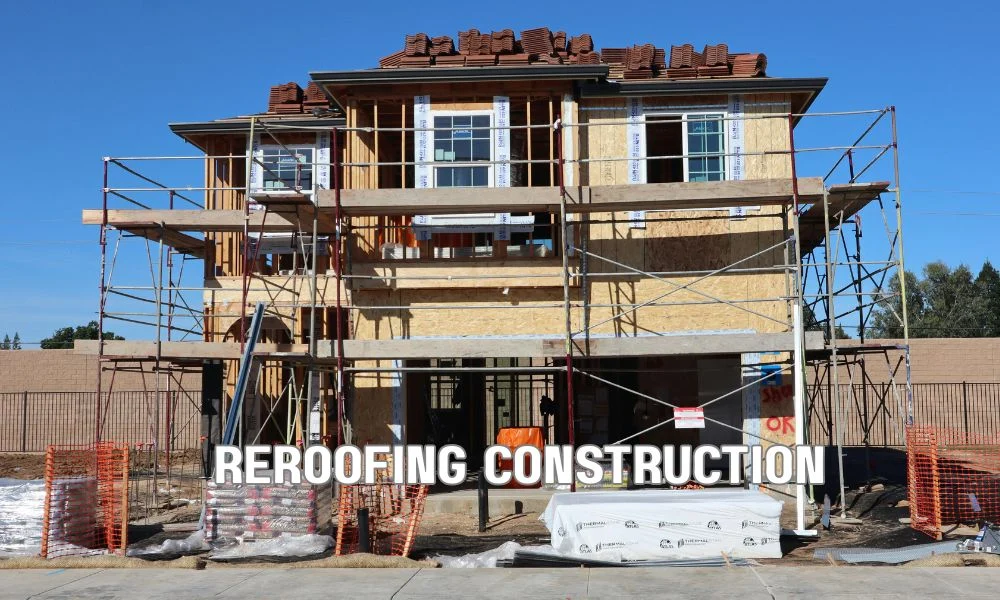
A re-roofing project generally necessitates full compliance with the current energy code when it involves the removal of 50% or more of the existing roof assembly or the roof decking. This “50% rule” is a common trigger: if a substantial portion of the roof is being replaced, the local building department will typically require the new roof system to meet the current insulation, reflectance, and other energy code standards as if it were a new installation. The intent is to leverage significant renovation opportunities to upgrade the building’s energy performance.
Are there any specific exemptions or partial compliance options for re-roofs?
Yes, there can be specific exemptions or partial compliance options for re-roofs, though these are typically limited and must be approved by the local building official. For example, if only a small section of the roof is being repaired, or if the existing roof structure cannot support the weight of additional insulation without significant structural modifications, an exemption or an alternative compliance path (e.g., performance-based rather than prescriptive) might be considered. Historically, certain residential re-roofs might have had less stringent insulation requirements if the existing ceiling insulation was left undisturbed, but code updates increasingly push for improvements whenever a re-roof occurs. Always consult with a licensed contractor and local building department early in the planning phase to understand specific project requirements.
Compliance Strategies and Long-Term Benefits
What are the best practices for ensuring full compliance with roof energy codes?
Ensuring full compliance with Florida’s roof energy codes begins with proactive planning and knowledgeable execution. Best practices include engaging qualified design professionals and contractors who are intimately familiar with the latest code edition and specific Florida amendments. Specifying code-compliant materials, such as insulation with the correct R-value and roofing membranes with certified solar reflectance and thermal emittance properties, is paramount. Thorough documentation throughout the project, including product specifications and installation photographs, helps demonstrate compliance during inspections. Utilizing energy modeling software can also provide a clear path to compliance, particularly for complex commercial projects.
How do compliant roofs offer long-term financial and environmental advantages?
Compliant roofs offer significant long-term financial and environmental advantages. Financially, they lead to substantial reductions in energy consumption, translating into lower utility bills for the building owner over the lifespan of the roof. The improved thermal performance reduces the load on HVAC systems, potentially extending their operational life and decreasing maintenance costs. Environmentally, compliant roofs contribute to a lower carbon footprint by reducing energy demand and associated greenhouse gas emissions. Cool roofs specifically combat the urban heat island effect, improving local air quality and reducing ambient temperatures. These benefits create a more sustainable and resilient built environment, benefiting both occupants and the broader community.
Critical Fact 3: Investing in energy-efficient roofing materials and practices can qualify property owners for various incentives, including federal tax credits, utility rebates, and improved building valuations.
Frequently Asked Questions
What is the difference between R-value and U-factor for roofs?
R-value measures a material’s resistance to heat flow, meaning a higher R-value indicates better insulation. U-factor measures the rate of heat transfer through an entire building assembly, where a lower U-factor signifies better insulation. Florida’s code often specifies R-values for individual components and U-factors for overall roof assemblies.
Do historic buildings have different roof energy code requirements in Florida?
Historic buildings may qualify for exemptions or alternative compliance methods under the Florida Energy Code, especially if strict adherence would compromise their historical integrity. These cases usually require special approval and consultation with preservation authorities and local building officials.
Is continuous insulation required for all roof types in Florida?
Continuous insulation (CI) is increasingly emphasized in the Florida Energy Code, particularly for commercial low-slope roofs and some residential applications, to minimize thermal bridging. However, requirements vary by climate zone, building type, and specific roof assembly.
How is “cool roof” performance measured and verified?
Cool roof performance is measured by solar reflectance and thermal emittance, often certified by programs like the Cool Roof Rating Council (CRRC). Verification typically involves product labeling and documentation submitted during the permitting and inspection process, demonstrating adherence to specified minimum values.
What happens if a re-roof project doesn’t meet the energy code?
Failure to meet the energy code during a re-roof project can lead to failed inspections, stop-work orders, penalties, and the requirement to remediate the non-compliant work, which can be costly and delay project completion.
Are solar panels considered in the Florida roof energy code?
While solar panels themselves are not directly part of the prescriptive roof energy code for insulation or reflectance, their installation often requires structural review and can impact roof design. They contribute to overall building energy performance through renewable energy generation.
Can I use an energy performance alternative instead of prescriptive compliance?
Yes, the Florida Energy Code allows for energy performance analysis (e.g., using approved software) as an alternative compliance path. This method assesses the total energy usage of the building, offering flexibility in how prescriptive requirements are met, as long as overall performance is equivalent or better.
Where can I find the most up-to-date Florida Energy Code for roofs?
The most up-to-date Florida Energy Code, including specific requirements for roofs, can be found on the Florida Building Commission’s official website or through commercially available code books and resources. Always ensure you are referencing the latest adopted edition (e.g., 8th Edition 2023).
