
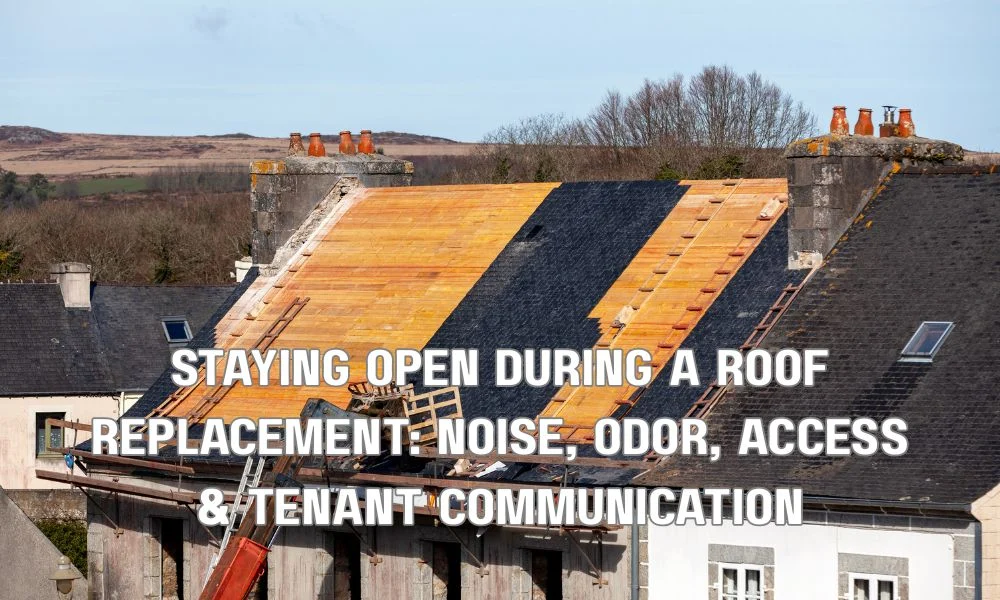
Executive Summary
- Proactive planning and transparent communication are paramount to minimize business disruption during a commercial roof replacement project.
- Implementing strategic scheduling, low-noise equipment, and temporary sound barriers can significantly reduce the impact of construction noise on daily operations.
- Effective ventilation systems, careful material selection, and phased project execution are crucial for managing and mitigating strong roofing odors.
- Maintaining clear, marked access routes and establishing robust safety protocols ensure tenant and customer safety while sustaining workflow during construction.
- Consistent, multi-channel communication with tenants, including detailed schedules and progress updates, fosters cooperation and manages expectations effectively.
- Selecting less disruptive roofing materials and employing a sectional replacement approach can dramatically reduce the overall impact on occupants and business continuity.
- A collaborative partnership with an experienced roofing contractor is essential for developing a comprehensive plan that addresses all operational concerns.
Undertaking a roof replacement while keeping a commercial property operational presents unique challenges, yet it is often a necessity for businesses aiming to avoid costly downtime. The key to a successful project lies in meticulous planning, clear communication, and strategic mitigation of potential disruptions such as noise, odors, and access limitations. This guide will walk you through best practices for managing these aspects, ensuring your business can continue to thrive even as significant structural improvements are underway.
Critical Fact 1: Over 70% of business disruptions during roof replacement are attributable to inadequate planning for noise, odor, and access management, significantly impacting tenant satisfaction and operational efficiency.
Managing Noise Disruption
How can businesses minimize noise disruption during roof replacement?
Businesses can significantly minimize noise disruption during roof replacement by prioritizing proactive planning, strategic scheduling, and the deployment of specialized equipment. This involves coordinating closely with the roofing contractor to identify peak operating hours and scheduling the loudest work outside these times, such as early mornings, evenings, or weekends. Utilizing low-decibel equipment and power tools, where feasible, also contributes to a quieter work environment, reducing stress for both employees and customers.
Beyond scheduling, physical interventions play a crucial role. Erecting temporary sound barriers, such as specialized construction fencing or strategically placed acoustic panels, around active work zones can absorb and deflect noise away from critical areas. For particularly sensitive zones like offices or conference rooms, internal soundproofing measures like temporary sound blankets or even encouraging remote work options can be considered. Regular communication with tenants about the noise schedule and expected intensity helps manage expectations and allows them to plan accordingly, fostering a more understanding environment despite the inconvenience.

Controlling Odor Issues
What strategies effectively mitigate strong odors from roofing materials?
Effectively mitigating strong odors from roofing materials primarily involves strategic material selection, robust ventilation, and careful project sequencing. Certain roofing materials, such as hot-applied asphalt or specific adhesives, produce stronger, more persistent odors than others. Opting for low-VOC (Volatile Organic Compound) materials, cold-applied systems, or single-ply membranes (TPO, PVC, EPDM) can significantly reduce the intensity and duration of offensive smells.
When odorous materials are unavoidable, implementing powerful ventilation strategies is paramount. This includes setting up industrial-grade exhaust fans near the work areas to draw fumes away from the building’s interior and installing air scrubbers with activated carbon filters to neutralize odors before they disperse. Sealing off HVAC intake vents in the affected zones during application hours prevents fumes from circulating through the building’s air conditioning system. Furthermore, phasing the project to work on smaller sections at a time allows for more contained odor management and limits the overall area affected by strong smells, ensuring that tenants in unaffected sections experience minimal disruption.
Critical Fact 2: Modern advancements in roofing materials now offer significantly lower VOC alternatives, reducing odor impact by up to 80% compared to traditional hot-applied systems, a vital consideration for occupied buildings.
Ensuring Safe Access and Workflow
How can tenant access and daily operations remain uninterrupted?
Tenant access and daily operations can remain largely uninterrupted by establishing clear, well-marked pathways, implementing stringent safety protocols, and meticulously coordinating work zones. Before construction begins, identify all critical entry points, emergency exits, and high-traffic areas. Develop alternative routes for pedestrians and vehicles, ensuring these are well-lit, free of debris, and clearly signed with directional arrows and safety warnings. Barricades and caution tape should delineate work zones strictly, preventing unauthorized access and protecting individuals from potential hazards.
Daily operational workflow requires constant vigilance and communication. Regular walkthroughs with the contractor can ensure that deliveries, waste removal, and customer access points remain functional. Consider dedicated “quiet hours” or “access windows” for specific tenants who require uninterrupted periods for critical operations. Implementing a robust communication system for reporting and addressing immediate access concerns allows for quick adjustments, maintaining safety and efficiency throughout the project. Proactive scheduling of material deliveries and debris removal outside peak business hours also minimizes congestion and disruption on the property.
Effective Tenant Communication
What are best practices for communicating with tenants about roof work?
Best practices for communicating with tenants about roof work involve proactive, transparent, and multi-channel information dissemination, ensuring everyone is well-informed and can plan accordingly. Initiate communication well in advance of the project start date, ideally several weeks to a month prior. This initial notice should outline the scope of work, estimated timeline, potential disruptions (noise, odor, access changes), and key contact information for questions or concerns.
Utilize multiple communication channels to reach all tenants effectively. This could include email announcements, physical notices posted in common areas, dedicated project websites or portals, and even tenant meetings for larger properties. Provide regular updates on progress, any schedule changes, and specific advisories for upcoming noisy or odorous work phases. Encourage an open feedback loop where tenants can voice concerns, which should be addressed promptly and empathetically. Clear, consistent, and honest communication builds trust and significantly reduces complaints and frustration, fostering a cooperative environment during a challenging period.
Material Selection and Phasing
Which roofing materials minimize disruption, and how does project phasing help?
Certain roofing materials inherently minimize disruption due to their application methods and composition, and project phasing further enhances this benefit by localizing impacts. Single-ply membrane systems like TPO (Thermoplastic Polyolefin), PVC (Polyvinyl Chloride), and EPDM (Ethylene Propylene Diene Monomer) are often preferred for occupied buildings because they are typically installed using mechanical fasteners or adhesive systems that produce minimal noise and odors compared to hot-applied asphalt or torch-down modified bitumen systems. These materials often come in large rolls, reducing installation time and the number of workers on the roof at any given moment.
Project phasing, or sectioning the roof replacement into manageable segments, is a crucial strategy. Instead of tackling the entire roof at once, contractors work on one area, complete it, and then move to the next. This approach confines noise, debris, and odors to a smaller, localized zone, allowing the rest of the building to operate with less interference. It also enables more precise scheduling, where a specific tenant directly below a work section can be given ample warning or temporary relocation options, while other tenants remain unaffected. Phasing allows for clearer delineation of work areas and minimizes the duration of overall disruption for any single part of the building.
| Roofing System | Primary Odor Impact | Primary Noise Impact | Typical Lifespan | Disruption Suitability |
|---|---|---|---|---|
| TPO/PVC Membrane | Low (Adhesive fumes) | Low (Mechanical fasteners) | 20-30+ years | High (Ideal for occupied) |
| EPDM Membrane | Low (Adhesive fumes) | Low (Mechanical fasteners) | 25-35+ years | High (Ideal for occupied) |
| Modified Bitumen (Hot-Applied) | High (Asphalt fumes) | Moderate (Torch, heavy equipment) | 20-25 years | Low (Avoid if possible) |
| Modified Bitumen (Cold-Applied) | Moderate (Solvent fumes) | Low (Adhesive, rollers) | 20-25 years | Medium (Better than hot-applied) |
| Built-Up Roof (BUR – Hot-Applied) | Very High (Asphalt fumes) | High (Kettles, heavy equipment) | 20-30 years | Very Low (Least suitable) |
Proactive Planning & Contractor Collaboration
What role does a detailed plan and contractor collaboration play in success?
A detailed, comprehensive plan developed in close collaboration with a reputable roofing contractor is the cornerstone of a successful roof replacement project for an occupied building. The plan should encompass every facet of the project, from initial assessment and material selection to daily operational logistics, safety protocols, and waste management. It’s not just a construction schedule; it’s an operational blueprint designed to minimize impact on tenants and business activities.
Collaboration with the contractor begins long before the first shingle is removed. This involves pre-construction meetings where all stakeholders – property management, building occupants (if applicable), and the roofing team – can discuss concerns, outline expectations, and agree on mitigation strategies for noise, odor, and access. A good contractor will have experience working on occupied buildings and can offer valuable insights into phasing, alternative work methods, and effective communication strategies. They should be integrated as a partner, not just a service provider, allowing for joint problem-solving and proactive adjustments to the plan as the project progresses. This shared commitment to minimizing disruption is vital for maintaining business continuity and tenant satisfaction.
Staying open during a commercial roof replacement is a complex undertaking, but by employing strategic planning, effective communication, and careful material selection, businesses can navigate the process with minimal disruption. The upfront investment in detailed planning and a strong partnership with your roofing contractor will pay dividends in maintaining tenant satisfaction, operational continuity, and ultimately, the long-term health of your property.
Critical Fact 3: Engaging a roofing contractor with specific experience in occupied commercial buildings significantly reduces the risk of project delays and budget overruns by an average of 15-20%, thanks to their specialized disruption management protocols.
Frequently Asked Questions
How long does a typical commercial roof replacement take?
The duration of a commercial roof replacement varies significantly based on roof size, complexity, material type, and weather conditions. Smaller projects might take a few weeks, while larger, more complex roofs can extend to several months. Phased approaches can also extend the overall timeline but reduce daily disruption.
Can work be scheduled outside of business hours to minimize disruption?
Yes, many roofing contractors can accommodate off-hours scheduling, including evenings and weekends, to minimize impact on daily operations. This often comes with a higher labor cost but can be invaluable for maintaining business continuity in occupied buildings.
Are there any government regulations regarding noise or odor during construction?
Local municipalities often have ordinances concerning construction noise, especially during specific hours. While direct odor regulations are less common, health and safety standards related to air quality and VOC emissions may apply. It’s crucial to check local regulations.
What happens if there’s an emergency like a leak during the replacement?
A reputable contractor will have emergency protocols in place, including temporary waterproofing measures and dedicated response teams, to address unexpected leaks or other issues immediately. This should be part of the pre-construction planning.
How will the contractor manage debris and waste?
Contractors typically use dedicated dumpsters, chutes, and careful staging areas to manage debris. They should have a plan for daily cleanup to maintain site safety and aesthetics, preventing accumulation that could obstruct access or pose hazards.
Is it necessary to inform all tenants individually about the project?
While property management is responsible for communication, contractors often assist by providing content for notices or attending tenant meetings. Comprehensive communication ensures everyone is aware, regardless of individual impact.
Can specific building sections request a temporary work stoppage?
Requests for temporary work stoppages in specific sections should be communicated through property management to the contractor. While not always feasible without impacting the overall schedule, a collaborative contractor will strive to accommodate critical tenant needs.
What protective measures are put in place for landscaping and building exteriors?
Contractors should deploy protective measures like tarps, plywood, and netting to shield landscaping, windows, and building facades from falling debris and equipment. This prevents damage and maintains the property’s aesthetic during the project.
