
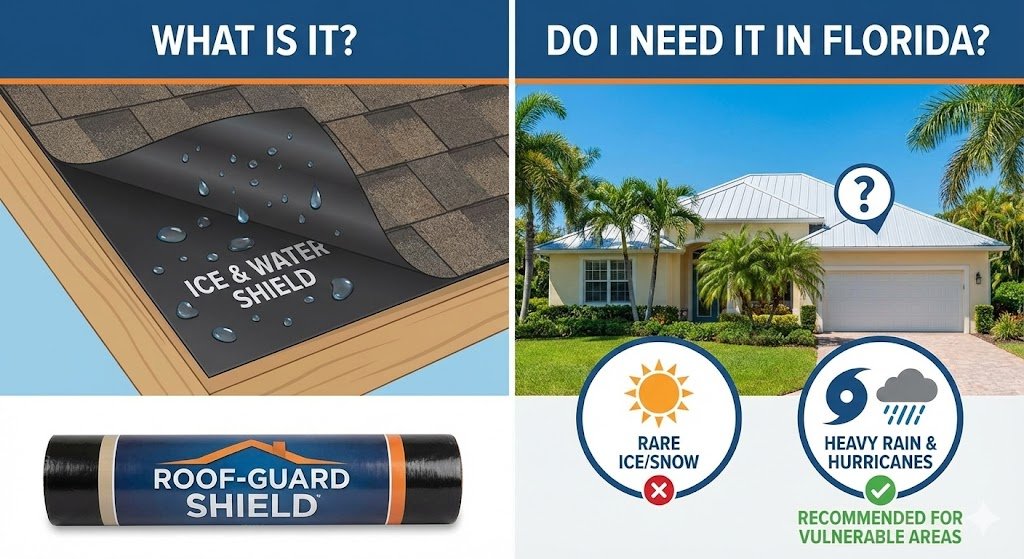
What Is an Ice and Water Shield, and Given Florida’s Climate, Do I Truly Need It?
As experienced and licensed roofing contractors serving Fort Lauderdale, Hollywood, and the broader South Florida region, our team at Shieldline Roofing understands that protecting your home from the elements is paramount. When discussing roof replacement or repair, a critical component often comes up: the Ice and Water Shield. While its name might suggest it’s only for colder climates, this advanced roofing underlayment is an unsung hero for homes in our unique, hurricane-prone environment.
You might be asking, “Why would I need an ‘Ice’ and Water Shield in sunny Florida?” The answer lies not just in the “water” part of its name, but in its unparalleled ability to create a robust, secondary waterproofing layer that offers superior defense against the torrential rains, high winds, and moisture challenges we face year-round. It’s more than just an option; for many South Florida homes, it’s a strategic investment in resilience, compliance, and peace of mind.
Understanding the Ice and Water Shield: Beyond the Name
At Shieldline Roofing, we believe in educating our clients. Let’s demystify this powerful product and explain why it’s so relevant for your South Florida home.
Defining the Product: Composition, Layers, and Self-Sealing Properties
An Ice and Water Shield, also known as a self-adhering modified bitumen membrane, is a premium roofing underlayment designed to be a durable, waterproof barrier. Unlike traditional underlayments, it features multiple layers: a rubberized asphalt adhesive layer on the bottom, a fabric or film layer on top, and often a release liner that’s peeled away during installation. The magic is in its adhesive qualities; when a nail or fastener penetrates it, the material actually self-seals around the penetration, preventing water from seeping through. This makes it an incredibly effective guard against leaks.
Primary Function: A Robust Secondary Barrier for Roof Deck Protection
Its primary role is to serve as a robust secondary waterproofing layer, directly applied to your roof deck. While your shingles or tiles form the primary defense, this shield acts as a crucial backup, catching any water that might breach the main roofing material. In South Florida, this is particularly vital during heavy downpours or wind-driven rain events where water can be forced under the primary roofing system.
How it Differs from Standard Felt or Synthetic Underlayment
Traditional asphalt felt or modern synthetic underlayments provide a good base layer and temporary weather protection. However, they are typically mechanically fastened (nailed) and do not possess the self-adhering, self-sealing properties of an Ice and Water Shield. Standard underlayments protect the deck from moisture *before* the main roof is installed, and help shed water that gets past the shingles. The Ice and Water Shield, however, forms an actual watertight bond to the roof deck, sealing around fasteners and offering a level of waterproofing that felt or synthetic underlayment simply cannot match, especially against pressurized water common in hurricane conditions.
The Original Purpose: Battling Ice Dams in Colder Climates
To truly appreciate the Ice and Water Shield’s versatility, it’s helpful to understand its origins. Developed for colder regions, its name reflects its initial purpose.
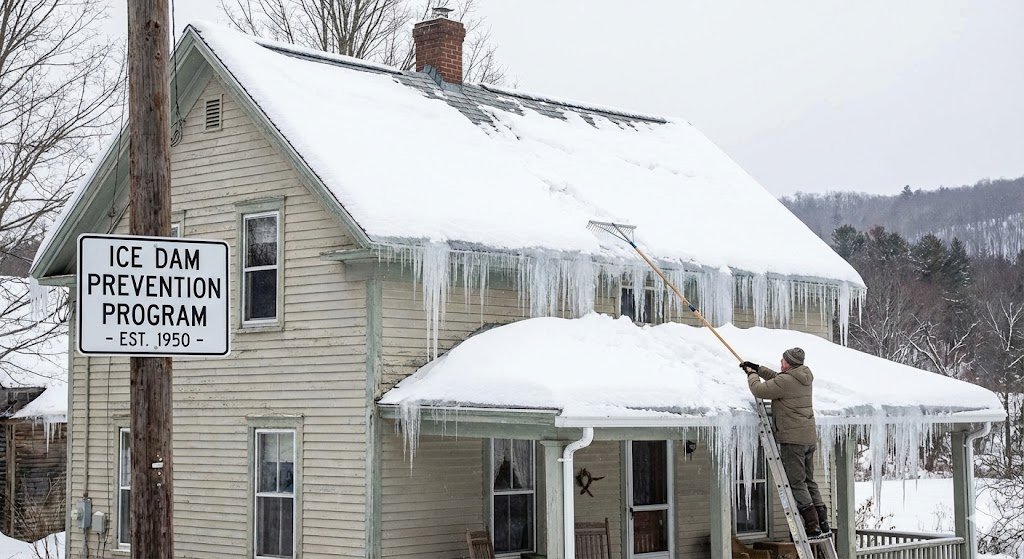
Mechanism of Ice Dam Formation and Associated Damage
In snowy climates, uneven roof temperatures can cause snow to melt, run down the roof, and then refreeze at the colder eaves, creating an ice dam. This dam traps subsequent melted water, forcing it to back up under shingles and into the roof structure, causing significant interior damage.
How the Shield Prevents Water Entry from Melted Ice
The self-adhering membrane, applied to the eaves and other vulnerable areas, creates an impermeable barrier that prevents this trapped water from penetrating the roof deck, even when it’s pressurized by the ice dam. While ice dams are not a concern in Fort Lauderdale, the underlying principle of preventing water intrusion under adverse conditions is directly transferable.
The Evolution and Global Applicability of its Waterproofing Technology
Over time, the roofing industry recognized the superior waterproofing capabilities of this material extended far beyond preventing ice dams. Its ability to seal out wind-driven rain, resist high winds, and provide an enduring secondary barrier made it indispensable for any climate facing significant weather challenges – including and especially here in South Florida.
Florida’s Unique Roofing Challenges: Why Water is the Enemy
For homeowners and business owners in Fort Lauderdale, Hollywood, and throughout South Florida, water isn’t just an inconvenience; it’s a constant threat to your property’s integrity.
Hurricane-Force Winds and Intense Wind-Driven Rain
Our region is the epicenter of hurricane activity. During these powerful storms, winds can exceed 100 mph, transforming rainfall into wind-driven rain that can be forced sideways or even upwards. This pressurized water can easily penetrate tiny gaps in shingles, around flashing, or through fastener holes, leading to immediate and severe interior water damage, even if no shingles are visibly lifted.
Torrential Downpours and Prolonged Wet Seasons
Even outside of hurricane season, South Florida experiences regular, intense thunderstorms that deliver staggering amounts of rain in short periods. Our prolonged wet seasons mean roofs are constantly exposed to moisture, making any vulnerability a potential leak point. A robust secondary barrier like an Ice and Water Shield helps manage this constant deluge.
High Humidity, Condensation, and Mold/Mildew Risks
The pervasive high humidity in our climate creates an environment ripe for mold and mildew growth. Water intrusion, even minor, that goes undetected can quickly lead to widespread mold in attics, ceilings, and walls. An Ice and Water Shield acts as a critical line of defense, preventing the initial moisture entry that often triggers these costly issues.
The Cumulative Impact of These Factors on Roof Vulnerability in South Florida
When you combine these factors—hurricane winds, torrential rain, and relentless humidity—the vulnerability of a standard roof system without enhanced protection becomes clear. The constant stress from thermal expansion and contraction, UV exposure, and cyclical moisture can degrade conventional underlayments over time, leaving your roof deck exposed. An Ice and Water Shield significantly enhances your roof’s ability to withstand these cumulative challenges.
The Florida Building Code and Ice & Water Shield Requirements in South Florida
The Florida Building Code (FBC) is constantly evolving to ensure structures can withstand our challenging climate. Understanding these requirements is essential for any responsible homeowner or contractor in our area.
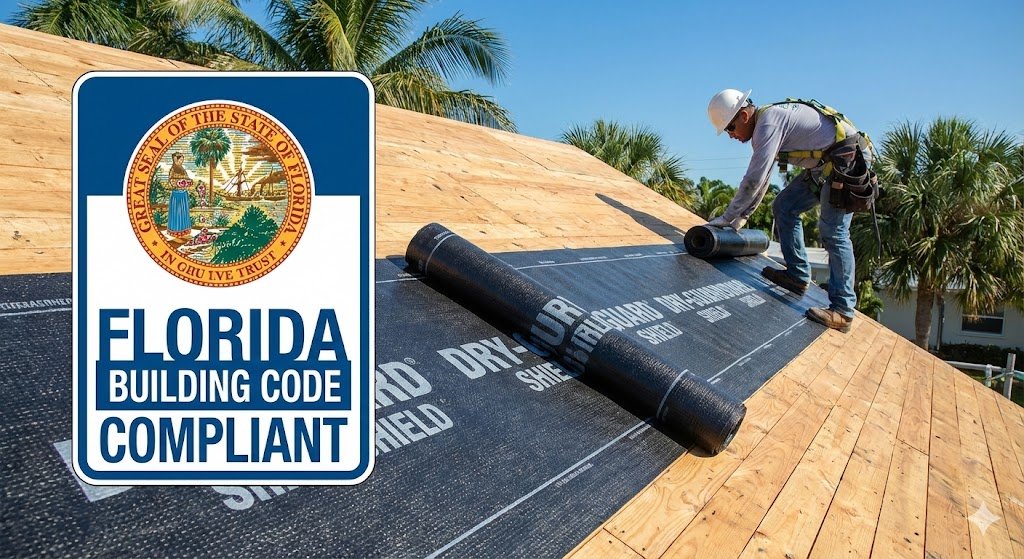
Specific Mandates for High-Velocity Hurricane Zones (HVHZ) and Other Jurisdictions
South Florida, including Fort Lauderdale and Hollywood, falls under High-Velocity Hurricane Zones (HVHZ), where the FBC imposes some of the most stringent building standards in the nation. The FBC mandates the use of secondary water barriers, which often include self-adhering membranes like Ice and Water Shield, in specific areas of the roof and for certain roof types, precisely because of the extreme wind and rain our region experiences.
Requirements for Low-Slope Roofs, Eaves, Valleys, and Vulnerable Roof Penetrations
The code typically requires an Ice and Water Shield, or a similar self-adhering secondary water barrier, on specific critical areas. This includes the eaves (typically the first 6 to 24 inches from the edge, depending on the code cycle and jurisdiction), in valleys (where two roof planes meet), around chimney flashings, skylights, and other roof penetrations like vent pipes. For low-slope roof sections (e.g., 2:12 or less), a fully adhered secondary water barrier is often a code requirement, as these areas are highly susceptible to water pooling and intrusion.
Understanding the “Enhanced Protection” Provisions for Roof Assemblies
Beyond strict mandates, the FBC encourages “enhanced protection” provisions for roof assemblies. This means that while certain applications are required, extending the coverage of an Ice and Water Shield beyond the minimum—such as covering the entire roof deck—is often recommended by experts like Shieldline Roofing. This approach significantly boosts your roof’s overall resilience against water intrusion, exceeding minimum code for maximum protection.
Critical Benefits for Florida Homes: A Strategic Investment for Resilience
Choosing to install an Ice and Water Shield during your roof replacement or repair is not an added expense; it’s a strategic investment in the long-term health and safety of your Fort Lauderdale property.
Superior Water Intrusion Prevention: Protecting Attics and Interiors from Leaks
This is the most direct and crucial benefit for South Florida. Even if shingles are damaged or lifted by strong winds, the Ice and Water Shield acts as a formidable, watertight membrane, preventing water from reaching your attic, insulation, drywall, and valuable belongings. This can literally save your home from devastating water damage during a storm.
Enhanced Wind Uplift Resistance: Securing Shingles and Underlayment Against Hurricanes
The adhesive properties of the Ice and Water Shield do more than just seal out water; they also provide an extra layer of adhesion for the entire roofing system. When applied directly to the deck, it helps bond the underlayment more securely, contributing to the overall wind resistance of your shingles or tiles. This added grip can be critical in preventing catastrophic roof uplift during hurricane-force winds.
Mold and Mildew Mitigation: Preventing Growth in the Roof Assembly and Structure
By drastically limiting water intrusion, an Ice and Water Shield plays a direct role in mold and mildew prevention. In our humid climate, even a small leak can quickly become a significant mold problem, posing health risks and requiring costly remediation. This shield acts as a proactive defense against such pervasive issues.
Extending Roof Lifespan: Protecting the Deck from Rot and Premature Deterioration
The primary structure of your roof is the deck itself. Constant exposure to moisture, even minor leaks over time, can lead to wood rot, deterioration, and compromise the structural integrity of your roof. By keeping the deck dry, an Ice and Water Shield helps preserve its longevity, which in turn extends the life of your entire roofing system.
Potential Insurance Benefits: Reduced Risk Profile and Possible Premium Savings
Many insurance carriers recognize the value of enhanced roof protection. Installing a secondary water barrier like an Ice and Water Shield often qualifies your home for certain discounts or reduces your overall risk profile, potentially leading to lower homeowner’s insurance premiums. It signals to insurers that your property is more resilient to common storm damage.
Where and When to Prioritize Ice & Water Shield in Fort Lauderdale and Hollywood
While often mandated in specific zones and applications, our experts at Shieldline Roofing often recommend expanded use of Ice and Water Shield for maximum protection.
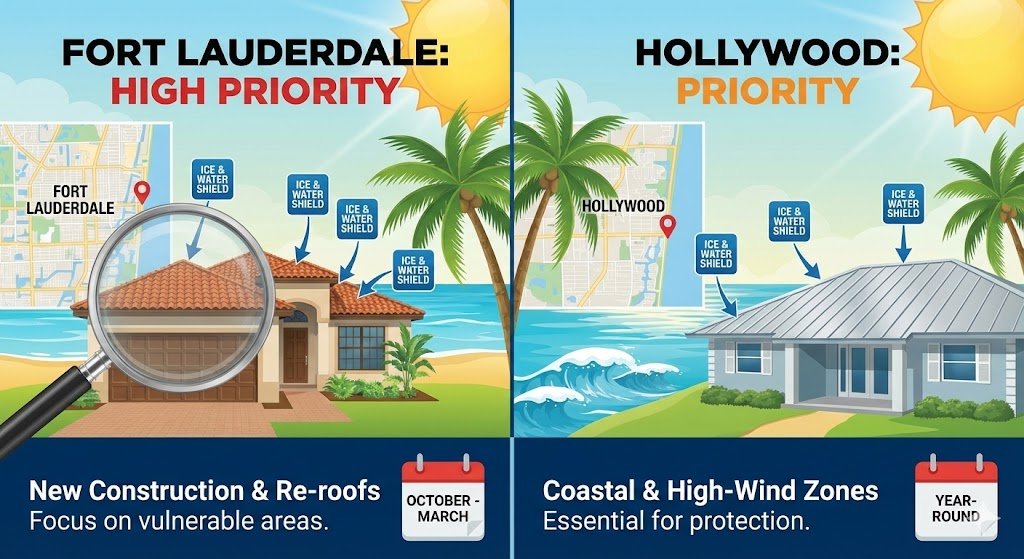
New Roof Installations vs. Full Roof Replacements
Anytime you’re getting a new roof installation or a full roof replacement in South Florida, it’s the ideal time to incorporate an Ice and Water Shield. This ensures your entire roof system starts with the highest level of protection from day one, laying a resilient foundation for decades to come.
Low-Slope Sections, Flat Roof Areas, and Roof-to-Wall Intersections
These areas are inherently more prone to water pooling and intrusion. Code typically requires enhanced protection here, but even when not strictly mandated, applying a full Ice and Water Shield to low-slope sections, flat roof areas (common on commercial properties or modern residential designs), and roof-to-wall intersections is highly advisable to prevent leaks.
Valleys, Chimney Flashings, Skylight Perimeters, and Other Roof Penetrations
These are the traditional weak points of any roof where water naturally collects or where openings are created. Shieldline Roofing meticulously installs Ice and Water Shield in valleys, around chimney flashings, skylight perimeters, and all other roof penetrations (such as plumbing vents and HVAC curbs) to create a watertight seal around these vulnerable areas.
Homes in High-Risk Flood Zones or Coastal Environments
If your property is located in a high-risk flood zone or directly in a coastal environment in Fort Lauderdale or Hollywood, the potential for severe wind-driven rain and storm surge is elevated. Maximizing your roof’s secondary water barrier is not just a recommendation; it’s a critical component of your property’s overall flood and storm resilience strategy.
Installation Best Practices for Florida’s Climate: The Shieldline Difference
The effectiveness of an Ice and Water Shield heavily relies on proper installation. At Shieldline Roofing, our licensed professionals adhere to the highest standards, especially given South Florida’s unique conditions.
Proper Surface Preparation and Adhesion Techniques
Before application, the roof deck must be clean, dry, and free of debris to ensure optimal adhesion. Any existing nails or uneven surfaces must be addressed. We ensure the substrate is perfectly prepared to allow the self-adhering membrane to form a complete, lasting bond, which is critical for its self-sealing capabilities.
Overlap Requirements and Sealing Procedures for Optimal Performance
The membrane must be installed with proper overlap to create a continuous, watertight surface. Manufacturers specify minimum overlaps, often 3 to 6 inches, and these are meticulously followed. Joints are pressed firmly to ensure full adhesion, and any seams are carefully sealed to prevent water ingress. This attention to detail is what guarantees the system’s performance.
Considerations for High Ambient Temperatures During Installation
Installing self-adhering membranes in South Florida’s high heat requires specific expertise. The material can become very pliable, and care must be taken to prevent wrinkling or bubbling. Our team is trained in techniques that ensure smooth, consistent application, even on the hottest days, optimizing the bond and long-term performance.
Why Professional Installation by Shieldline Roofing is Crucial
While DIY might seem appealing, the intricate process of installing an Ice and Water Shield correctly, especially considering Florida Building Code requirements and our climate, demands professional expertise. Errors in surface prep, inadequate overlaps, or improper sealing can negate the product’s benefits entirely. As a licensed and insured roofing contractor in Fort Lauderdale, Shieldline Roofing guarantees a code-compliant, manufacturer-approved installation that ensures your investment provides the protection it’s designed for.
Cost-Benefit Analysis for South Florida Homeowners: Is it Worth the Investment?
When considering your roofing budget, it’s natural to weigh the immediate costs against long-term benefits. For Ice and Water Shield in Fort Lauderdale, the argument is overwhelmingly in favor of its value.

Initial Material and Labor Costs vs. Long-Term Protection and Peace of Mind
Yes, incorporating an Ice and Water Shield adds to the initial material and labor costs of a roof project. However, this upfront investment is minimal when compared to the potential costs of water damage. It buys you unparalleled long-term protection and the invaluable peace of mind knowing your home has a superior defense against our severe weather.
Avoiding Costly Interior Damage, Mold Remediation, and Structural Repairs
The average cost of repairing interior water damage from a significant roof leak in Florida can range from $5,000 to over $25,000. Add in potential mold remediation, which can double or triple those figures, not to mention structural repairs if left unchecked, and the cost of an Ice and Water Shield suddenly looks like a bargain. It’s an preventative measure that pays for itself many times over by helping you avoid these catastrophic expenses.
Increasing Home Resale Value and Overall Structural Resilience
A home with an enhanced roofing system, including an Ice and Water Shield, is a more resilient and attractive property. It can increase your home’s resale value and signals to potential buyers that your property is well-maintained and protected against Florida’s elements. It’s a testament to the overall structural resilience of your investment.
The True Value of a Resilient Roof in Hurricane Season
Ultimately, the true value of an Ice and Water Shield in South Florida cannot be measured in dollars alone. It’s about safeguarding your family, your possessions, and your most significant investment when the next hurricane inevitably approaches. It’s about building a resilient home that can stand up to anything our climate throws its way.
Key Statistics on Water Damage and Roof Resilience in Florida
- Florida experiences an average of 4.5 hurricane or tropical storm landfalls every three years, with wind-driven rain being a primary cause of interior damage even in structures with seemingly intact roofs.
- The average cost of water damage remediation from a significant roof leak in Florida can range from $5,000 to over $25,000, not including potential mold remediation which can double or triple costs.
- Homes utilizing a secondary water barrier like ice and water shield have shown up to an 80% reduction in interior water intrusion during major wind-driven rain events compared to those without.
- Florida Building Code updates, which often mandate secondary water barriers in specific zones, have contributed to a measured 25-30% increase in overall roof system resilience against severe weather since their inception.
Frequently Asked Questions (FAQs)
- Does Ice and Water Shield replace regular felt underlayment entirely?
- No, not necessarily. While an Ice and Water Shield is a superior waterproofing membrane, traditional felt or synthetic underlayment may still be used on areas of the roof where the shield isn’t strictly required by code or chosen for full coverage. However, if Ice and Water Shield is used over the entire roof deck, it effectively serves as the primary underlayment, providing enhanced protection throughout.
- Is it truly necessary if I have a metal roof or tile roof, which are already water-resistant?
- Absolutely. While metal and tile roofs are highly durable and water-resistant, they are not 100% waterproof on their own, especially in a hurricane. Wind-driven rain can still be forced under tiles or through the seams of metal panels. An Ice and Water Shield provides that critical secondary defense, ensuring that any water that breaches the primary roofing material is stopped before it reaches your roof deck and interior.
- How long does an Ice and Water Shield typically last in Florida’s intense heat and UV exposure?
- High-quality Ice and Water Shields are engineered for longevity and are designed to last for the full lifespan of your primary roofing material, typically 20-30 years or more. While they are beneath the shingles and thus protected from direct UV exposure, they are formulated to withstand extreme temperatures and environmental conditions for decades.
- Can I install it myself, or is professional installation crucial for its effectiveness?
- Professional installation is crucial. The effectiveness of an Ice and Water Shield depends heavily on proper surface preparation, precise alignment, correct overlaps, and firm adhesion. Mistakes can lead to gaps, wrinkles, or poor sealing, compromising its waterproofing capabilities. Shieldline Roofing’s licensed professionals have the experience and expertise to ensure a flawless, code-compliant installation.
- Will my homeowner’s insurance premium be lower if I have an Ice and Water Shield installed?
- Potentially, yes. Many homeowner’s insurance companies offer discounts or credits for homes that have enhanced protective features, particularly secondary water barriers that improve hurricane resilience. It’s always a good idea to discuss this with your insurance provider after installation.
- What’s the difference between an Ice and Water Shield and other “peel-and-stick” underlayments?
- Ice and Water Shield is a specific type of “peel-and-stick” underlayment, typically referring to a modified bitumen membrane with self-sealing properties around fasteners. While there are other self-adhering synthetic underlayments on the market, the term “Ice and Water Shield” often implies this specific high-performance, self-sealing characteristic, which makes it particularly effective against pressurized water.
- Is Ice and Water Shield required on all roof types and slopes in Florida?
- The Florida Building Code (FBC) mandates its use in specific areas like eaves, valleys, and around penetrations, especially in High-Velocity Hurricane Zones (HVHZ) like Fort Lauderdale and Hollywood. For low-slope roofs, full coverage may be required. While not always mandated for the entire roof deck, it’s highly recommended by Shieldline Roofing for superior protection regardless of roof type or slope.
- What are the signs that my existing roof might significantly benefit from this product during a re-roofing project?
- Any signs of past or current leaks, water stains in your attic or on ceilings, or if your home is older and has only traditional felt underlayment, are strong indicators. If you’re in a coastal area or a high-wind zone, or if you simply want maximum protection against future storms, prioritizing an Ice and Water Shield during your re-roof is a smart decision.
Protect Your Investment: Partner with Shieldline Roofing
In Fort Lauderdale, Hollywood, and across South Florida, the decision to include an Ice and Water Shield in your roofing system is a testament to proactive home protection. It’s an investment that significantly enhances your property’s resilience against our challenging climate, safeguarding it from costly water damage, mold, and premature deterioration.
Your Local Experts in Fort Lauderdale, Hollywood, and South Florida
As your trusted local licensed roofing contractor, Shieldline Roofing specializes in installing robust, code-compliant roofing solutions that stand the test of time and weather. Our team understands the nuances of the Florida Building Code and the specific demands of our local environment. We don’t just build roofs; we build peace of mind.
Ensuring Code Compliance and Lasting Protection
Don’t leave your most important asset vulnerable. Choosing Shieldline Roofing means partnering with experts who prioritize safety, compliance, and lasting protection for your home or business. We’ll guide you through every step, ensuring your roofing system is not just up to code, but built to exceed expectations.
Ready for a Free, Code-Compliant Roof Inspection?
If you’re considering a roof repair, replacement, or simply want to understand how an Ice and Water Shield can benefit your property, don’t hesitate. Contact Shieldline Roofing today for a free, no-obligation, code-compliant roof inspection. Let us help you fortify your home against the elements and ensure its long-term integrity.
