
Protecting Your Tropical Oasis: A Strategic Plan for Your Yard During Roof Replacement in South Florida
As a highly experienced, licensed roofing contractor serving Fort Lauderdale, Hollywood, and the wider South Florida region, Shieldline Roofing understands that a new roof is a significant investment. It enhances your home’s structural integrity, boosts energy efficiency, and provides crucial protection against our intense sun and formidable hurricane seasons.
However, we also know that homeowners and business owners in our vibrant communities take immense pride in their meticulously maintained landscapes – those lush gardens, mature palms, and vibrant flora that define our tropical aesthetic and add substantial value to properties across Fort Lauderdale and Hollywood.
The good news is that replacing your roof doesn’t have to come at the expense of your beautiful yard. With proactive planning, clear communication, and the right strategies, your green investment can emerge from a roofing project unscathed. At Shieldline Roofing, we prioritize not just the quality of your roof, but also the peace of mind that comes from knowing your entire property is respected and protected. This comprehensive guide, informed by decades of local experience and adherence to the **Florida Building Code (FBC)**, will equip you with a strategic protection plan to safeguard your South Florida oasis.
Understanding Your South Florida Landscape’s Unique Vulnerabilities During Roofing Projects
A roof replacement project, while essential, inherently involves activity that can pose risks to your surrounding landscape. In our unique South Florida environment, these risks are amplified by dense plantings, sensitive tropical species, and the high value homeowners place on their outdoor spaces.
The Impact of Falling Debris: More Than Just Shingles
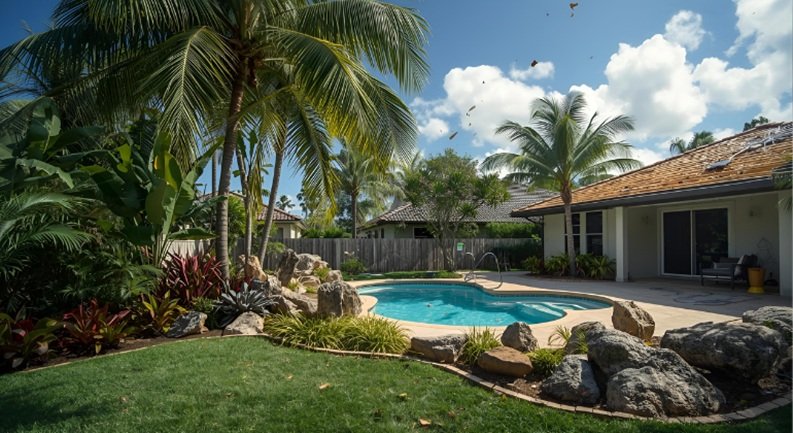
Think beyond just old shingles. During a roof tear-off, your yard can be subjected to a barrage of falling materials including nails, flashing, underlayment, and even small tools. For a typical 2,000 sq ft home, roofing projects generate an average of **3,000-5,000 pounds of debris**, highlighting the sheer volume of material that can impact your yard. These items can crush delicate plants, puncture irrigation lines, or embed themselves in lawns, creating unseen hazards for pets and people.
Foot Traffic, Equipment, and the Subtropical Soil
Roofing projects require significant foot traffic from crews, the movement of ladders, scaffolding, and material delivery. This can lead to soil compaction, especially in our often sandy or loamy South Florida soils, damaging plant roots and impeding water absorption. Heavy equipment, even if confined to designated areas, can scuff pavements, crack driveways, or damage underground utilities if not properly managed.
Dust, Chemical Runoff, and Your Sensitive Flora
The process of cutting, tearing, and installing roofing materials generates dust – asphalt particles, wood splinters, and other fine debris. This dust can settle on plant leaves, clogging pores and hindering photosynthesis, particularly for our sensitive tropical plants like orchids or bromeliads. Furthermore, rain during the project could wash chemicals or accumulated dust into your soil, potentially affecting plant health or even impacting local water tables if not properly contained, a crucial concern for our fragile South Florida ecosystem.
Accidental Impacts: Ladders, Materials, and Hurricanes
Despite best intentions, accidental impacts can occur. A falling ladder, a dropped bundle of shingles, or a swing of a hammer can easily damage branches, crack pots, or even dent outdoor features. Given our **High-Velocity Hurricane Zone (HVHZ)** requirements, materials like plywood sheathing are robust and heavy, increasing the potential for significant impact if not handled with utmost care.
Pre-Project Strategic Planning: Communication, Documentation, and FBC Considerations
The foundation of a successful, damage-free roof replacement project in Fort Lauderdale begins long before the first shingle is removed. Proactive planning and clear communication with your chosen contractor – Shieldline Roofing – are non-negotiable.

The Critical Contractor Walkthrough: Identifying Risks with Shieldline Roofing
Before any work commences, schedule a joint walkthrough of your property with your Shieldline Roofing project manager. This is your opportunity to:
- Jointly Identify Vulnerable Areas: Point out specific plants, garden beds, irrigation heads, and decorative features that are of particular concern.
- Discuss Access Routes and Work Zones: Establish clear pathways for workers and materials, minimizing impact on sensitive areas. We’ll outline where dumpsters will be placed and how materials will be hoisted to the roof, always keeping your property’s layout and **FBC safety requirements** in mind.
- Clarify Our Safety Protocols: Shieldline Roofing adheres to the highest safety standards, not just for our crew, but for your property as well. We’ll explain how we manage tools and materials to prevent accidental drops.
Documenting Your Tropical Haven: Why Pre-Project Photos are Paramount
Before any work begins, thoroughly photograph your landscaping from multiple angles. Capture close-ups of specific plants, garden beds, hardscaping, and any existing features like fountains or statues. This documentation establishes a clear baseline of your property’s condition, providing undeniable evidence should any damage occur.
This simple step can save significant disputes later. Remember, well-maintained landscaping can add **7-15% to a home’s overall value**, making its protection a significant financial consideration.
Debris Management Tailored for South Florida Homes
Discuss the debris management plan in detail. Establish designated drop zones that are as far as possible from sensitive plantings. Clarify where waste containers will be placed and how often debris will be removed. At Shieldline Roofing, we maintain rigorous daily cleanup protocols to prevent accumulation and minimize risks. This is especially crucial in Fort Lauderdale, where high humidity can make debris heavier and more prone to fostering pests if left unattended.
Smart Relocation & Strategic Pruning for Optimal Clearance
Take proactive steps to move any items that can be relocated:
- Temporary Relocation: Move potted plants, patio furniture, garden ornaments, bird feeders, and even sensitive small shrubs (if feasible) to a safe, sheltered area. This simple step eliminates a significant percentage of potential damage.
- Strategic Pruning: Trim overhanging tree branches that are close to the roofline or in the path of anticipated work areas. This provides necessary clearance for workers, materials, and equipment, preventing damage to both the roof and the tree. For larger trees, especially those with significant canopy density common in South Florida, consider hiring a professional arborist. They understand local tree species and **hurricane-resistant pruning techniques** that can prevent future damage from high winds. As a general rule, aim for at least 6-10 feet of clearance from the roof edge.
Implementing Multi-Layered Physical Protection: Shielding Your Green Investment
Once the planning is complete, it’s time to create physical barriers that actively protect your landscape. Shieldline Roofing employs methods designed to withstand the rigors of our South Florida environment and adhere to the robustness required for **HVHZ** compliance.
Heavy-Duty Tarps, Plywood, and HVHZ Impact Resistance
This is your first line of defense:
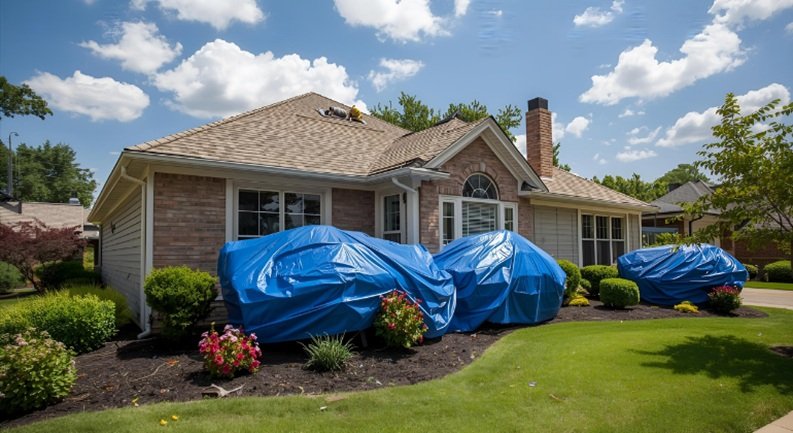
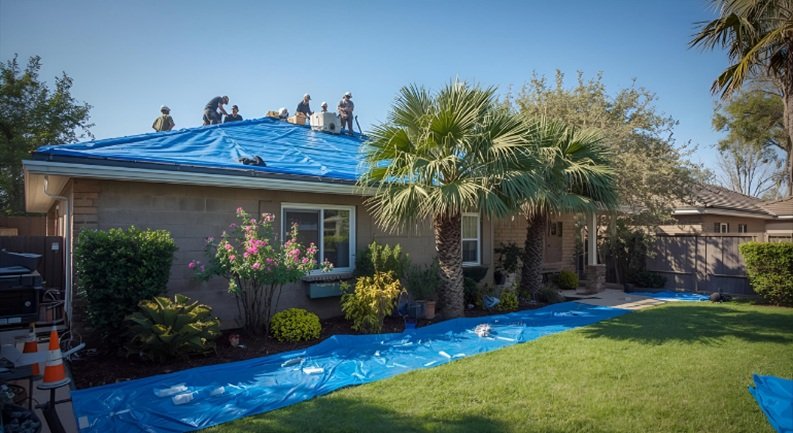
- Cover Garden Beds and Shrubs: Utilize heavy-duty, reinforced tarps. These aren’t your average flimsy covers; they should be thick enough to resist punctures and secured firmly to prevent wind from dislodging them.
- Add Plywood for Impact Protection: For particularly valuable or fragile plantings, lay sheets of plywood over the tarps. This creates a rigid barrier capable of deflecting falling debris, offering superior impact protection against heavier items.
- Protect Root Zones: Extend tarps and plywood out from the drip line of the roof to cover the critical root zones of trees and larger shrubs, preventing soil compaction and direct impact.
Vertical Barriers for Taller Trees and Irreplaceable Shrubs
Some plants are too large to cover with tarps or too delicate to withstand direct impact. For these, consider vertical protection:
- Netted Screens: Install temporary netting or screen material around taller, irreplaceable shrubs or the trunks of mature trees. This acts as a buffer against lateral impacts or debris that might slide off the roof.
- Burlap Wraps: For vulnerable tree trunks, especially those with thin bark, wrap them in burlap to protect against scratches or scuffs from ladders or materials.
- Temporary Fencing: For larger areas, temporary fencing can be erected to create a protective perimeter, clearly demarcating “no-go” zones for workers and material storage.
Protecting Your Paths, Driveways, and Irrigation Systems
Your hardscaping and hidden infrastructure also need attention:
- Surface Protection: Lay down plywood, heavy-duty rubber mats, or thick cardboard over pathways, patios, and driveways where significant foot traffic or material placement is expected. This prevents scratches, cracks, and staining from oil, tar, or other residues, crucial for maintaining the curb appeal of your Fort Lauderdale property.
- Irrigation System Safeguards: Mark all sprinkler heads clearly with bright flags or spray paint. Better yet, consider temporarily shutting down or capping vulnerable sections of your irrigation system, especially those directly beneath the roofline or in anticipated high-traffic zones. This prevents accidental damage and potential flooding.
Safeguarding Delicate Perennials and Ground Covers
For extensive perennial gardens or ground covers that cannot be easily moved, a combination of the above strategies is best. Use heavy-duty tarps directly over the beds, securing them well. If possible, add a layer of plywood over the tarp for impact resistance. For smaller, particularly precious plants, consider placing individual plastic containers or inverted buckets over them before tarping.
This creates a small protective dome. Ensure the tarps are removed daily or regularly to allow for light and air, especially in our humid climate, if the project extends over several days.
During the Project: Vigilance, Nail Control, and Environmental Care in South Florida
While Shieldline Roofing takes immense pride in our meticulous work, active homeowner vigilance during the project ensures all protocols are followed and any emerging issues are addressed promptly.
Daily Cleanup Protocols: Keeping Your Property Pristine
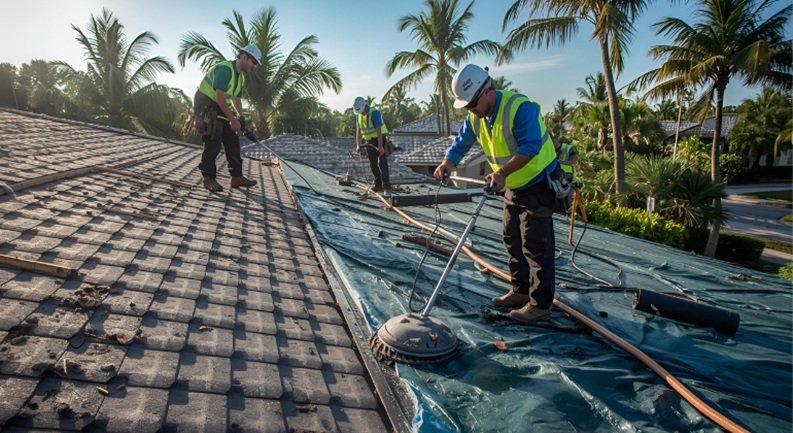
Confirm that workers are clearing debris regularly, especially around high-traffic areas, sensitive landscape zones, and at the end of each workday. Our commitment at Shieldline Roofing is to leave your property as clean, if not cleaner, than we found it. This daily diligence prevents accumulation, reduces trip hazards, and minimizes the time debris spends near your plants.
Proactive Nail Control: A Shieldline Roofing Standard
Nails are one of the most insidious hazards during a roof replacement. Emphasize the importance of frequent magnetic sweeps throughout the day, not just at the project’s conclusion. Shieldline Roofing crews are trained to perform these sweeps regularly, using powerful magnetic rollers in all work areas, flowerbeds, and even the grass, to minimize nail hazards for you, your family, and your pets.
Homeowners who communicate specific landscape protection needs with their contractors *before* work begins report a **60% lower incidence of significant damage** compared to those who do not.
Monitoring Runoff and Protecting Our Local Ecosystem
During rain events, observe how water is draining from the roof and around the work site. If there’s active cutting or significant dust, ensure that runoff is not directly channeling into sensitive garden beds, ponds, or storm drains without proper filtration.
Protecting our local waterways and the delicate South Florida ecosystem is a responsibility we all share, and Shieldline Roofing takes every precaution to minimize environmental impact.
Post-Project Assessment and Restoration: Bringing Your Yard Back to Life
Once the last shingle is laid and the final cleanup is done, a thorough post-project assessment is crucial to ensure your landscape fully recovers.
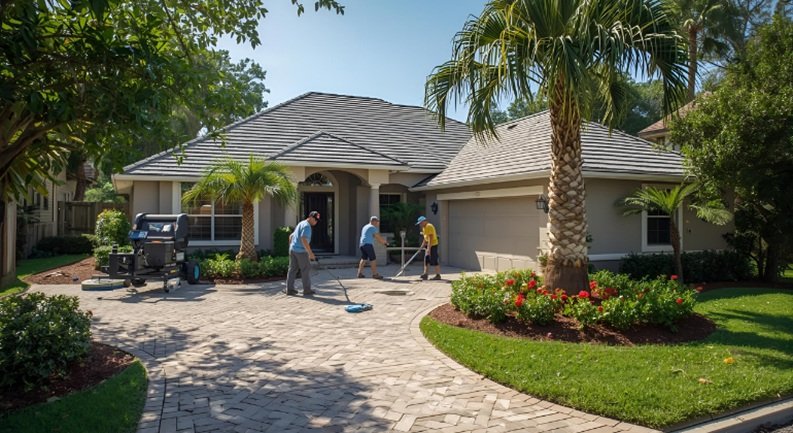
The Comprehensive Shieldline Final Walkthrough: Inspecting Every Detail
Once our crew has completed their final cleanup, conduct a comprehensive walkthrough of your entire property with your Shieldline Roofing project manager. This is the time to check for any missed debris, hidden nails (especially in flowerbeds and thick grass), and any signs of damage to plants, hardscaping, or irrigation systems. Our goal is your complete satisfaction, and we welcome your thorough inspection.
Nurturing Your Plants Back to Health: Hydration and Care
After a period of being covered, your plants will appreciate some extra care:
- Thorough Watering: Water thoroughly to wash off any residual dust from leaves and help rehydrate stressed plants. In South Florida’s heat, this is particularly important.
- Gentle Cleaning: For plants with particularly dusty leaves, a gentle spray with a hose can help restore their vigor.
- Monitor for Stress: Keep an eye on any plants that appear stressed or discolored in the days following the project.
Addressing Minor Scuffs and Soil Compaction Promptly
Promptly address any minor scuffs on hardscaping, broken small branches, or areas of soil compaction. Rake compacted soil lightly and consider adding a fresh layer of mulch to help the soil recover and retain moisture. Our team at Shieldline Roofing strives for perfection, but should any minor issues arise, we address them quickly and efficiently.
Understanding Contractor Liability for Significant Damage
What if, despite all precautions, your landscaping is significantly damaged? As a licensed and insured contractor, Shieldline Roofing assumes responsibility for damages directly caused by our work. This is why the pre-project documentation is so vital.
Your initial photographs establish the baseline, allowing us to accurately assess and address any substantial landscape damage, whether it requires repair or replacement. It’s critical to ensure your contractor is fully insured to cover such eventualities, a standard practice for Shieldline Roofing. We will discuss our process for evaluating and rectifying significant damage during your initial consultation.
Should I turn off my irrigation system entirely during the roof replacement?
It is generally advisable to turn off your irrigation system, or at least the zones directly impacted by the roofing work, during the active construction phase. This prevents accidental damage to sprinkler heads and pipes from foot traffic, equipment, or falling debris.
If the project spans several days and our South Florida sun is intense, you might consider hand-watering certain sensitive plants that are safely outside the immediate work zone. Your Shieldline Roofing project manager will guide you on the optimal approach for your specific property.
How much clearance should I prune from my trees, and should I do it myself or hire a professional?
For optimal clearance and safety, aim for at least 6-10 feet of space between tree branches and your roofline. This provides ample room for workers, materials, and equipment. For smaller branches that are easily accessible and don’t pose a significant risk, you might prune them yourself. However, for larger branches, or for trees that are tall or require specialized knowledge (especially in a hurricane-prone area like ours), it is highly recommended to hire a professional, licensed arborist. They can ensure the pruning is done safely, without damaging the tree’s health, and in a manner that complies with local regulations and contributes to hurricane preparedness.
Your Protected Property: A Testament to Shieldline Roofing’s Commitment
A new roof is an investment in your property’s future, and your landscaping is a vital component of that investment. By engaging in proactive planning, clear communication with a reputable local contractor like Shieldline Roofing, and implementing a multi-layered defense strategy, you can ensure your Fort Lauderdale or Hollywood home benefits from a superior roof replacement without compromising the beauty and value of your tropical oasis.
At Shieldline Roofing, we pride ourselves on delivering not just top-tier roofing solutions that meet or exceed **Florida Building Code** standards, but also a service experience that respects your entire property. Our experienced teams are trained in meticulous cleanup and property protection protocols, understanding the unique care required for South Florida homes.
Ready for a free, code-compliant roof inspection that respects your property and protects your valuable landscaping? Contact Shieldline Roofing, your trusted Fort Lauderdale and Hollywood roofing experts, today for a consultation. Let us show you why homeowners and business owners across South Florida choose us for quality, integrity, and peace of mind.
