
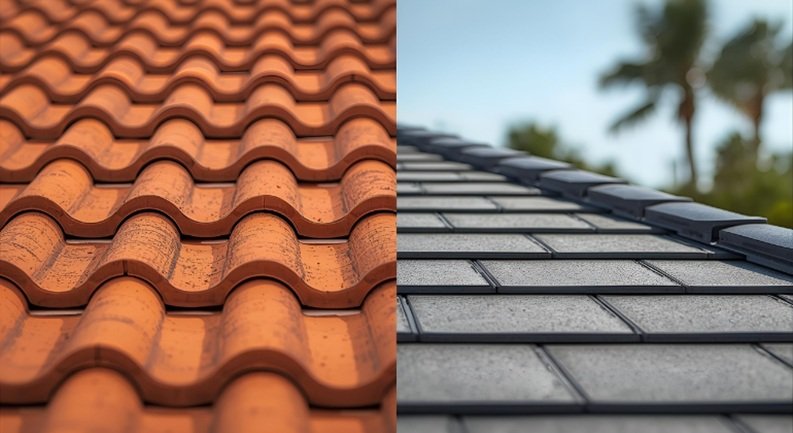
Clay vs. Concrete Roof Tiles: Making the Right Choice in Fort Lauderdale
As licensed roofing contractors and long-standing technical experts at Shieldline Roofing, we understand that choosing the right roof for your Fort Lauderdale, Hollywood, or broader South Florida property is one of the most significant decisions you’ll make. It’s not just about curb appeal; it’s about long-term protection, energy efficiency, and compliance with the stringent **Florida Building Code (FBC)**.
In our unique climate—battling intense heat, relentless humidity, corrosive salt air, and the ever-present threat of hurricanes—the performance and longevity of your roofing material are paramount. This article cuts through the noise, offering an authoritative, in-depth comparison of two popular and highly durable options: clay and concrete roof tiles. We’ll examine their strengths and weaknesses specifically through the lens of South Florida living, helping you make an informed decision that balances budget, aesthetics, and crucial performance factors like wind uplift and heat reflection.
The Fort Lauderdale Roofing Dilemma: Beyond Aesthetics – Understanding Your Climate
For homeowners and business owners in Fort Lauderdale, Hollywood, and throughout South Florida, a roof is more than just a cover; it’s your primary defense against a relentless tropical environment. The choice between clay and concrete roof tiles extends far beyond their visual appeal, delving into critical performance metrics under extreme conditions.
The South Florida Climate Challenge
Our region presents a unique gauntlet for roofing materials. The scorching sun delivers intense **UV radiation**, leading to material degradation and color fading. Constant high humidity creates a breeding ground for mold and mildew. Proximity to the ocean means pervasive **salt air**, which can corrode fasteners and deteriorate certain materials over time. And, of course, the annual hurricane season demands roofing systems capable of withstanding extreme wind uplift pressures, flying debris, and torrential downpours. Understanding these challenges is the first step in making a resilient roofing choice.
Adhering to Florida Building Code (FBC): Why It’s Paramount for Tile Roofs
In **High-Velocity Hurricane Zones (HVHZ)** like Fort Lauderdale, adherence to the **Florida Building Code (FBC)** is not just a recommendation—it’s the law, designed to protect lives and property. For tile roofs, this means strict requirements for underlayment systems (often a **secondary water barrier**), fastening patterns, and perimeter securement to ensure maximum resistance against wind uplift. Any tile roof installed by Shieldline Roofing is meticulously planned and executed to exceed these codes, ensuring your investment provides ultimate protection and is compliant for insurance purposes.
Long-Term Value vs. Initial Cost: A Strategic Homeowner’s Perspective
While the initial material and installation costs are significant, a smart investment considers the total lifecycle cost. This includes expected lifespan, maintenance requirements, potential repair expenses, and impact on energy bills. A roof that costs less upfront but demands frequent repairs or contributes to higher cooling costs might be more expensive in the long run. Our goal at Shieldline Roofing is to help you weigh these factors, providing expert insights into which tile option offers the best long-term value for your specific property and budget.
Clay Roof Tiles: Enduring Elegance and Natural Resilience in South Florida
Clay tiles, with their classic Mediterranean and Spanish aesthetics, have graced South Florida homes for generations, offering an undeniable natural charm and a proven track record of durability.
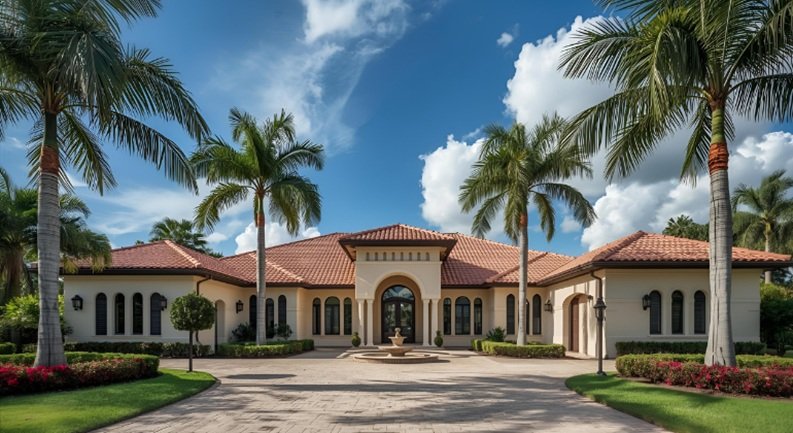
The Unmatched Aesthetics and Longevity of Clay
Clay tiles are celebrated for their exceptional aesthetic appeal, available in a variety of profiles from traditional barrel to contemporary flat designs. Their natural, long-lasting color is baked directly into the material during firing, meaning the pigment won’t fade or wash away over time, maintaining its vibrant hue for decades. Beyond beauty, clay boasts inherent properties that make it remarkably resilient in coastal environments. It offers excellent resistance to **salt spray degradation**, a significant advantage along the Fort Lauderdale coast. When properly glazed, clay is naturally mold and mildew resistant due to its low porosity, reducing the need for frequent harsh cleanings. With a high durability and very long lifespan, often exceeding **50-100+ years**, a clay roof is truly a generational investment.
Practical Considerations for Fort Lauderdale Homes
While the benefits are compelling, homeowners should be aware of a few practical considerations. Clay tiles generally come with a higher initial material and installation cost compared to concrete. They are also inherently more fragile than concrete tiles, making them susceptible to breakage from impact—whether from falling tree limbs or foot traffic during maintenance. Furthermore, clay is a heavier roofing material, requiring a robust roof decking and supporting structure that must be inspected and potentially reinforced to comply with **FBC** load-bearing requirements.
Clay’s Performance Against Fort Lauderdale’s Elements
In the intense South Florida heat, clay tiles provide good thermal mass, which helps insulate the home, reducing heat transfer into the attic and contributing to lower cooling costs. Their natural ventilation, particularly with barrel profiles, also aids in heat dissipation. The inherent **salt air resistance** of clay is a significant advantage, protecting your roof from corrosive elements that can degrade other materials. For hurricanes, the key is proper, FBC-compliant installation. With modern fastening techniques and code-mandated underlayments, clay tiles can provide formidable wind uplift resistance, ensuring your home is protected during severe weather events.
Concrete Roof Tiles: Versatility, Durability, and Value for Fort Lauderdale
Concrete roof tiles have emerged as a highly versatile and cost-effective alternative to clay, offering exceptional durability and a vast array of design options suitable for any Fort Lauderdale architectural style.
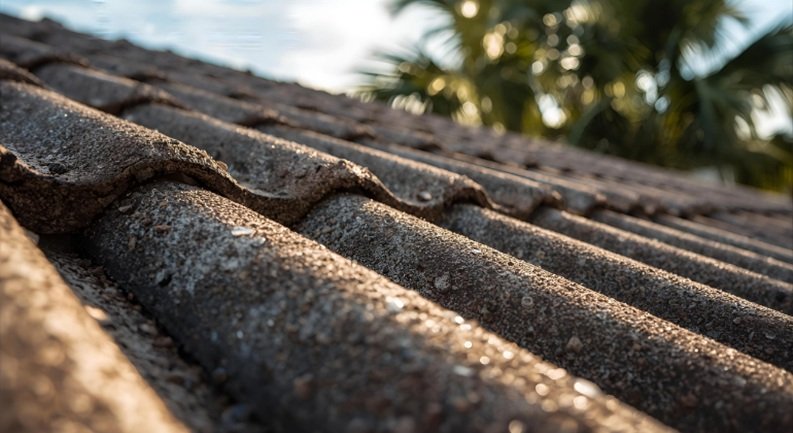
Versatility and Robust Durability
One of concrete tiles’ greatest strengths is their versatility. They are manufactured in a wide range of styles, textures, and colors, able to mimic the look of traditional barrel tiles, flat slate, or even wood shakes, offering immense flexibility for architectural design. This allows for seamless integration with Fort Lauderdale’s diverse neighborhoods, from historic homes to modern constructions. Beyond aesthetics, concrete tiles are extremely durable and impact-resistant, capable of withstanding hail, falling debris, and heavy foot traffic better than their clay counterparts. When installed to **Florida Building Code (FBC)** standards, they offer excellent hurricane and wind uplift resistance, and they are also a good fire-resistant option. With a long lifespan typically ranging from **30-50+ years**, concrete tiles provide dependable protection and value.
Maintaining Concrete’s Appeal in Humid Climates
While concrete tiles are robust, they do come with specific maintenance considerations for our humid climate. The pigments used to color concrete tiles are typically surface-applied, making them more susceptible to color fading over time due to intense **UV exposure**. Additionally, concrete’s slightly more porous nature can make it more prone to mold and mildew growth in humid environments without regular cleaning or specialized coatings. Shieldline Roofing often recommends routine maintenance plans and advanced sealant applications to preserve color and inhibit organic growth. Concrete can also absorb more water than glazed clay, potentially increasing its weight during prolonged rain, which underscores the importance of a properly engineered roof structure.
Concrete’s Superior Hurricane Resistance for HVHZ Zones
For properties located in **High-Velocity Hurricane Zones (HVHZ)** like Fort Lauderdale, concrete roof tiles offer a compelling advantage in terms of structural integrity and wind resistance. Their robust nature, combined with advanced fastening systems mandated by the **Florida Building Code (FBC)**, allows them to withstand incredible forces. **Advanced concrete tile systems, installed to Florida Building Code (FBC) standards, can withstand wind speeds exceeding 150 mph.** This makes them a top choice for homeowners prioritizing hurricane resilience. However, constant UV degradation and diligent mildew prevention are key considerations to ensure their long-term performance and aesthetic appeal in our climate.
Direct Comparison: A Fort Lauderdale Homeowner’s Matrix
Let’s break down the key factors in a side-by-side comparison relevant to your South Florida property.
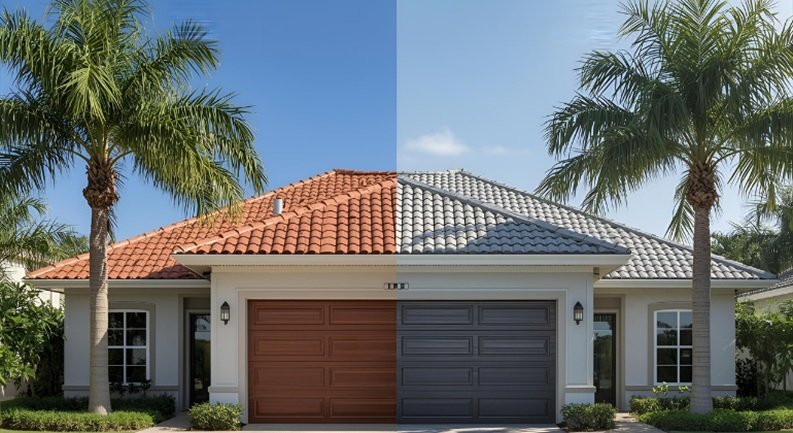
Cost Analysis: Initial Investment vs. Lifecycle Value
When budgeting for a new roof, consider both the upfront cost and the long-term expenses. **Clay tiles typically range from $10-$20 per sq. ft. installed**, while **concrete tiles are $7-$15 per sq. ft. installed** in South Florida, varying based on profile, manufacturer, and complexity. While clay has a higher initial investment, its potentially longer lifespan (up to 100 years vs. 50 years for concrete) and lower long-term maintenance needs (less fading, less mildew) can sometimes offset the difference over many decades. Conversely, concrete offers a more budget-friendly entry point with excellent durability, making it a strong value proposition.
Performance Factors for South Florida: Durability, Maintenance, Energy Efficiency
- Durability & Lifespan: Both are highly durable. Clay offers superior salt air resistance and natural color retention, but is more brittle. Concrete is highly impact-resistant and excels in hurricane wind loads but may fade and require mildew cleaning.
- Maintenance: Glazed clay requires less frequent cleaning for mildew. Concrete may need periodic cleaning to remove mildew and potentially re-coating to refresh color after decades.
- Energy Efficiency: Both materials offer excellent thermal mass. Properly installed tile roofs, leveraging their inherent air channels and thermal mass, can significantly reduce heat transfer. **Properly installed tile roofs can reduce attic heat gain by up to 70% compared to traditional asphalt shingles**, significantly impacting cooling costs in Fort Lauderdale’s hot climate.
Aesthetic & Structural Considerations
- Aesthetics & Curb Appeal: Clay offers a timeless, natural, often higher-end aesthetic, ideal for Mediterranean or Spanish styles prevalent in Fort Lauderdale. Concrete provides immense versatility, replicating many looks at a lower cost, suitable for a broader range of architectural styles.
- Weight Load: Both materials are heavy compared to shingles, requiring a robust roof structure that must be inspected and potentially upgraded to meet **FBC** requirements. Shieldline Roofing always performs a thorough structural assessment to ensure your home can safely support either tile option.
Making Your Final Decision: Partnering with Shieldline Roofing
Choosing between clay and concrete tiles for your Fort Lauderdale home is a complex decision with many variables. It’s an investment that will protect your property for decades, influence your energy bills, and define your home’s curb appeal. Don’t navigate these choices alone.
Key Decision Factors for Fort Lauderdale Properties
Consider these points as you weigh your options:
- Budget Assessment: Beyond initial cost, consider the lifecycle cost and your long-term financial planning.
- Aesthetic Preference: Does your vision align with the natural elegance of clay or the versatile modern appeal of concrete? How does it complement your existing architecture and neighborhood style?
- Longevity Goals: How long do you plan to own the property? A 100-year clay roof may be overkill if you plan to sell in 10 years, but a significant selling point if it’s your forever home.
- Maintenance Commitment: Are you willing to undertake periodic cleaning for concrete, or do you prefer the lower maintenance of glazed clay?
- Energy Efficiency Goals: Both offer benefits, but understanding their specific thermal properties can impact your cooling costs significantly in South Florida.
The Critical Role of a Licensed South Florida Roofing Professional
This is where the expertise of a local, licensed, and insured roofing contractor like Shieldline Roofing becomes invaluable. We don’t just install roofs; we provide comprehensive solutions tailored to South Florida’s unique challenges. Our team understands every nuance of the **Florida Building Code (FBC)**, the specific wind-load requirements for **HVHZ** zones, and the best practices for installing both clay and concrete tiles to maximize their lifespan and performance against heat, humidity, and hurricanes.
Why Shieldline Roofing is Your Trusted Partner
At Shieldline Roofing, we pride ourselves on being more than just roofers; we are your strategic partners in protecting your most valuable asset. Our commitment to safety, adherence to the highest industry standards, and unparalleled expertise in local conditions ensure that your new tile roof is not just beautiful, but built to last and code-compliant. We’ll guide you through every step, from material selection and structural assessment to flawless installation and post-project support. We stand behind our work with robust warranties and a reputation built on trust and quality.
Ready to explore the best tile roofing solution for your Fort Lauderdale property?
Don’t leave your biggest investment to chance. Contact Shieldline Roofing today for a free, no-obligation roof inspection and expert consultation. Let our licensed and insured professionals provide you with the peace of mind that comes from a high-quality, code-compliant roof.
FAQs: Your Fort Lauderdale Tile Roofing Questions Answered
Q: Are tile roofs significantly heavier than shingle roofs?
A: Yes, absolutely. Both clay and concrete tiles are substantially heavier than asphalt shingles, typically weighing between 6-12 pounds per square foot, compared to shingles which are around 2-4 pounds per square foot. This added weight necessitates a robust roof structure. As part of our comprehensive service, Shieldline Roofing always performs a thorough structural assessment to ensure your Fort Lauderdale home’s decking and truss system can safely support the chosen tile material, adhering strictly to **Florida Building Code (FBC)** load-bearing requirements.
Q: How do tile roofs perform in hurricanes compared to other materials?
A: When installed correctly and in strict adherence to the **Florida Building Code (FBC)** for **High-Velocity Hurricane Zones (HVHZ)**, tile roofs – both clay and concrete – offer exceptional hurricane resistance. Their individual components are designed to withstand significant wind uplift, and their inherent weight provides stability. They often outperform many other roofing materials, especially asphalt shingles, in severe wind events. Proper fastening systems, code-compliant underlayment (like a **secondary water barrier**), and meticulous installation by a licensed contractor like Shieldline Roofing are critical for this superior performance.
Q: Do clay or concrete tiles require special structural reinforcement?
A: Due to their significant weight, both clay and concrete tiles often require special structural reinforcement, particularly on older homes not originally designed for such heavy loads. This might involve reinforcing existing trusses or decking. Shieldline Roofing conducts a detailed structural evaluation before any tile roof installation in Fort Lauderdale to determine if reinforcements are necessary and to ensure full compliance with **FBC** structural requirements. This step is crucial for the safety and longevity of your roof.
Q: What is the typical warranty for clay and concrete roof tiles in Fort Lauderdale?
A: Warranties for tile roofs in Fort Lauderdale typically come in two parts: a manufacturer’s warranty for the materials and a contractor’s warranty for the installation. Manufacturer warranties for clay and concrete tiles often range from 30-50 years, with some clay products offering limited lifetime warranties (up to 75-100 years). Shieldline Roofing provides a robust workmanship warranty, typically 5-10 years, ensuring your installation meets the highest standards and local codes. We’ll provide all warranty details specific to your chosen materials during your consultation.
Q: Can I mix and match different types of tiles on my roof?
A: While it’s technically possible to mix different profiles or colors of the *same material* (e.g., different shades of concrete tiles), mixing entirely different materials like clay and concrete on a single roof is highly uncommon and generally not recommended. Different materials have varying weights, fastening methods, and expansion/contraction rates, which can lead to structural issues, flashing complications, and voided warranties. For a cohesive, code-compliant, and durable roof in Fort Lauderdale, consistency in material is key. If you have unique aesthetic goals, our experts at Shieldline Roofing can explore various styles and colors within a single material type to achieve your vision.
Q: What’s the best way to clean mold and mildew off a concrete tile roof?
A: In Fort Lauderdale’s humid climate, concrete tiles can be susceptible to mold and mildew. The best approach is a gentle, low-pressure cleaning using a solution of water and a mild, non-abrasive roof cleaning agent specifically designed for concrete tiles. Avoid high-pressure washing, as it can damage the tile surface, strip away color, and force water under the tiles, potentially compromising your roof’s integrity. Regular, professional cleaning every 2-3 years, or as needed, by a licensed service is recommended to maintain your roof’s appearance and prevent severe growth. Shieldline Roofing can provide recommendations for trusted cleaning services.
Q: Is one type of tile more eco-friendly than the other?
A: Both clay and concrete tiles have environmental benefits. Clay tiles are made from natural, abundant materials and are highly recyclable, with a very long lifespan reducing waste. Concrete tiles also use natural materials, are recyclable, and their manufacturing process has become more environmentally conscious, often incorporating recycled content. Both types of tiles contribute to energy efficiency by reducing heat transfer into the attic, which lowers energy consumption for cooling in hot climates like Fort Lauderdale. The “more eco-friendly” choice often depends on specific product formulations and local sourcing, which our team at Shieldline Roofing can discuss with you.
