
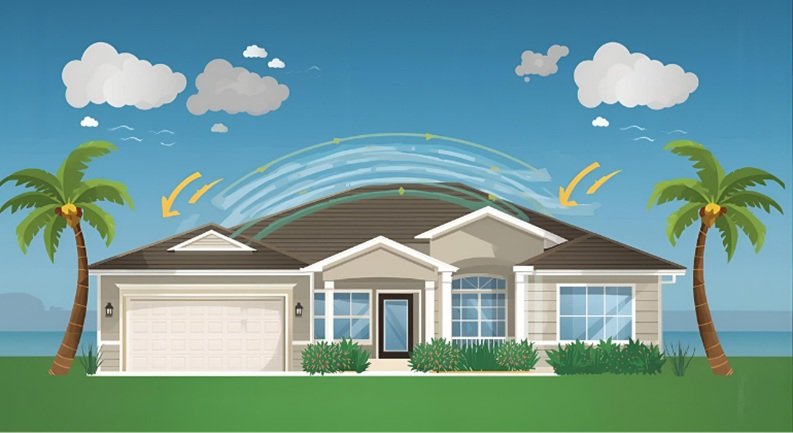
What Wind Rating Does My Florida Roof Need? Expert Guide for Fort Lauderdale & South Florida
Living in Fort Lauderdale, Hollywood, or anywhere across the sun-drenched expanse of South Florida comes with its unique charm – and its unique challenges. Foremost among these is the undeniable threat of hurricanes, tropical storms, and the relentless high winds that accompany them. At Shieldline Roofing, we know that your roof isn’t just a cover; it’s your primary defense against these powerful forces of nature. That’s why understanding your roof’s required wind rating isn’t merely a suggestion; it’s a critical aspect of protecting your property and ensuring peace of mind.
Florida boasts some of the most rigorous building codes in the nation, a direct response to our state’s hurricane history. As your trusted, licensed roofing contractors serving Fort Lauderdale, Hollywood, and the wider South Florida region, we’re here to demystify these complex requirements. We’ll guide you through the intricacies of the Florida Building Code (FBC), how your specific location impacts wind ratings, and why choosing the right contractor and materials is paramount for the safety and longevity of your home or business.
Understanding South Florida’s Unyielding Wind Challenges & The FBC
South Florida homeowners and business owners live on the front lines of hurricane season. Our region’s unique geographical position makes us particularly vulnerable, necessitating construction standards that are second to none. This reality is why the Florida Building Code (FBC) exists – to build resilience into every structure, starting from the top down.
The Legacy of Hurricane Andrew and the Birth of the FBC
The devastating impact of Hurricane Andrew in 1992 served as a stark, unforgettable lesson for South Florida. The widespread destruction, particularly to roof systems that simply couldn’t withstand the extreme wind uplift and projectile impacts, spurred an urgent, statewide overhaul of building regulations. The result was the Florida Building Code, which fundamentally reshaped how structures, especially roofs, are designed and built to resist hurricane-force winds. At Shieldline Roofing, we honor this legacy by ensuring every project we undertake meets and often exceeds these vital standards.
How the Florida Building Code Protects South Florida Properties
The FBC is a comprehensive, statewide mandate designed to mitigate structural damage from high winds, heavy rains, and other environmental threats. For roofing, it dictates specific design and construction standards for all new construction, as well as significant roof repairs or replacements. The FBC directly references **ASCE 7-16: Minimum Design Loads for Buildings and Other Structures** – the authoritative national standard for calculating wind loads. This standard specifies how to determine the “Ultimate Design Wind Speed” (Vult) for various locations across the state. This unified approach ensures that regardless of your specific city, your roof is built to a consistent, high level of protection. In fact, the FBC was adopted statewide in 2002, unifying building standards across all counties.
The HVHZ Advantage: Stricter Codes for Miami-Dade & Broward
While the statewide FBC is robust, areas designated as High-Velocity Hurricane Zones (HVHZ) – namely Miami-Dade and Broward counties (which includes Fort Lauderdale and Hollywood) – have even stricter requirements. Due to their extreme historical hurricane exposure, these zones often mandate higher-rated materials, more stringent fastening schedules, and more rigorous product testing (like Miami-Dade NOAs) that exceed the statewide FBC minimums. This means that if your property is located in our service area, you benefit from some of the most advanced and protective roofing standards in the world, offering an enhanced layer of safety for your investment.
Deciphering Your Roof’s Specific Wind Zone & Design Pressure in Fort Lauderdale
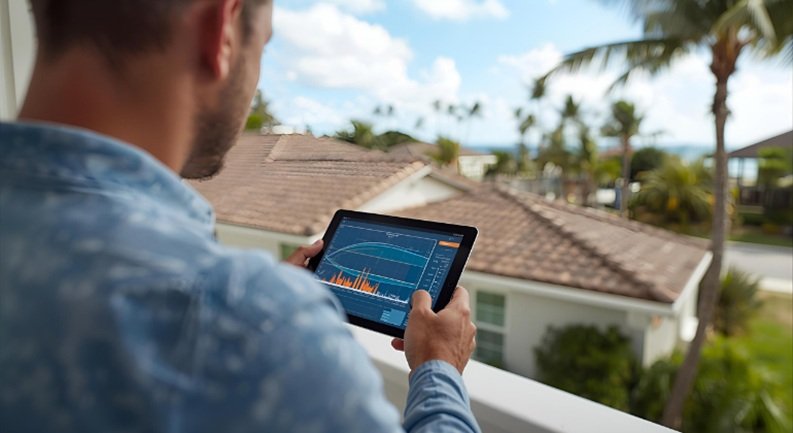
Understanding your roof’s required wind rating isn’t about a single, universal number. It’s a sophisticated calculation influenced by several specific factors unique to your property and its environment. As your local Fort Lauderdale and Hollywood roofing experts, Shieldline Roofing performs these critical assessments to ensure your roof meets precise safety and code requirements.
Geographic Wind Zones & Ultimate Design Wind Speeds
Florida is meticulously mapped into different wind zones, each with varying ultimate design wind speeds. As expected, coastal areas, particularly within the HVHZ, typically have the highest requirements. For many properties in Fort Lauderdale and Hollywood, this means designing for exceptionally high wind speeds. Many coastal areas in Florida require design wind speeds of 170-185 mph, translating to immense pressure on your roof during a hurricane. Knowing your precise wind zone is the first step in determining the structural integrity your roof needs.
Beyond Wind Speed: Building Height, Exposure, and Occupancy Categories
The FBC, through ASCE 7-16, considers more than just your address. Several site-specific factors fine-tune the wind load calculations:
- Building Height: Taller structures experience greater wind forces at higher elevations, necessitating stronger design.
- Exposure Category: This describes the roughness of the terrain surrounding your building.
- Exposure B: Urban/suburban areas with numerous obstructions (trees, buildings).
- Exposure C: Open terrain with scattered obstructions, common for many residential areas in Fort Lauderdale.
- Exposure D: Flat, unobstructed areas directly exposed to wind flowing over large bodies of water (e.g., coastal fronts, directly on the Intracoastal Waterway or oceanfront properties in Hollywood). This category demands the most robust design.
- Building Type & Occupancy Category: Essential facilities (like hospitals, fire stations) and high-occupancy buildings have higher importance factors, leading to more conservative and robust design requirements to ensure they remain functional during and after a disaster.
The Critical Role of Roof Geometry and Design Pressure (PSF)
Even the shape of your roof plays a significant role. Hip roofs, with their sloped sides, generally perform better in high winds than gable roofs, which present large, flat surfaces to wind forces. The roof slope, overhangs, and perimeter details also critically influence wind uplift pressures. Ultimately, all these factors converge to determine the **Design Pressure (PSF)** your roof must withstand. Measured in pounds per square foot, this PSF rating is the precise force that the roofing materials, fastening system, and underlying structure must meet or exceed to comply with code. At Shieldline Roofing, we calculate these intricate design pressures to specify the exact materials and installation methods needed for your Fort Lauderdale or Hollywood property.
The Anatomy of a Wind-Resistant Roof: Materials & Installation for South Florida
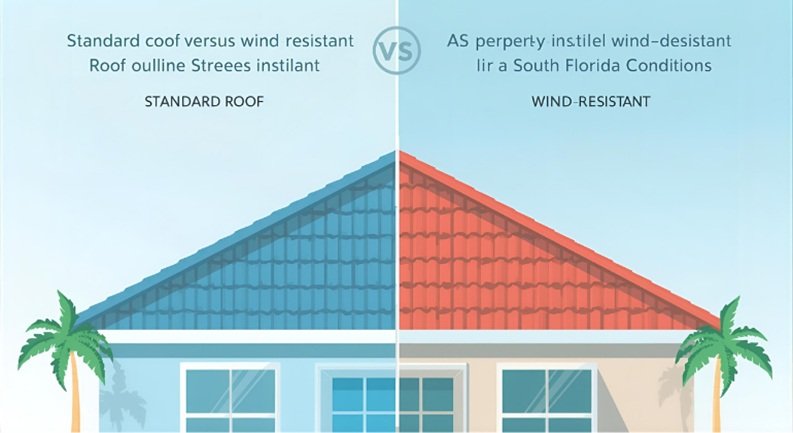
While design specifications are crucial, the actual performance of your roof in a hurricane depends entirely on the quality of its components and, most importantly, the precision of its installation. Shieldline Roofing specializes in constructing roofs that don’t just meet code but are engineered for superior resilience against South Florida’s formidable weather.
High-Performance Roofing Materials for Hurricane Zones
The choice of roofing material is foundational to wind resistance. In Fort Lauderdale and Hollywood, we typically recommend materials that have proven their mettle in high-wind environments:
- Asphalt Shingles: Not all shingles are created equal. We utilize architectural shingles with enhanced adhesion and higher ASTM D7158 ratings (Class G or H for 120-150 mph resistance), often requiring a 6-nail per shingle pattern instead of the standard 4-nail pattern in lower wind areas.
- Tile Roofs (Concrete & Clay): These are excellent choices for their durability and aesthetic appeal in South Florida. However, their wind resistance is highly dependent on proper fastening (adhesives, screws, clips) and adherence to specific FBC details for high-wind zones.
- Metal Roofing: Standing seam or screw-down metal panels offer exceptional wind resistance when properly installed with robust fastening systems. Their interlocking designs can withstand powerful uplift forces.
- Modified Bitumen/TPO: Common for low-slope commercial roofs, these membrane systems are installed with specialized adhesives or mechanical fasteners designed to resist extreme uplift pressures.
All materials Shieldline Roofing recommends are accompanied by **Florida Product Approvals** or **Miami-Dade County Notice of Acceptance (NOA)**, ensuring they’ve passed rigorous testing for our unique climate.
The Unsung Heroes: Fastening Schedules, Underlayment, and Deck Attachment
The strength of your roof system lies in its weakest link, which is often its attachment. This is where Shieldline Roofing’s expertise truly shines:
- Fastening Schedule: This dictates the number, type, and spacing of fasteners (nails, screws, clips) used to secure every component. For instance, in high wind zones, a **6-nail per shingle pattern** is often required for asphalt shingles, significantly increasing their resistance compared to the standard 4-nail pattern.
- Underlayment: This critical layer beneath your primary roofing material acts as a secondary water barrier, protecting your home even if the outer layer is compromised. High-quality synthetic or self-adhering underlayments also contribute significantly to the roof’s overall uplift resistance.
- Deck Attachment: The connection of your roof sheathing (plywood or OSB) to the trusses or rafters is foundational. Proper nail size, spacing, and penetration are vital for the entire roof system’s ability to resist uplift forces from below.
Protecting the Perimeter: Edge Details, Flashing, and Critical Vulnerabilities
The edges of your roof – the eaves, rakes, and corners – are the most vulnerable points for wind uplift. This is where wind can get underneath the roofing material, initiating a catastrophic peel-off. Proper installation of these details is non-negotiable:
- Drip Edge & Rakes: Correctly installed metal drip edge along the eaves and rake edges is essential to prevent wind from catching and lifting the roof covering.
- Flashing: Meticulous flashing around chimneys, skylights, vents, and wall intersections prevents water intrusion and ensures these penetrations are securely integrated into the wind-resistant system.
- Sealing and Adhesion: In many systems, high-quality sealants and adhesives are used in conjunction with mechanical fasteners to create a monolithic, wind-resistant barrier, especially at vulnerable perimeters.
At Shieldline Roofing, we leave no detail overlooked, knowing that the integrity of your Fort Lauderdale roof depends on it.
Elevating Protection: Beyond Minimum Code for Ultimate Peace of Mind
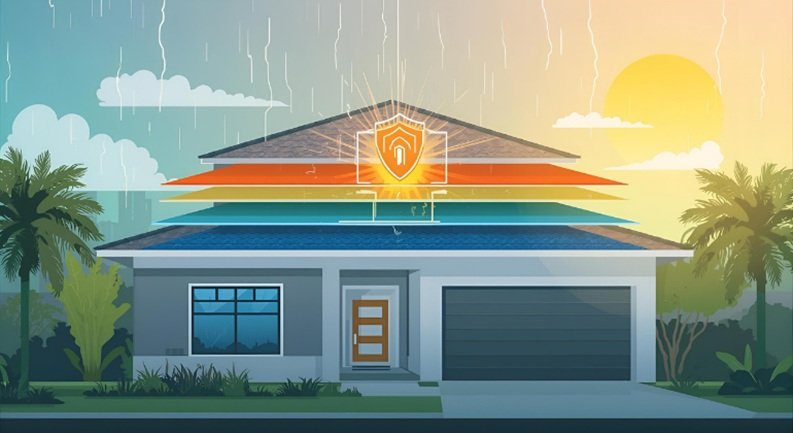
While meeting the Florida Building Code is legally mandatory and provides a baseline for safety, many discerning homeowners and business owners in Fort Lauderdale and Hollywood choose to invest in enhanced protection. Going “beyond code” offers a superior level of defense and invaluable peace of mind when the next storm threatens our South Florida shores.
Strategic Material Upgrades: Why Higher Ratings Matter Here
Opting for materials with ratings significantly higher than your minimum requirement is a smart investment. For instance:
- Shingles: If your code requires Class G (120 mph) shingles, choosing Class H (150 mph) architectural shingles provides an extra buffer against stronger-than-expected gusts. These often come with superior adhesive strips and heavier mats.
- Metal Roofing: Investing in standing seam metal systems with robust panel profiles and concealed fasteners offers superior uplift resistance compared to basic exposed-fastener panels.
- Tile Roofs: Ensuring all tiles are individually fastened, often with screws and specialized clips, rather than relying solely on foam adhesive, provides significantly greater wind resistance.
These upgrades mean your roof is designed to withstand more extreme conditions, reducing the risk of damage and costly repairs.
The Imperative of a Sealed Roof Deck and Enhanced Fastening
Two key enhancements can dramatically improve your roof’s overall resilience:
- Sealed Roof Deck: This involves applying a self-adhering modified bitumen membrane or a fluid-applied flashing directly to the roof deck joints and seams before the underlayment is installed. This creates a secondary water barrier that virtually eliminates water intrusion even if your primary roof covering is completely lost during a hurricane. A sealed roof deck can reduce interior water damage by up to **95%** during a major hurricane, saving you from devastating internal property loss.
- Enhanced Fastening for Decking: Beyond just the roofing materials, ensuring your roof deck itself is securely fastened to the trusses or rafters with additional nails or screws can prevent the entire deck from peeling off in extreme winds. This is a critical, often overlooked, layer of protection.
Understanding Wind Mitigation and Insurance Savings in Florida
One of the most compelling reasons to choose enhanced wind resistance is the potential for significant savings on your homeowner’s insurance. After a new roof installation, we highly recommend obtaining a **wind mitigation inspection (Form OIR-B1-1802)**. This inspection assesses key features of your home’s wind resistance, including:
- Roof-to-wall attachment strength
- Roof decking attachment
- Secondary water resistance (like a sealed roof deck)
- Roof geometry (hip vs. gable)
- Opening protection (shutters, impact windows)
Homes in Fort Lauderdale and Hollywood that meet certain criteria, especially with a new, high-rated roof installed by Shieldline Roofing, can qualify for substantial discounts on their premiums, making these upgrades a financially savvy choice in the long run.
Partnering with the Right Expert: Shieldline Roofing for Your South Florida Home
Navigating Florida’s stringent roof requirements and ensuring your home is truly protected demands more than just a handyman; it requires a seasoned, licensed professional. For homeowners and business owners in Fort Lauderdale, Hollywood, and throughout South Florida, Shieldline Roofing is that trusted partner.
The Non-Negotiables: Licensing, Insurance, and FBC Expertise
Before any work begins, always verify your contractor’s credentials. At Shieldline Roofing, we are fully **licensed by the State of Florida** and carry comprehensive **insurance** – including workers’ compensation and general liability. This protects you, your property, and our crew. Furthermore, our team is deeply knowledgeable about the latest edition of the **Florida Building Code** and any specific local county or city amendments relevant to Fort Lauderdale and Hollywood. We don’t just know the code; we live by it, ensuring every project is fully compliant and built to last.
The Shieldline Roofing Permitting and Inspection Promise
A reputable contractor doesn’t cut corners on bureaucracy. Shieldline Roofing takes full responsibility for pulling all necessary permits from your local municipality (Fort Lauderdale, Hollywood, etc.) and ensuring proper inspections are conducted at each critical stage of the roofing process. From the initial tear-off and deck inspection to the final completion, our commitment to transparency and adherence to regulations guarantees your roof is installed correctly and approved by local building officials. This prevents future headaches and ensures your insurance validity.
Local Knowledge & Unwavering Commitment to South Florida Safety
Beyond the technical specifications, our value comes from our deep roots in the South Florida community. We understand the unique challenges our local climate presents – not just hurricanes, but also intense sun, high humidity, and persistent algae growth. This local knowledge informs our material recommendations, installation techniques, and maintenance advice. When you choose Shieldline Roofing, you’re not just hiring a contractor; you’re partnering with a team committed to safeguarding your property with superior craftsmanship and an unwavering dedication to the safety and longevity of your investment in Fort Lauderdale, Hollywood, and beyond.
FAQs
Q: What is the High-Velocity Hurricane Zone (HVHZ)?
A: The HVHZ consists of Miami-Dade and Broward counties (including Fort Lauderdale and Hollywood), which have the strictest building code requirements in Florida due to their historical exposure to severe hurricanes. This means heightened standards for roofing materials and installation.
Q: Can I just replace my roof with the same materials it had before?
A: No. Any significant roof repair or replacement in Florida, especially in the HVHZ, must comply with the current Florida Building Code. This almost always means upgrading materials and installation methods to meet higher wind rating standards than older roofs. Shieldline Roofing ensures your new roof meets current code.
Q: How do I find my specific wind zone and required design speed for my Fort Lauderdale home?
A: A licensed roofing contractor like Shieldline Roofing or a structural engineer can calculate your specific wind design parameters using your property address, building characteristics, and the ASCE 7-16 standard. We provide these details as part of our comprehensive assessment.
Q: Do older homes have different requirements for roof replacement in South Florida?
A: Yes, generally. While the core FBC applies, older homes undergoing re-roofing may have specific requirements regarding existing structural components. However, the new roof system *itself* must meet current wind uplift and material standards. We assess each older home individually to ensure compliance and optimal performance.
Q: What’s the difference between wind speed (MPH) and design pressure (PSF)?
A: Wind speed (MPH) is the velocity of the wind. Design pressure (PSF) is the actual force per square foot that the wind exerts on the roof surface, causing uplift and downward pressure. Building codes use the ultimate design wind speed to calculate the necessary PSF that your roof components must be engineered to resist.
Q: Does my insurance company care about my roof’s wind rating?
A: Absolutely. A highly wind-resistant roof, especially one with a “wind mitigation inspection” (Form OIR-B1-1802) confirming features like a sealed roof deck and strong attachments, can qualify you for significant discounts on your homeowner’s insurance premiums. This is a crucial benefit for South Florida residents.
[{“stat”:”95%”,”claim”:”A sealed roof deck can reduce interior water damage by up to 95% during a major hurricane.”}]
