Executive Summary
- The Florida 25 percent roof rule mandates a full roof replacement if damage affects one-quarter or more of the total roof surface area.
- This legislation aims to prevent partial repairs on aging roofs, promoting comprehensive structural integrity and enhancing safety standards for Florida homes.
- Homeowners must proactively understand this rule as it significantly impacts insurance claims, potential repair costs, and long-term property value.
- Insurance companies can deny claims for partial repairs if the damage exceeds the 25% threshold, compelling homeowners to pursue full replacement.
- Regular professional roof inspections and diligent maintenance are crucial for Florida homeowners to mitigate unexpected future expenses and ensure compliance.
- Navigating the rule effectively requires consulting qualified roofing professionals and thoroughly understanding the specifics of your homeowner’s insurance policy.
Understanding the Florida 25 Percent Roof Rule
What is the Florida 25 Percent Roof Rule?
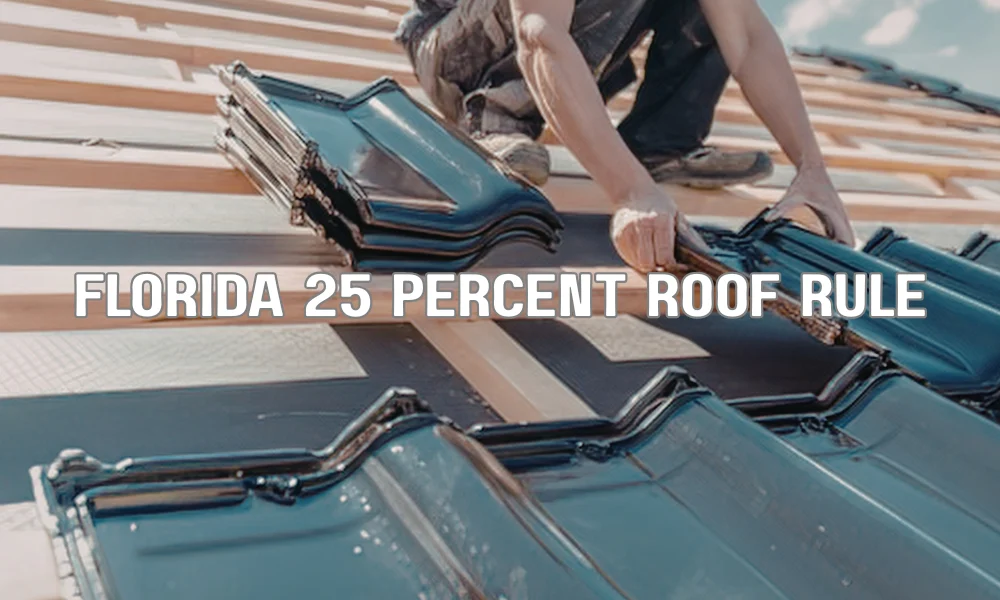
The Florida 25 Percent Roof Rule, codified in Florida Statute 627.706, stipulates that if a roofing system sustains damage exceeding 25% of its total surface area, the entire roof must be replaced, not merely repaired. This regulation applies particularly to roofs nearing the end of their useful life or to older roofing systems. Its primary objective is to ensure that significant damage leads to a complete, unified, and structurally sound roofing system rather than fragmented, temporary patches.
Critical Fact 1: Florida Statute 627.706 is the legal basis for the 25 percent roof rule, mandating full replacement if damage exceeds a quarter of the roof’s surface, particularly for older roofs, to ensure structural integrity and reduce future liabilities.
Why was this rule implemented in Florida?
This rule was implemented to address widespread issues with aging roofs, frequent hurricane damage, and the prevalence of insurance fraud related to partial roof repairs. Florida’s harsh climate, characterized by strong winds, torrential rains, and intense sun, often causes extensive but not always immediately visible roof damage. The previous practice of performing repeated small, localized repairs on an old roof frequently led to persistent leaks, further structural damage, and an increased burden on insurance providers due to recurrent claims. The rule helps standardize roof replacement for safety and longevity.
Who does the 25 percent roof rule primarily affect?
The 25 percent roof rule primarily affects Florida homeowners with older roofs or those facing significant roof damage from storms or other catastrophic events. It profoundly impacts how insurance companies process claims and dictates the scope of necessary repairs, often shifting the expectation from a simple patch to a complete roof replacement. Property owners considering selling their homes also find this rule influential, as a roof in compliance with current codes is a significant selling point and can streamline real estate transactions.
Navigating Compliance and Its Implications
How does the 25 percent rule impact roof repairs and replacements?
The 25 percent rule significantly impacts roof repairs and replacements by often requiring a full roof overhaul instead of minor fixes, even for what might appear to be localized damage. When a licensed inspector or adjuster determines that damage covers 25% or more of the roof’s surface area, insurance companies are generally compelled to approve a full replacement claim, assuming the damage is covered by the homeowner’s policy. This typically means homeowners avoid a series of costly, ineffective partial repairs on an aging or compromised roof.
What are the key considerations for homeowners under this rule?
Key considerations for homeowners include understanding their current roof’s age, its overall condition, and the specific details of their insurance policy. It is vital to schedule regular professional roof inspections to identify potential issues early and maintain thorough documentation of all repairs and maintenance performed. Homeowners should also be prepared for the financial implications of a full replacement, even with insurance, considering deductibles and potential policy changes or premium adjustments.
Critical Fact 2: While the 25 percent rule often necessitates a full roof replacement, leading to higher upfront costs, it typically results in long-term savings by enhancing roof durability, significantly reducing future repair frequency, and potentially lowering insurance premiums due to improved risk profiles.
How does this rule affect home insurance policies?
The 25 percent rule profoundly affects home insurance policies by influencing coverage for roof damage and potentially increasing premiums or deductibles for homes with older roofs. Insurers are now more likely to insist on full replacements for significant damage, as mandated by the statute, to ensure long-term structural integrity. This has led many insurance companies to tighten their underwriting criteria for homes with roofs over 10-15 years old, making it more challenging to obtain or renew policies without a recently updated or well-maintained roof.
Are there any exceptions or special circumstances to the rule?
Generally, there are very few explicit exceptions to the Florida 25 percent roof rule, as it is a statewide statute designed for public safety and insurance market stability. However, some nuances may exist based on local building code amendments, specific historical property designations that dictate material use, or the unique type of roof material. Homeowners should always consult with their local building departments and their insurance provider to understand any unique applicability or interpretation of the rule regarding their specific property.
Practical Steps for Florida Homeowners
How can homeowners prepare for potential roof issues under this rule?
Homeowners can prepare for potential roof issues by investing in regular, preventative roof maintenance and scheduling professional inspections every few years. Keeping detailed records of all maintenance, repairs, and previous inspections is crucial, as this documentation can be vital when filing an insurance claim. Additionally, thoroughly understanding the specifics of their current insurance policy, including their deductible, coverage limits, and any specific roof-related clauses, can help prevent unpleasant surprises when damage occurs.
What should homeowners look for when choosing a roofing contractor?
When choosing a roofing contractor, homeowners should look for a licensed, insured, and reputable professional with extensive experience in Florida’s specific building codes and the intricacies of the 25 percent rule. Always request multiple detailed quotes, check references, and ensure the contractor provides a comprehensive contract outlining the scope of work, material specifications, project timeline, and warranty information. A reliable contractor will also often assist homeowners in navigating the complex insurance claim process.

How can homeowners appeal an insurance denial related to the 25 percent rule?
Homeowners can appeal an insurance denial by first thoroughly reviewing the denial letter to understand the stated reasons for the decision. Gather all relevant supporting documentation, including independent roof inspection reports, multiple repair estimates, and clear photographs of the damage. It is often highly beneficial to hire a public adjuster or an attorney specializing in Florida insurance claims to advocate on your behalf and expertly navigate the complex and often lengthy appeal process.
Critical Fact 3: Engaging a public adjuster or attorney specializing in Florida insurance claims significantly increases a homeowner’s chances of successfully appealing a denied roof replacement claim under the 25 percent rule, providing expert negotiation and legal leverage.
Comparison of Common Florida Roofing Materials & Rule Compliance
Understanding how different roofing materials perform and their typical susceptibility to damage under Florida’s climate is essential for homeowners navigating the 25 percent rule. This table provides a brief comparison:
| Roofing Material | Typical Lifespan (Years) | Initial Cost (per sq ft) | Damage Susceptibility | 25% Rule Impact | Maintenance Needs |
|---|---|---|---|---|---|
| Asphalt Shingles | 15-30 | $3.00 – $6.00 | Moderate (wind/hail) | Often triggers full replacement for older roofs due to widespread damage | Low to Moderate |
| Metal Roofing | 40-70 | $7.00 – $14.00 | Low (wind/impact) | Less likely to trigger full replacement due to superior durability and localized repair capability | Very Low |
| Tile Roofing (Clay/Concrete) | 50-100+ | $8.00 – $18.00 | Moderate (impact/cracking) | Partial tile replacement can be complex; significant damage often leads to full replacement | Low to Moderate |
| Flat/Low Slope (TPO/Modified Bitumen) | 15-25 | $4.00 – $10.00 | Moderate (punctures/UV) | High likelihood of full replacement if damage is widespread due to membrane integrity | Moderate |
Frequently Asked Questions
Does the 25 percent rule apply to all types of roof damage?
The rule specifically applies when damage from a single event, such as a severe storm or hurricane, affects 25% or more of the entire roofing system. It typically does not apply to routine wear and tear, isolated leaks, or minor repairs unless such issues contribute to exceeding the established 25% damage threshold.
What happens if my roof damage is less than 25 percent?
If the damage is definitively assessed as less than 25 percent of the total roof surface, your insurance company will likely approve a claim for a repair to only the affected area. However, the insurer may still consider the roof’s age and overall condition when evaluating the claim’s scope.
Can I get insurance for an old roof in Florida?
It can be quite challenging to secure new insurance coverage or renew existing policies for an old roof in Florida, especially if it’s over 10-15 years old. Many insurers require a full roof replacement or a “4-point inspection” confirming the roof’s excellent condition before providing coverage.
How is the “25 percent” of my roof damage calculated?
A licensed roofing contractor or an insurance adjuster typically calculates the percentage by assessing the aggregate area of damaged components against the total roof surface area. This assessment considers individual shingles, tiles, or membrane sections, not simply the square footage of a singular hole.
Will a new roof lower my Florida home insurance premiums?
Yes, a new roof, especially one constructed to current Florida building codes and utilizing storm-resistant materials, can often significantly lower your home insurance premiums. Insurers view newer, more resilient roofs as lower risk, which frequently leads to substantial discounts and more favorable policy terms.
Do I need a permit for roof repairs under the 25 percent rule?
Yes, any significant roof repair or full replacement, especially those triggered by the 25 percent rule, will definitively require a building permit from your local municipality. Your chosen licensed roofing contractor should be responsible for handling the entire permit application and inspection process.
What if my insurance company offers a cash payout instead of full replacement?
If your insurance company offers a cash payout, you must ensure it is entirely sufficient to cover the full replacement cost by obtaining detailed, legitimate estimates from reputable contractors. Do not accept a payout that will leave you financially underinsured for the necessary work.
How does the rule affect homes in HOAs or historic districts?
While the 25 percent rule is a statewide law, homes located within Homeowners Associations (HOAs) or designated historic districts may have additional aesthetic, material, or architectural requirements. You must comply with both the state rule and any applicable local or association guidelines when undergoing a roof replacement.